Green Biotechnology Center, MASCIR (Moroccan Foundation for Advanced Science, Innovation & Research), Rue Mohamed Al Jazouli Madinat Al Irfane, 10 100, Rabat, Morocco.
Microbiology and Molecular Biology Team, Center of Plant and Microbial Biotechnology, Biodiversity and Environment, Faculty of Sciences, Mohammed V University, 4 Avenue Ibn Battouta, B.P. 1014, Rabat, Morocco.
Sci Rep. 2021 Jan 13;11(1):930. doi: 10.1038/s41598-020-78820-2.
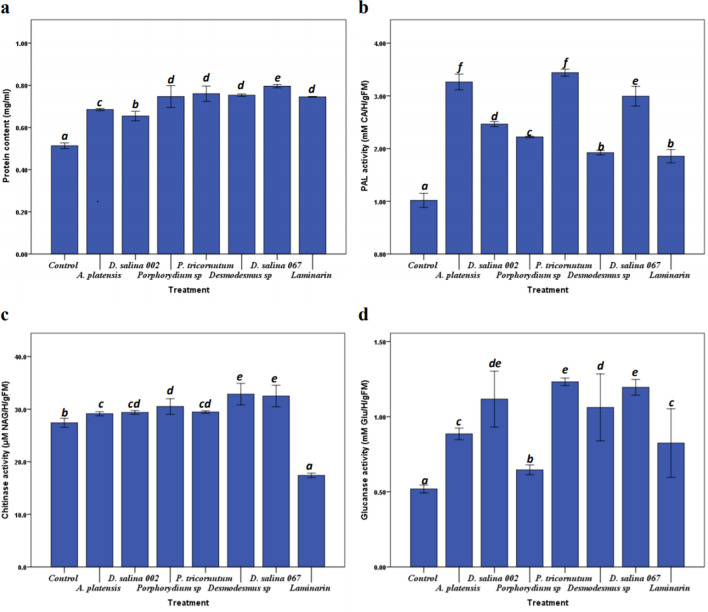
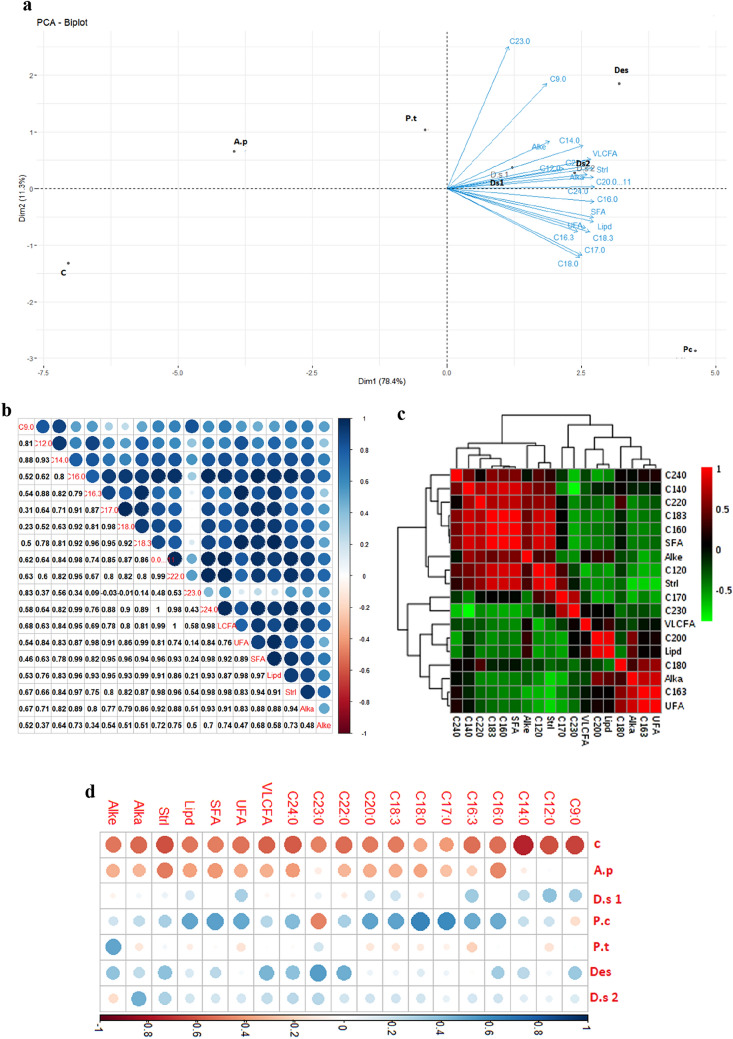
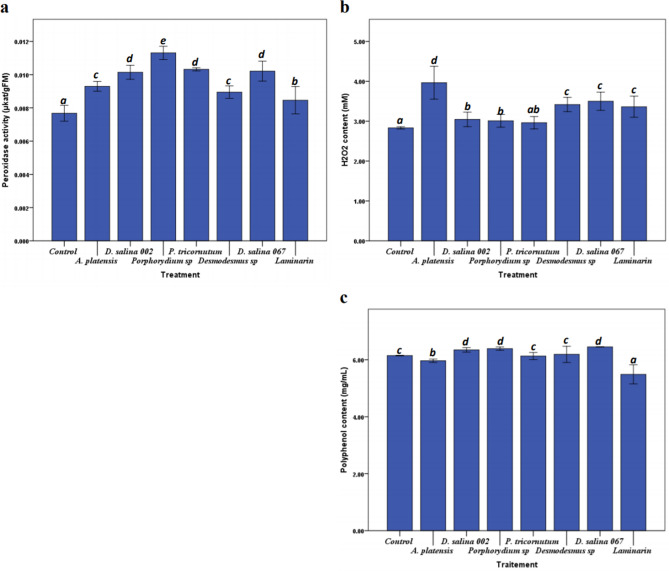
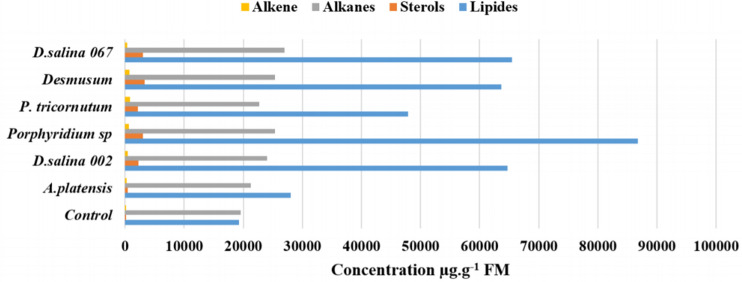
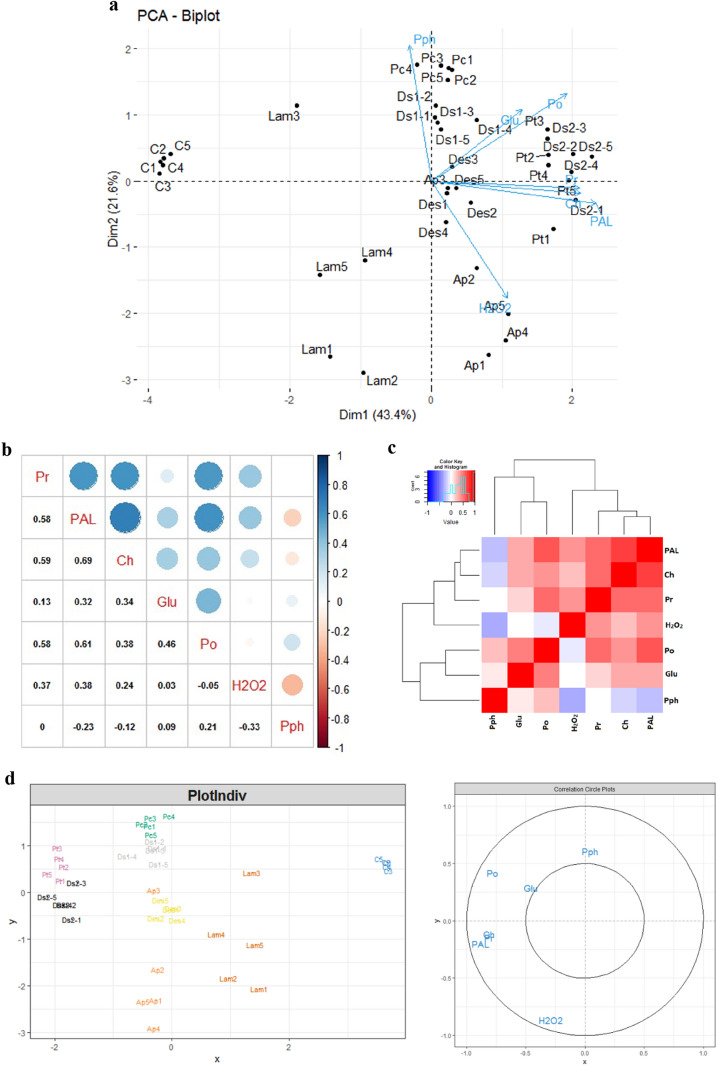
Microalgal polysaccharides (PSs) may be an effective elicitor agent that can efficiently protect plants against biotic stresses. In this study, wee investigates, the effect of PS obtained from microalgae and cyanobacteria (D. salina MS002, P. tricorontum MS023, Porphyridium sp. MS081, Desmodesmus sp., D. salina MS067 and A. platensis MS001) on the biochemical and metabolomics markers linked to defense pathways in tomato plants. The phenylalanine ammonia lyase (PAL), chitinase, 1,3-beta-glucanase and peroxidase (POX) activities have been improved in tomato plants leaves treated by polysaccharides extracted from P. triocnutum (238.26%); Desmodesmus sp. (19.95%); P. triocnutum (137.50%) and Porphyridium sp. (47.28%) respectively. For proteins, polyphenols and HO, the maximum effect was induced by D. salina 067 (55.01%), Porphyridium sp. (3.97%) and A. platensis (35.08%) respectively. On the other hand, Gas Chromatography-mass spectrometry (GC-MS) metabolomics analysis showed that PSs induced the modification of metabolite profile involved in the wax construction of tomato leaves, such as fatty acids, alkanes, alkenes and phytosterol. PS treatments improved the accumulation of fatty acids C16:3, C18:2 and C18:3 released from the membrane lipids as precursors of oxylipin biosynthesis which are signaling molecules of plant defense. In addition, PS treatment induced the accumulation of C18:0 and Azelaic acid which is a regulator of salicylic acid-dependent systemic acquired resistance. However, molecular and metabolic studies can determine more precisely the mode of action of microalgal polysaccharides as biostimulants/elicitors plant defense.
微藻多糖(PSs)可能是一种有效的诱导剂,可有效保护植物免受生物胁迫。本研究调查了从微藻和蓝藻(D. salina MS002、P. tricorontum MS023、Porphyridium sp. MS081、Desmodesmus sp.、D. salina MS067 和 A. platensis MS001)中获得的 PS 对与番茄植物防御途径相关的生化和代谢组学标记物的影响。从 P. triocnutum(238.26%)、Desmodesmus sp.(19.95%)、P. triocnutum(137.50%)和 Porphyridium sp.(47.28%)中提取的多糖处理的番茄植物叶片中的苯丙氨酸解氨酶(PAL)、几丁质酶、1,3-β-葡聚糖酶和过氧化物酶(POX)活性得到了提高。对于蛋白质、多酚和 HO,D. salina 067(55.01%)、Porphyridium sp.(3.97%)和 A. platensis(35.08%)分别诱导最大效应。另一方面,气相色谱-质谱联用(GC-MS)代谢组学分析表明,PSs 诱导了与番茄叶片蜡质结构修饰相关的代谢物谱的改变,如脂肪酸、烷烃、烯烃和植物甾醇。PS 处理可提高从膜脂释放的作为氧化脂生物合成前体的脂肪酸 C16:3、C18:2 和 C18:3 的积累,氧化脂是植物防御的信号分子。此外,PS 处理诱导了 C18:0 和壬二酸的积累,壬二酸是水杨酸依赖的系统获得性抗性的调节剂。然而,分子和代谢研究可以更准确地确定微藻多糖作为植物防御生物刺激剂/诱导剂的作用模式。