Republican Research and Practical Center for Epidemiology and Microbiology, Minsk, Belarus.
Department of General Chemistry, Belarusian State Medical University, Minsk, Belarus.
Sci Rep. 2021 Jan 13;11(1):1225. doi: 10.1038/s41598-020-79587-2.
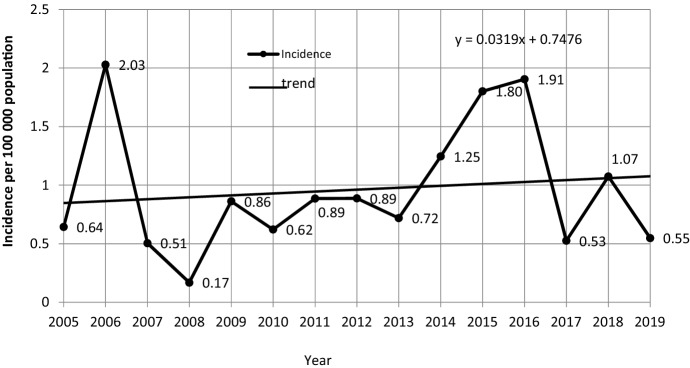
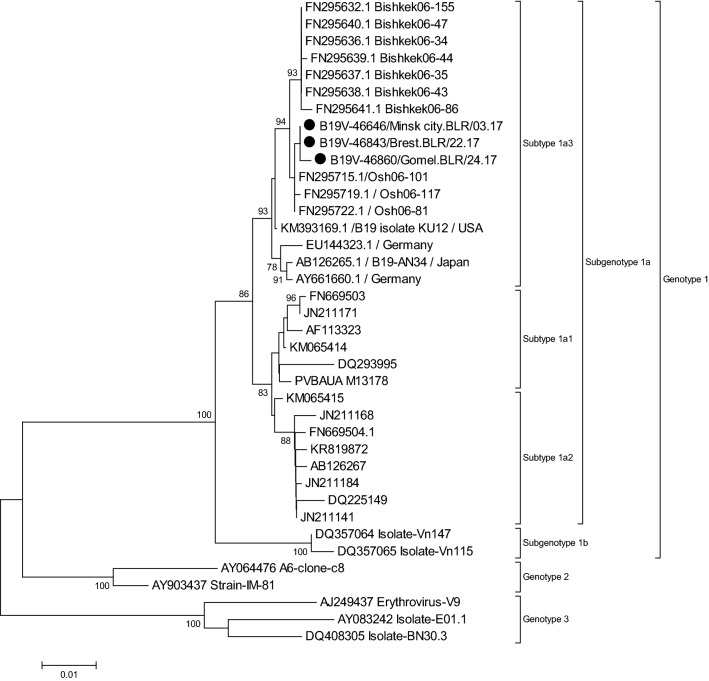
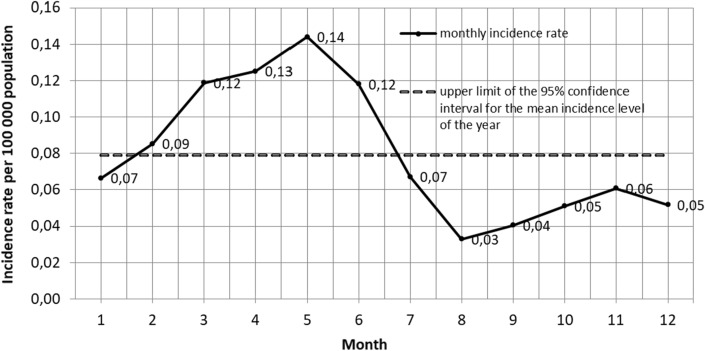
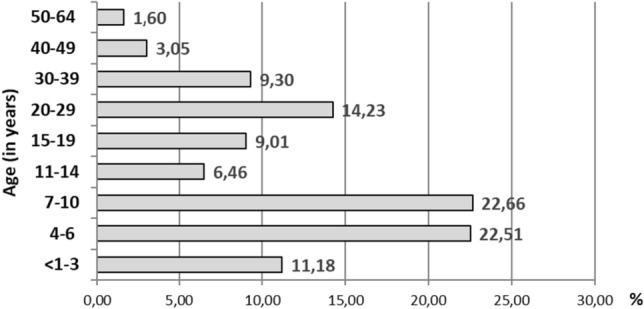
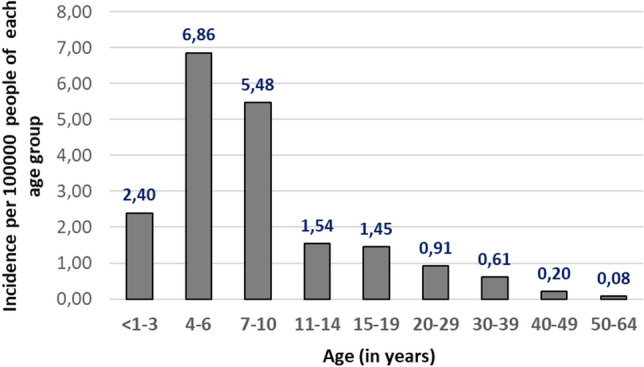
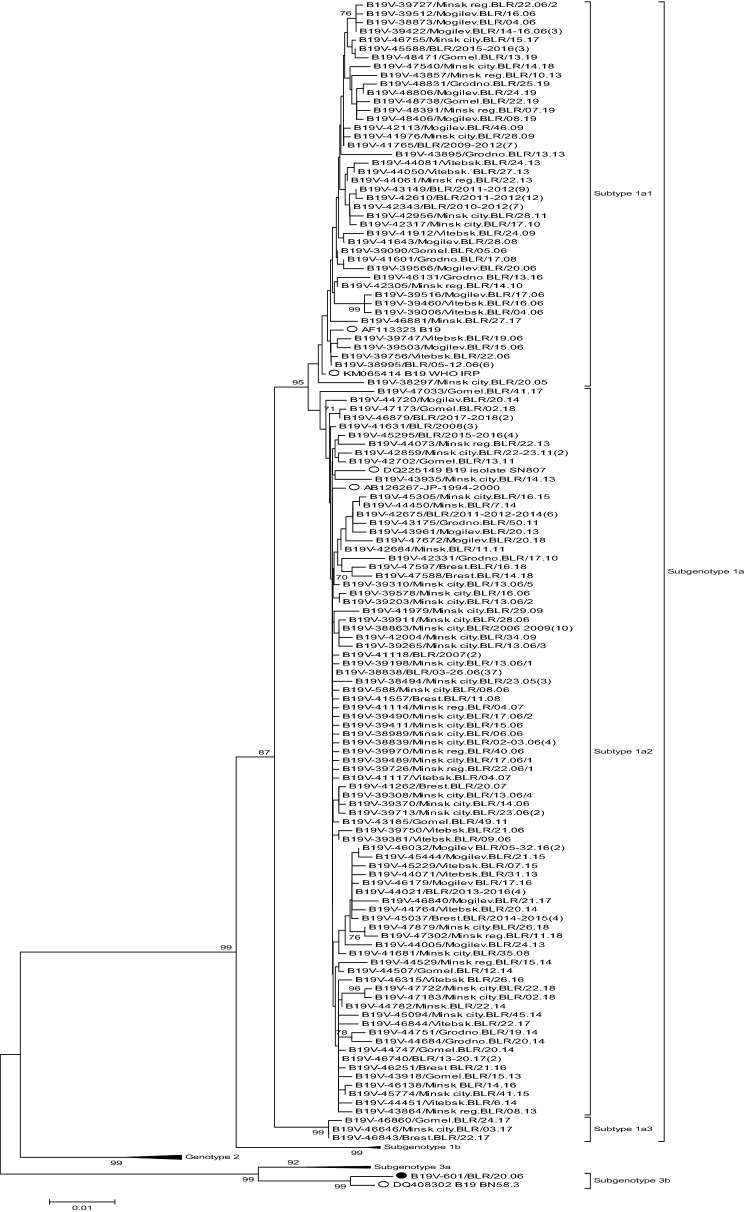
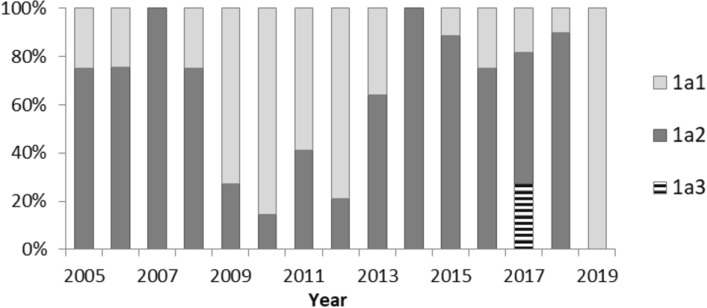
Human parvovirus B19 (B19V) infection is not notifiable in Belarus and its most common clinical presentation erythema infectiosum (EI) is often difficult to distinguish from other exanthematous diseases. The objective of this study was to provide comprehensive data about EI epidemiology in Belarus based on the serological and molecular investigation of samples from measles and rubella discarded cases collected between 2005 and 2019. Overall, 4919 sera were investigated for IgM antibodies against B19V and the positive cases were analysed according to year, season and age. B19V DNA was amplified by PCR in a total of 238 sera from all over the country, and sequenced for phylogenetic analyses. B19V infection was confirmed in 1377 (27.8%) measles and rubella discarded cases. Two high incidence periods and a seasonal increase of EI between mid-February to mid-July were identified. Children from 4 to 6 and from 7 to 10 years of age represented the largest groups of patients (22.51% and 22.66% of all cases, respectively), followed by adults between 20 and 29 years of age (14.23%). Among the 238 B19Vs sequenced, one belonged to subgenotype 3b and 237 to subgenotype 1a with 81 (34.2%) clustering with subtypes 1a1 and 153 (64.6%) with 1a2. Three strains (1.2%) formed an additional, well-supported cluster suggesting the presence of another subtype of 1a, tentatively named 1a3. The epidemiological and molecular analyses highlighted not only the prominent role of B19V in exanthematous diseases in Belarus, but also suggested a previously underestimated diversity of subgenotype 1a sequences with a third subtype 1a3.
人细小病毒 B19(B19V)感染在白俄罗斯不是法定报告疾病,其最常见的临床表现为传染性红斑(EI),通常难以与其他出疹性疾病区分。本研究的目的是基于 2005 年至 2019 年期间收集的麻疹和风疹废弃病例的血清学和分子调查,提供白俄罗斯 EI 流行病学的综合数据。总共检测了 4919 份血清的 B19V IgM 抗体,根据年份、季节和年龄对阳性病例进行了分析。从全国各地的 238 份血清中通过 PCR 扩增 B19V DNA,并进行了测序进行系统发育分析。在 1377 例(27.8%)麻疹和风疹废弃病例中证实存在 B19V 感染。确定了两个高发期和 2 月中旬至 7 月中旬之间 EI 的季节性增加。4 至 6 岁和 7 至 10 岁的儿童分别代表最大的患者群体(分别占所有病例的 22.51%和 22.66%),其次是 20 至 29 岁的成年人(占 14.23%)。在测序的 238 株 B19V 中,1 株属于亚基因型 3b,237 株属于亚基因型 1a,81 株(34.2%)与 1a1 亚型聚类,153 株(64.6%)与 1a2 聚类。3 株(1.2%)形成了另一个支持良好的聚类,表明存在另一种 1a 亚型,暂命名为 1a3。流行病学和分子分析不仅突出了 B19V 在白俄罗斯出疹性疾病中的重要作用,还表明亚基因型 1a 序列的多样性被低估,存在第三种 1a3 亚型。