Division of Urology, Department of Surgery, University of Colorado Denver School of Medicine, 12700 E 19th Avenue, Aurora, CO, 80045, USA.
Children's Hospital Colorado, 13123 E 16th Avenue, B463, Aurora, CO, 80045, USA.
Sci Rep. 2021 Jan 13;11(1):1149. doi: 10.1038/s41598-020-80794-0.
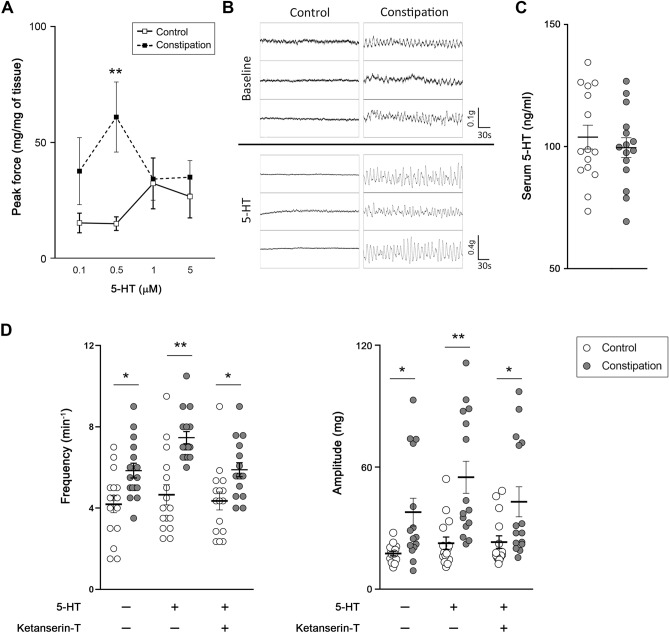
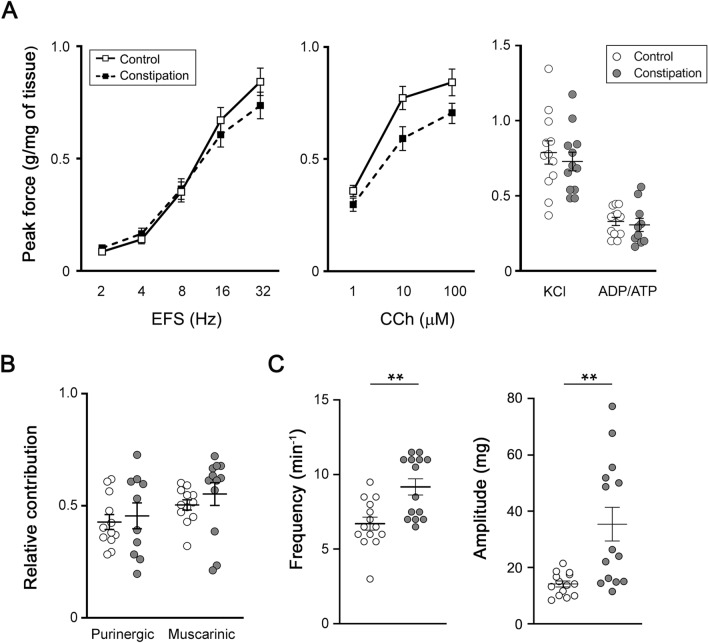
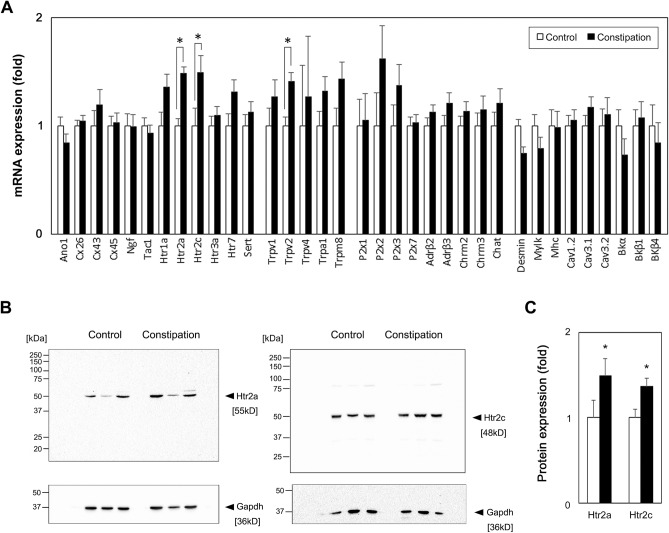
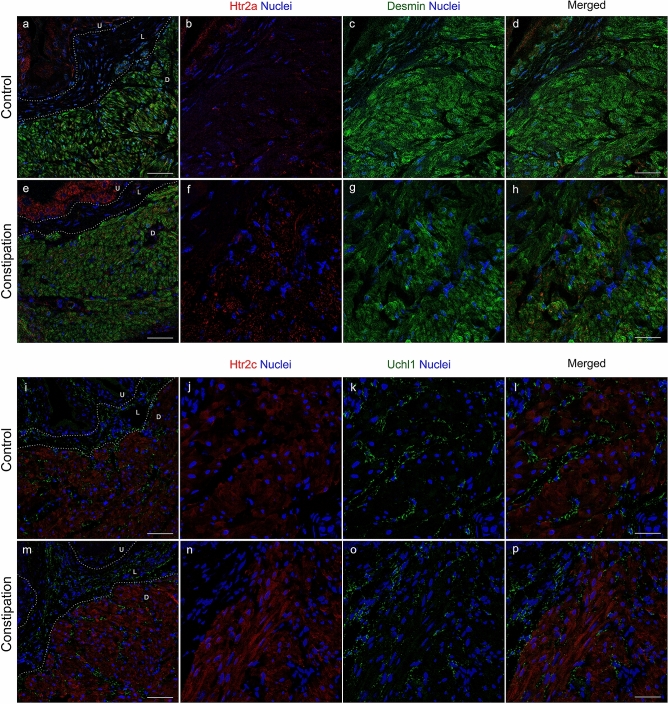
Bladder and bowel dysfunction (BBD) is a common yet underdiagnosed paediatric entity that describes lower urinary tract symptoms (LUTS) accompanied by abnormal bowel patterns manifested as constipation and/or encopresis. LUTS usually manifest as urgency, urinary frequency, incontinence, and urinary tract infections (UTI). Despite increasing recognition of BBD as a risk factor for long-term urinary tract problems including recurrent UTI, vesicoureteral reflux, and renal scarring, the mechanisms underlying BBD have been unclear, and treatment remains empirical. We investigated how constipation affects the lower urinary tract function using a juvenile murine model of functional constipation. Following four days of functional constipation, animals developed LUTS including urinary frequency and detrusor overactivity evaluated by awake cystometry. Physiological examination of detrusor function in vitro using isolated bladder strips, demonstrated a significant increase in spontaneous contractions without affecting contractile force in response to electrical field stimulation, carbachol, and KCl. A significant upregulation of serotonin receptors, Htr2a and Htr2c, was observed in the bladders from mice with constipation, paralleled with augmented spontaneous contractions after pre-incubation of the bladder strips with 0.5 µM of serotonin. These results suggest that constipation induced detrusor overactivity and increased excitatory serotonin receptor activation in the urinary bladder, which contributes to the development of BBD.
膀胱和肠道功能障碍(BBD)是一种常见但未被充分诊断的儿科病症,描述了下尿路症状(LUTS)伴有异常的肠道模式,表现为便秘和/或大便失禁。LUTS 通常表现为尿急、尿频、尿失禁和尿路感染(UTI)。尽管 BBD 作为长期尿路问题的危险因素,包括复发性 UTI、膀胱输尿管反流和肾瘢痕形成,越来越受到认识,但 BBD 的机制仍不清楚,治疗仍基于经验。我们使用功能性便秘的幼年鼠模型研究了便秘如何影响下尿路功能。在功能性便秘持续四天后,动物出现了 LUTS,包括通过清醒膀胱测压评估的尿频和逼尿肌过度活动。使用分离的膀胱条进行体外膀胱功能生理检查,显示自发性收缩显著增加,而对电场刺激、卡巴胆碱和 KCl 的收缩力无影响。在便秘小鼠的膀胱中观察到 5-羟色胺受体 Htr2a 和 Htr2c 的显著上调,在用 0.5µM 5-羟色胺预孵育膀胱条后,自发性收缩显著增加。这些结果表明,便秘诱导逼尿肌过度活动和增加膀胱中兴奋性 5-羟色胺受体激活,导致 BBD 的发生。