Li Wenjie, Li Mengting, Wang Haizhou, Peng Yanan, Dong Shouquan, Lu Yuanyuan, Wang Fan, Xu Fei, Liu Lan, Zhao Qiu
Department of Gastroenterology, Zhongnan Hospital of Wuhan University, Wuhan, China.
Hubei Clinical Center and Key Lab of Intestinal and Colorectal Diseases, Wuhan, China.
J Cancer. 2021 Jan 1;12(4):965-975. doi: 10.7150/jca.51079. eCollection 2021.
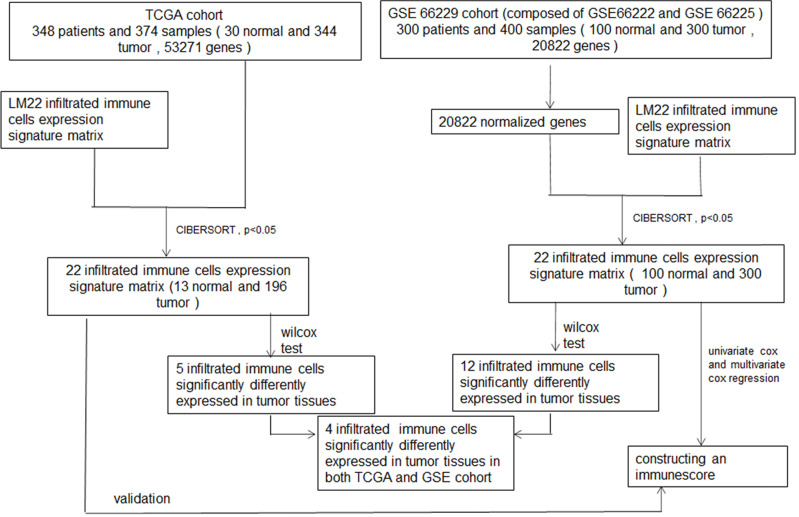
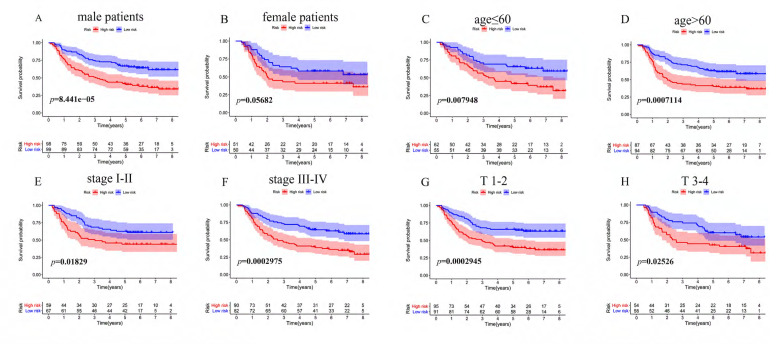
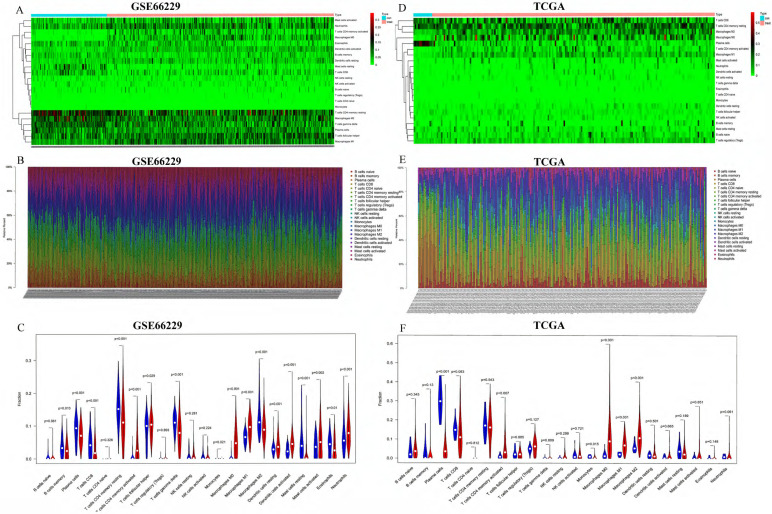
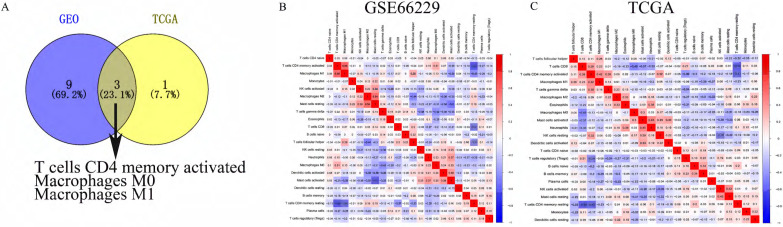
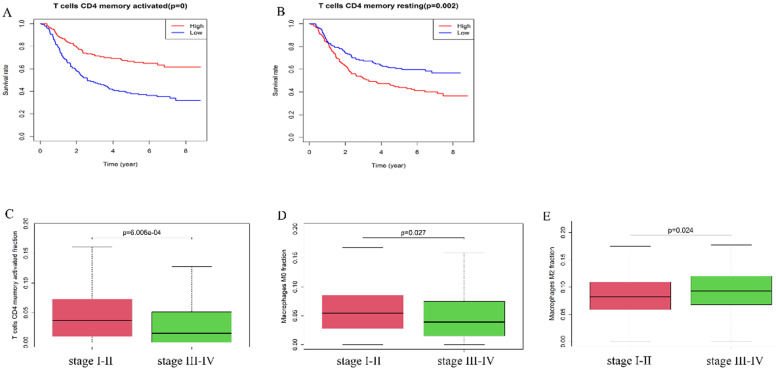
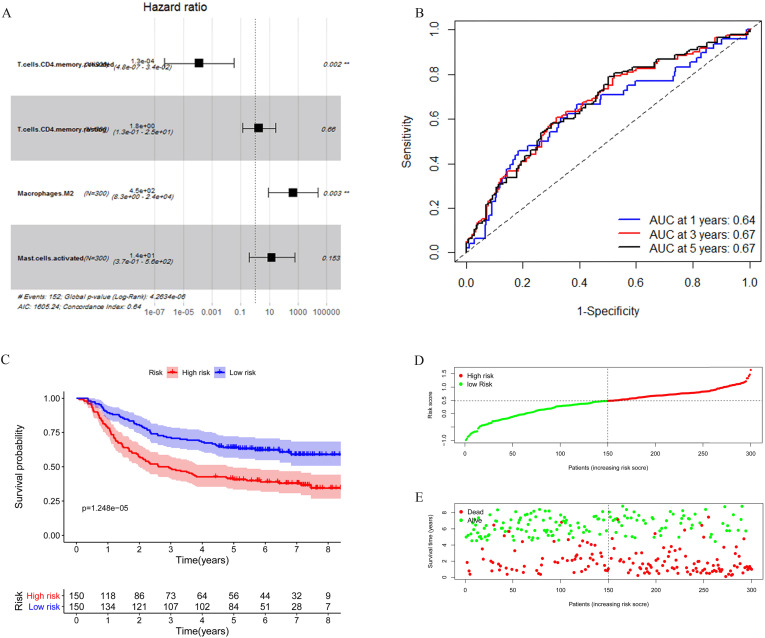
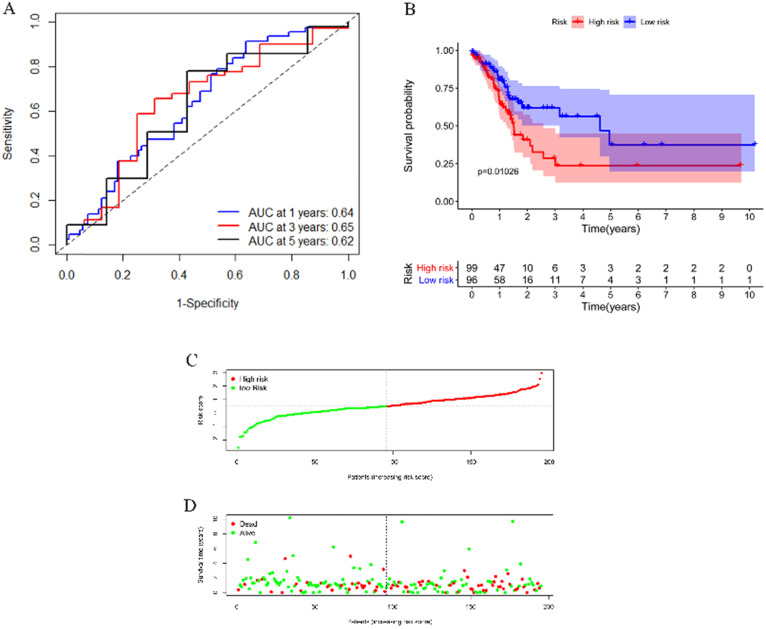
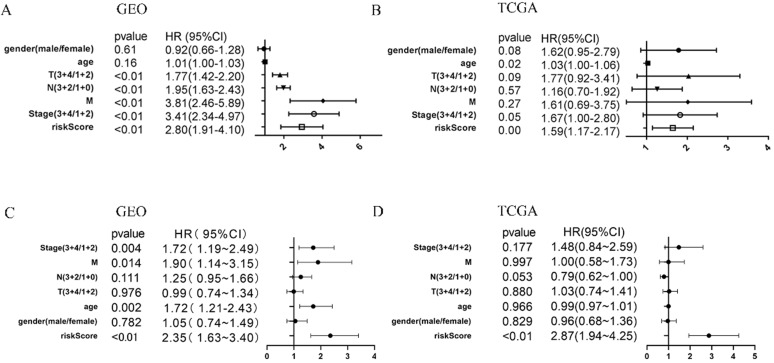
: Immune cells infiltrating has been proved to be associated with prognosis in gastric cancer (GC) by studies. This study aims to explore the prognosis value of infiltrating immune cells in gastric cancer. In our study, the CIBERSORT algorithm was used to calculate the fraction of 22 tumor-infiltrating immune cells (TIIC) in 100 normal and 300 tumor samples from the GEO cohort and 30 normal and 344 tumor samples from the TCGA cohort. Univariate and multivariate Cox regression were used to construct an immune risk score model. Multivariate cox regression was also used to validate whether our risk score model could predict prognosis in GC independently. Furthermore, the model was validated in different patient subgroups to test its independence. 0.05 was considered statistically significant. The results showed that the fraction of 3 immune cells increased in tumor tissues compared with normal tissues in both the GEO and TCGA cohort. Univariate cox regression analysis showed four cells significantly correlated with survival rate in GC (0.05). The immune risk score model was constructed based on the four cells through multivariate cox regression and further validated. The KM survival curve suggested that patients with high risk had poor prognosis than patients with low risk (0.05). ROC curve indicated the model was reliable (AUC= 0.67 in the GEO cohort, AUC = 0.65 in the TCGA cohort). Furthermore, multivariate Cox regression showed the model was an independent factor for overall survival predicting in GC (hazard ratio (HR) = 2.35, 95% confidence interval (CI) = 1.633.40 in the GEO cohort, HR = 2.87, 95% CI = 1.944.25 in the TCGA cohort). Finally, we validated the model in patient subgroups by the KM survival curve. In summary, tumor-infiltrating immune cells play an essential role in GC progression and affect the outcome of GC patients. The immune risk score can predict overall survival for GC independently, and high immune risk score is associated with poor prognosis.
研究已证明免疫细胞浸润与胃癌(GC)的预后相关。本研究旨在探讨浸润性免疫细胞在胃癌中的预后价值。在我们的研究中,使用CIBERSORT算法计算来自GEO队列的100个正常样本和300个肿瘤样本以及来自TCGA队列的30个正常样本和344个肿瘤样本中22种肿瘤浸润免疫细胞(TIIC)的比例。使用单变量和多变量Cox回归构建免疫风险评分模型。多变量Cox回归还用于验证我们的风险评分模型是否能够独立预测GC的预后。此外,在不同患者亚组中对该模型进行验证以测试其独立性。P < 0.05被认为具有统计学意义。结果表明,在GEO和TCGA队列中,与正常组织相比,肿瘤组织中3种免疫细胞的比例增加。单变量Cox回归分析显示,4种细胞与GC患者的生存率显著相关(P < 0.05)。通过多变量Cox回归基于这4种细胞构建免疫风险评分模型并进一步验证。KM生存曲线表明,高风险患者的预后比低风险患者差(P < 0.05)。ROC曲线表明该模型可靠(GEO队列中AUC = 0.67,TCGA队列中AUC = 0.65)。此外,多变量Cox回归显示该模型是GC总体生存预测的独立因素(GEO队列中风险比(HR)= 2.35,95%置信区间(CI)= 1.633.40;TCGA队列中HR = 2.87,95%CI = 1.94 April 2023 16 4.25)。最后,我们通过KM生存曲线在患者亚组中验证了该模型。总之,肿瘤浸润免疫细胞在GC进展中起重要作用,并影响GC患者的预后。免疫风险评分可独立预测GC的总体生存,高免疫风险评分与不良预后相关。