Mockus Taryn E, Munie Ashley, Atkinson Jeffrey R, Segal Benjamin M
Department of Neurology, The Ohio State University Wexner Medical Center, Columbus, OH 43210.
Graduate Program in Immunology, University of Michigan Medical School, Ann Arbor, MI 48109; and.
J Immunol. 2021 Jan 1;206(1):3-10. doi: 10.4049/jimmunol.2000797.
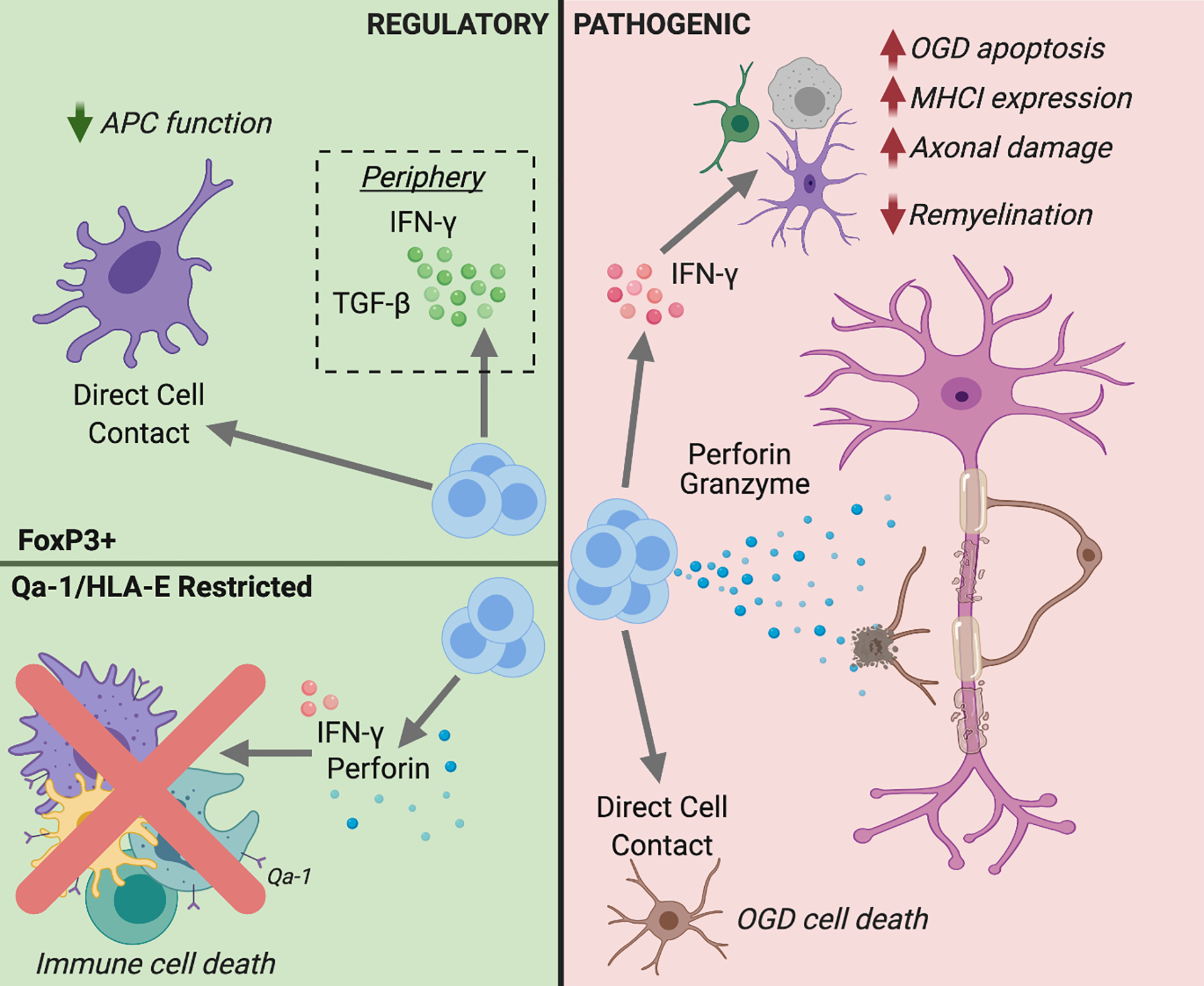
Multiple sclerosis (MS), a neuroinflammatory disease that affects millions worldwide, is widely thought to be autoimmune in etiology. Historically, research into MS pathogenesis has focused on autoreactive CD4 T cells because of their critical role in the animal model, experimental autoimmune encephalomyelitis, and the association between MS susceptibility and single-nucleotide polymorphisms in the MHC class II region. However, recent studies have revealed prominent clonal expansions of CD8 T cells within the CNS during MS. In this paper, we review the literature on CD8 T cells in MS, with an emphasis on their potential effector and regulatory properties. We discuss the impact of disease modifying therapies, currently prescribed to reduce MS relapse rates, on CD8 T cell frequency and function. A deeper understanding of the role of CD8 T cells in MS may lead to the development of more effective and selective immunomodulatory drugs for particular subsets of patients.
多发性硬化症(MS)是一种影响全球数百万人的神经炎症性疾病,病因上普遍认为是自身免疫性的。从历史上看,由于自身反应性CD4 T细胞在动物模型实验性自身免疫性脑脊髓炎中的关键作用,以及MS易感性与MHC II类区域单核苷酸多态性之间的关联,对MS发病机制的研究一直集中在这些细胞上。然而,最近的研究表明,在MS病程中,中枢神经系统内CD8 T细胞出现了显著的克隆性扩增。在本文中,我们综述了关于MS中CD8 T细胞的文献,重点关注它们潜在的效应和调节特性。我们讨论了目前用于降低MS复发率的疾病修饰疗法对CD8 T细胞频率和功能的影响。更深入地了解CD8 T细胞在MS中的作用可能会为特定患者亚群开发出更有效、更具选择性的免疫调节药物。