Department of Physiological Chemistry, Graduate School of Pharmaceutical Science, The University of Tokyo, Bunkyo, Tokyo, Japan.
Department of Molecular Genetics, Division of Centrosome Biology, National Institute of Genetics, Mishima, Shizuoka, Japan.
J Cell Biol. 2021 Feb 1;220(2). doi: 10.1083/jcb.202006085.
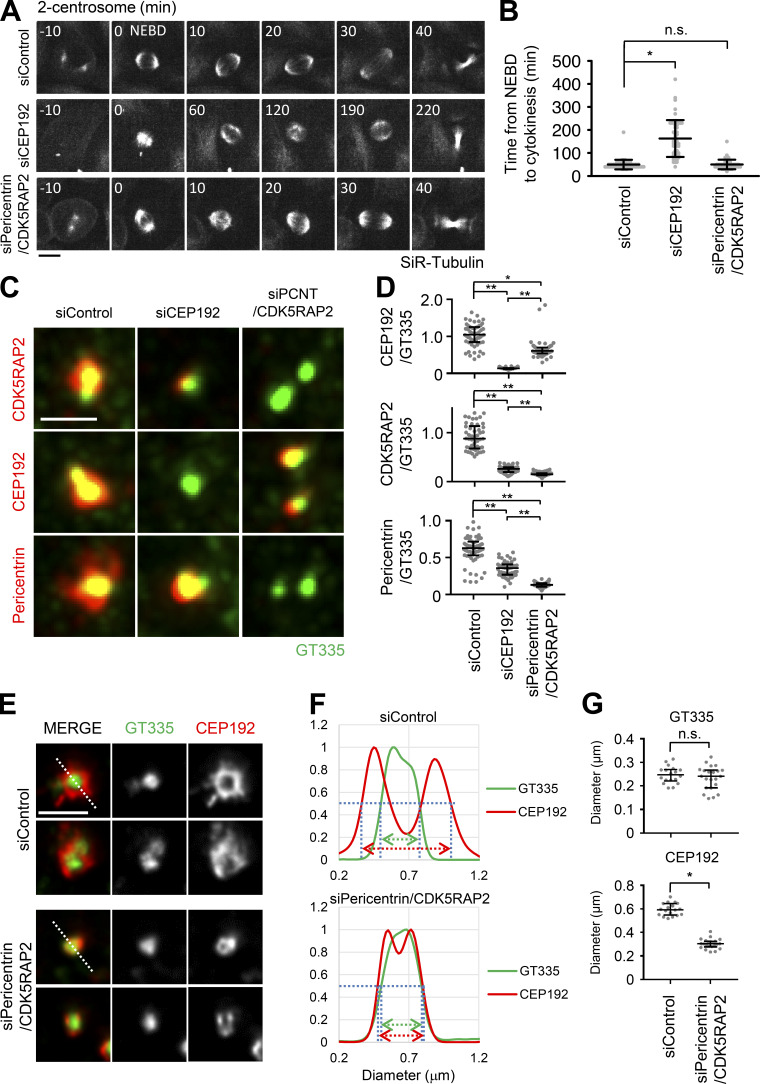
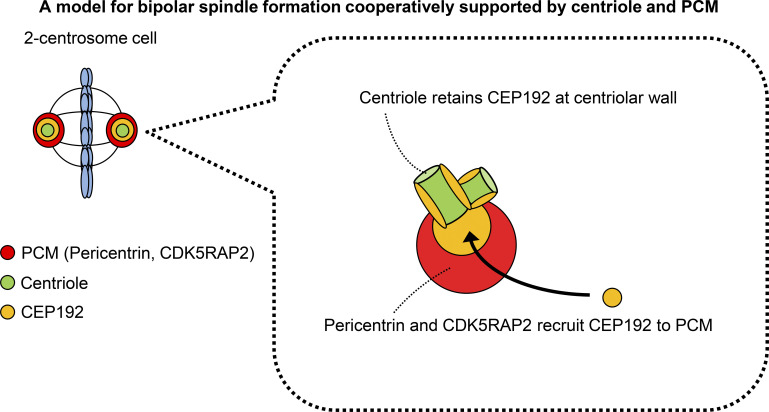
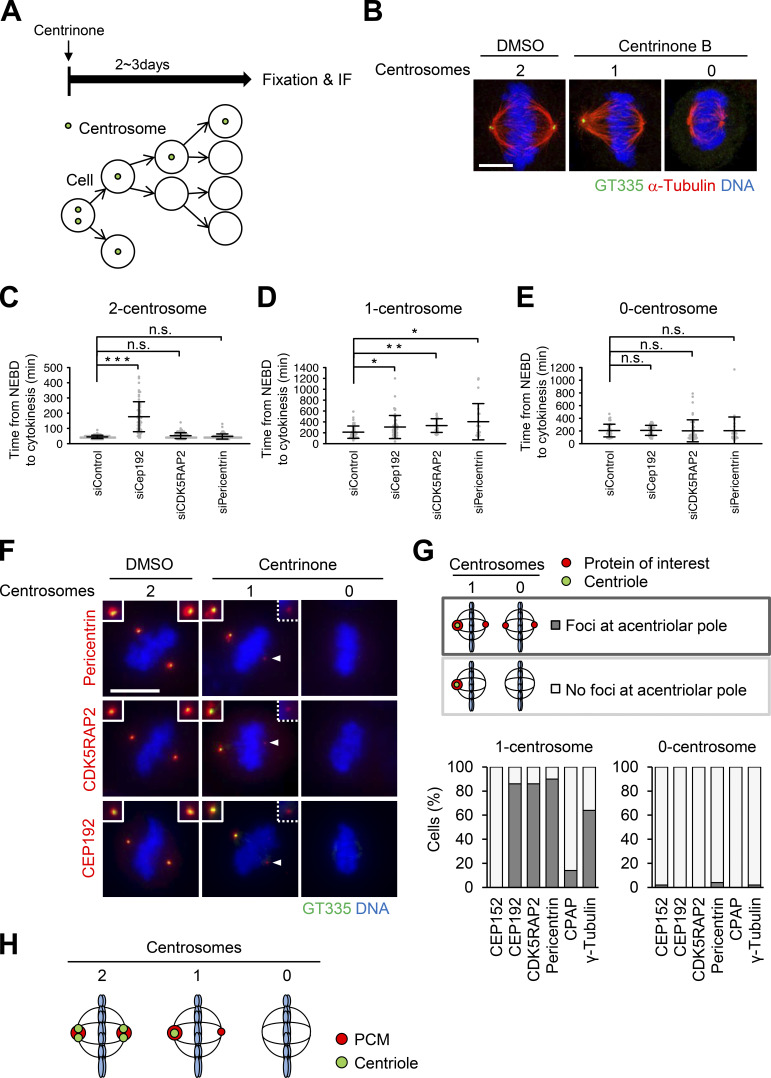
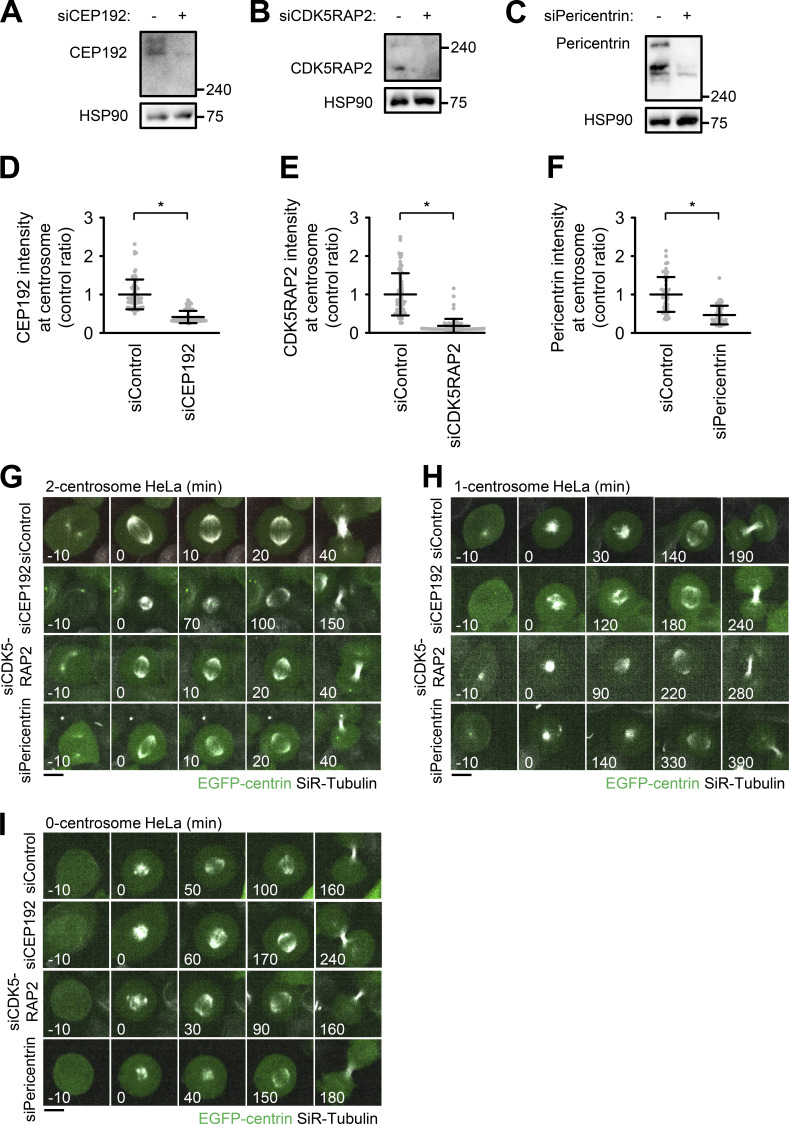
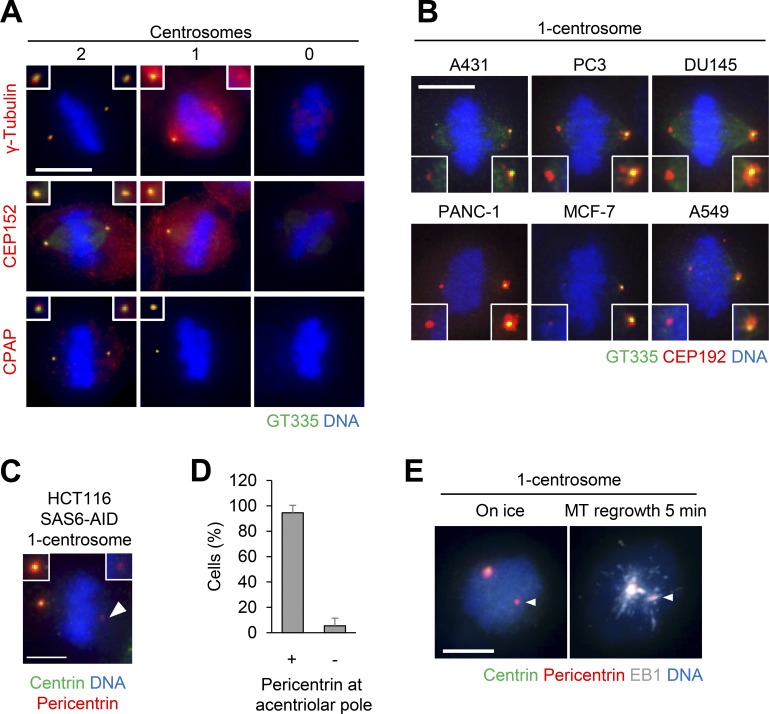
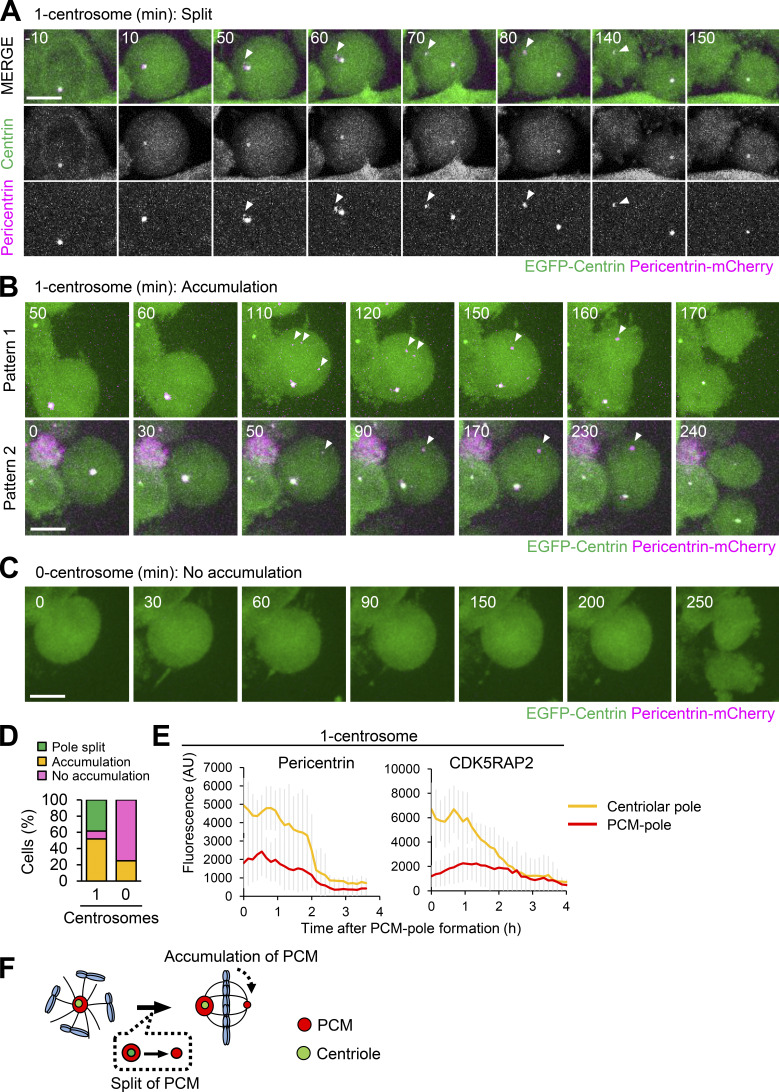
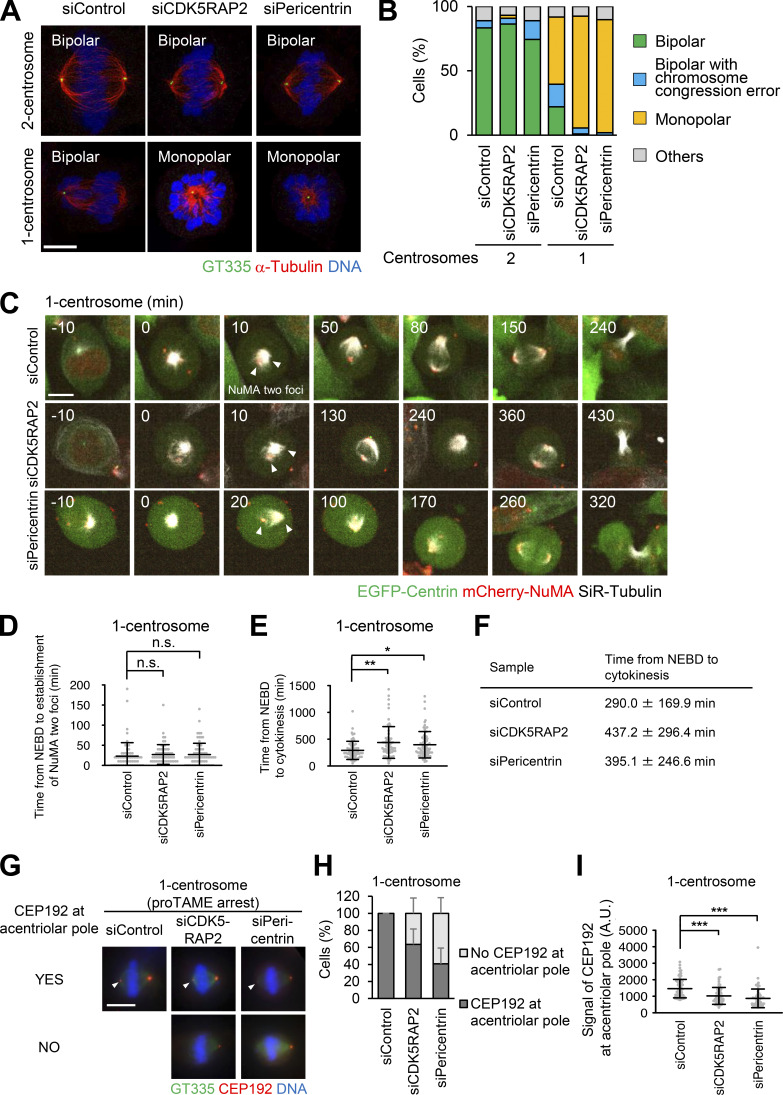
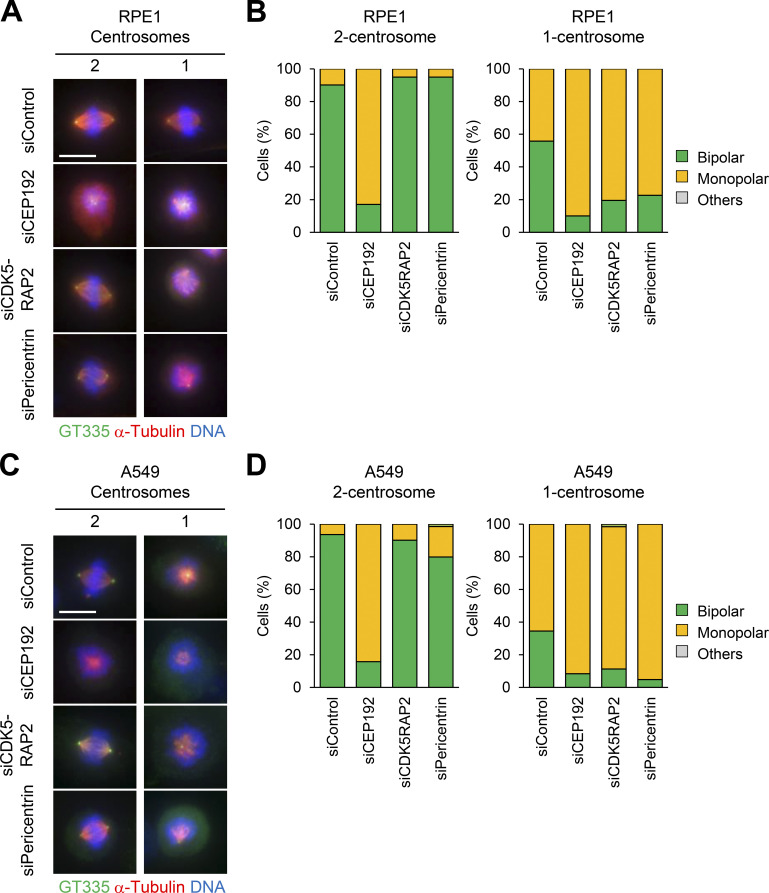
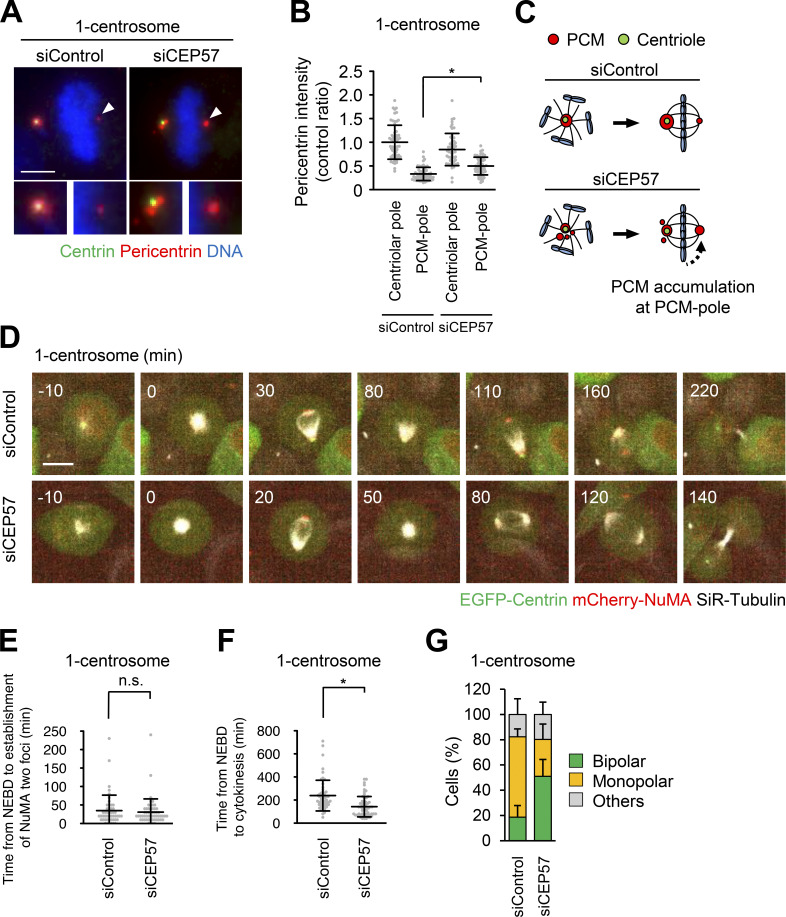
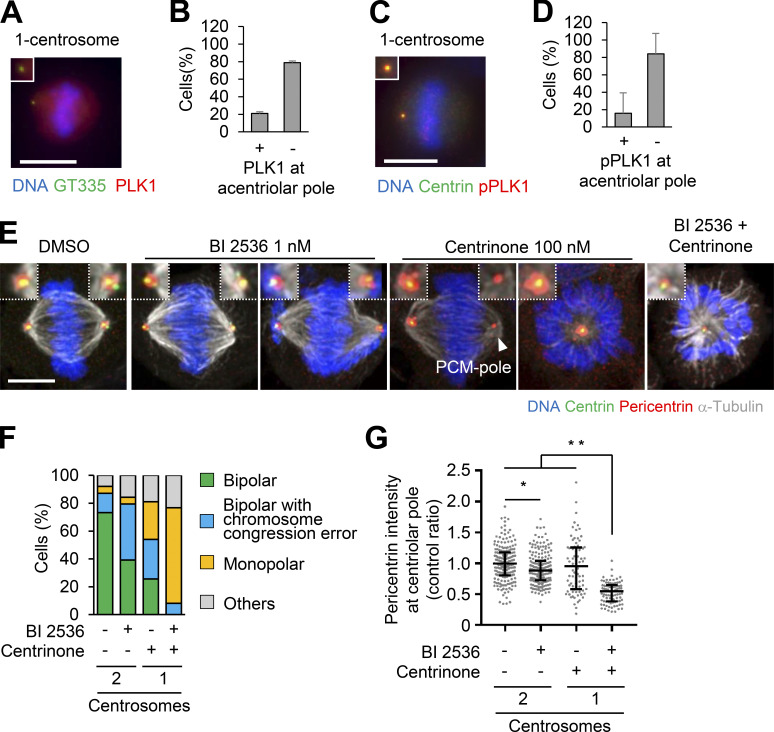
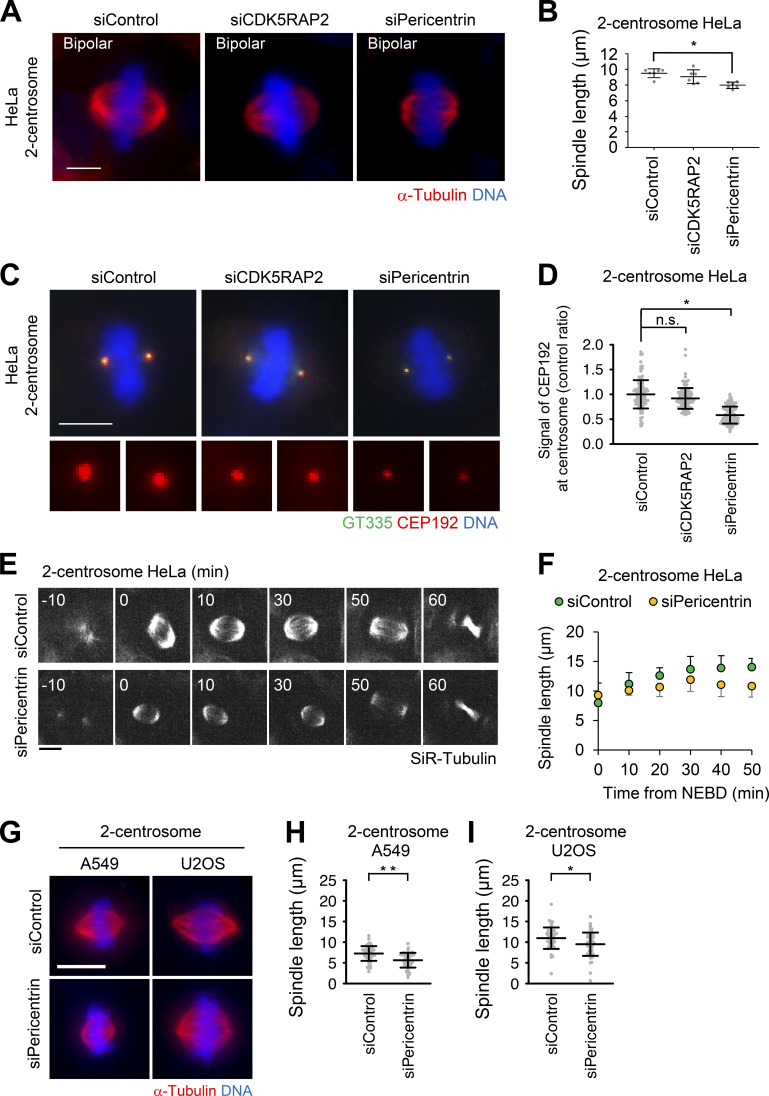
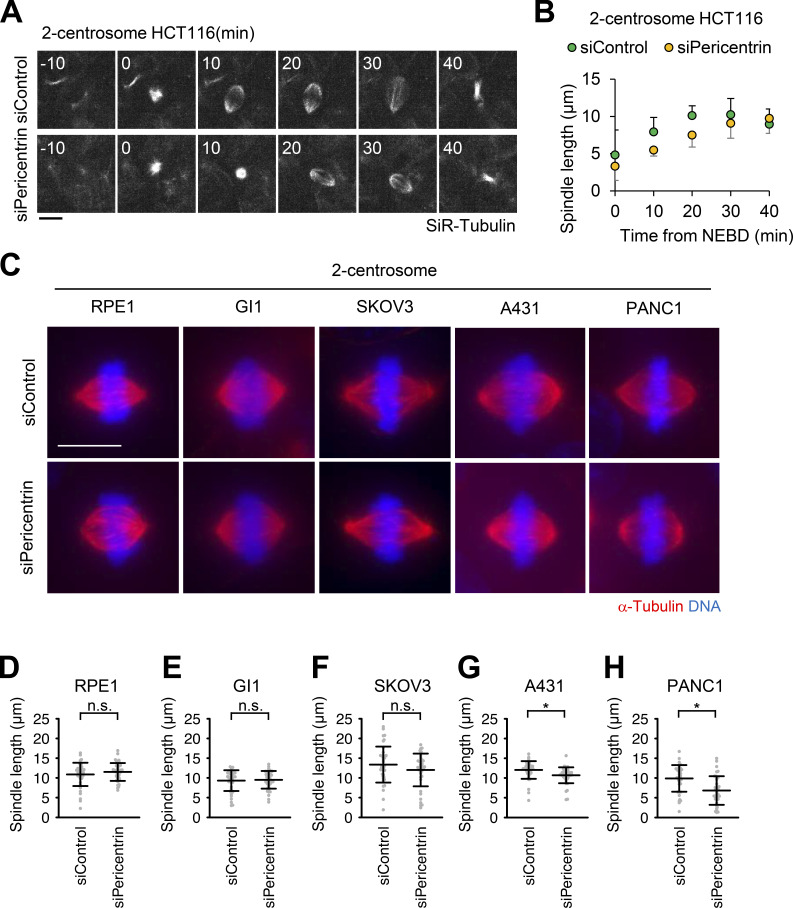
The pericentriolar material (PCM) that accumulates around the centriole expands during mitosis and nucleates microtubules. Here, we show the cooperative roles of the centriole and PCM scaffold proteins, pericentrin and CDK5RAP2, in the recruitment of CEP192 to spindle poles during mitosis. Systematic depletion of PCM proteins revealed that CEP192, but not pericentrin and/or CDK5RAP2, was crucial for bipolar spindle assembly in HeLa, RPE1, and A549 cells with centrioles. Upon double depletion of pericentrin and CDK5RAP2, CEP192 that remained at centriole walls was sufficient for bipolar spindle formation. In contrast, through centriole removal, we found that pericentrin and CDK5RAP2 recruited CEP192 at the acentriolar spindle pole and facilitated bipolar spindle formation in mitotic cells with one centrosome. Furthermore, the perturbation of PLK1, a critical kinase for PCM assembly, efficiently suppressed bipolar spindle formation in mitotic cells with one centrosome. Overall, these data suggest that the centriole and PCM scaffold proteins cooperatively recruit CEP192 to spindle poles and facilitate bipolar spindle formation.
中心体周围聚集的中心粒周围物质 (PCM) 在有丝分裂期间会扩张,并起始微管的形成。在这里,我们展示了中心体和 PCM 支架蛋白(中心粒蛋白和 CDK5RAP2)在招募 CEP192 到纺锤体两极方面的协同作用。系统性地去除 PCM 蛋白后发现,CEP192 而非中心粒蛋白和/或 CDK5RAP2 对于 HeLa、RPE1 和 A549 细胞中的中心粒的有丝分裂中双极纺锤体组装至关重要。在中心粒蛋白和 CDK5RAP2 双敲除后,仍然位于中心粒壁上的 CEP192 足以形成双极纺锤体。相比之下,通过去除中心体,我们发现中心粒蛋白和 CDK5RAP2 将 CEP192 招募到无中心体的纺锤体两极,并促进有一个中心体的有丝分裂细胞中双极纺锤体的形成。此外,关键的 PCM 组装激酶 PLK1 的扰动能有效地抑制有一个中心体的有丝分裂细胞中双极纺锤体的形成。总的来说,这些数据表明中心体和 PCM 支架蛋白协同招募 CEP192 到纺锤体两极并促进双极纺锤体的形成。