Cheng Shen, Nethi Susheel Kumar, Al-Kofahi Mahmoud, Prabha Swayam
Department of Experimental and Clinical Pharmacology, College of Pharmacy, University of Minnesota, Minneapolis, MN 55455, USA.
Fels Institute for Cancer Research & Molecular Biology, Lewis Katz School of Medicine, Temple University, Philadelphia, PA 19140, USA.
Pharmaceutics. 2021 Jan 12;13(1):92. doi: 10.3390/pharmaceutics13010092.
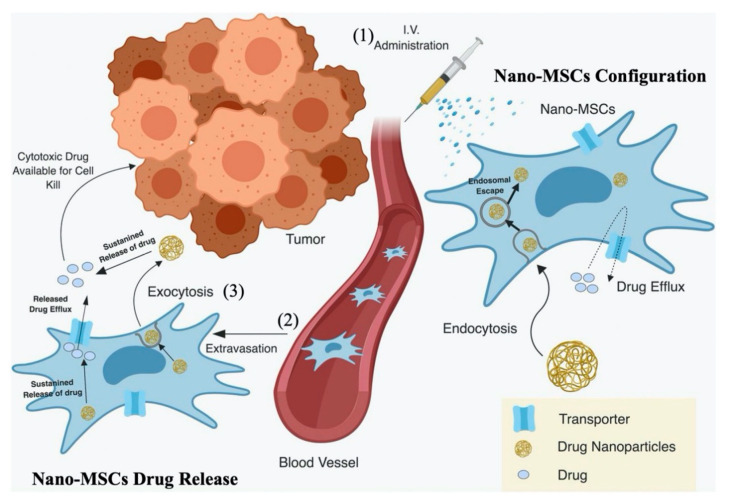
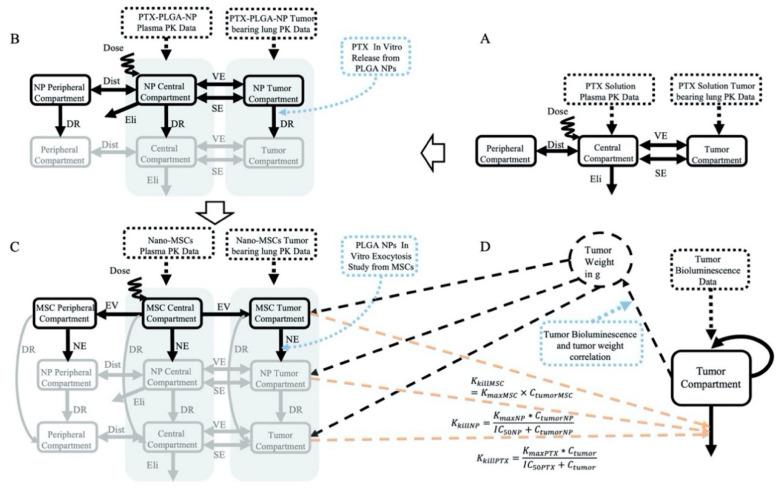
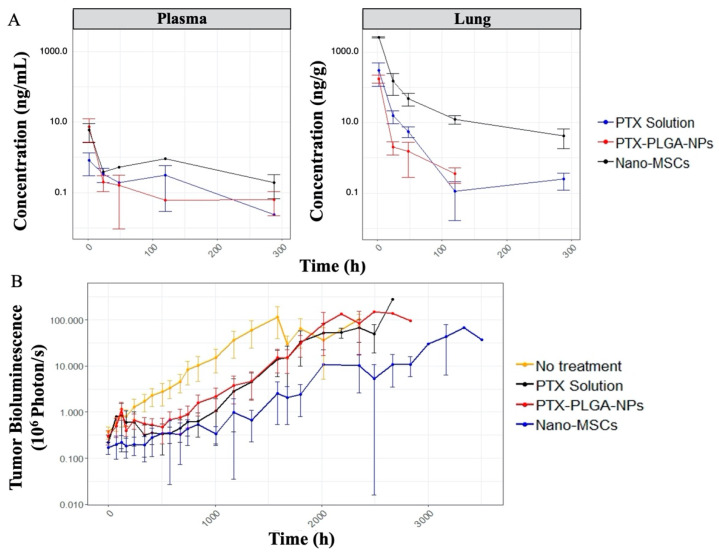
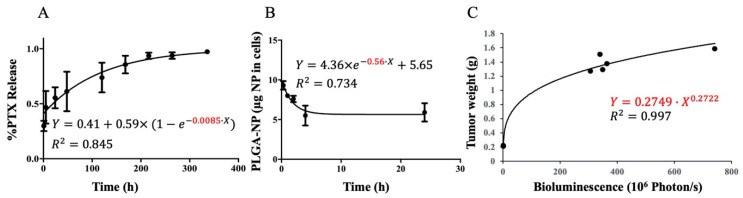
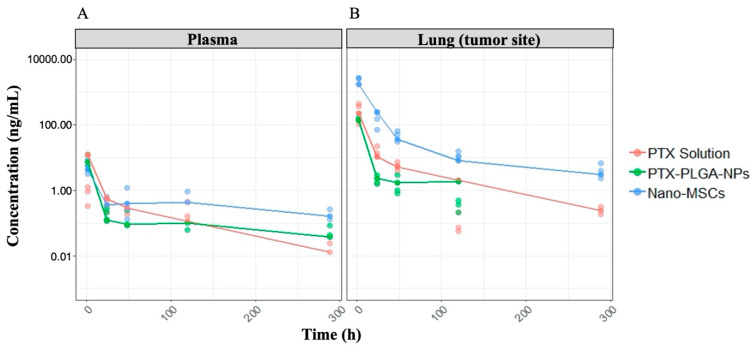
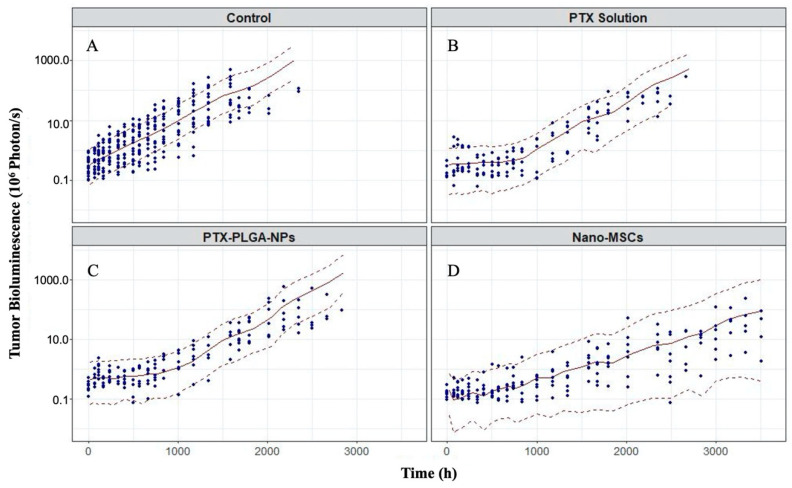
Nano-engineered mesenchymal stem cells (nano-MSCs) are promising targeted drug delivery platforms for treating solid tumors. MSCs engineered with paclitaxel (PTX) loaded poly(lactide-co-glycolide) (PLGA) nanoparticles (NPs) are efficacious in treating lung and ovarian tumors in mouse models. The quantitative description of pharmacokinetics (PK) and pharmacodynamics (PD) of nano-MSCs is crucial for optimizing their therapeutic efficacy and clinical translatability. However, successful translation of nano-MSCs is challenging due to their complex composition and physiological mechanisms regulating their pharmacokinetic-pharmacodynamic relationship (PK-PD). Therefore, in this study, a mechanism-based preclinical PK-PD model was developed to characterize the PK-PD relationship of nano-MSCs in orthotopic A549 human lung tumors in SCID Beige mice. The developed model leveraged literature information on diffusivity and permeability of PTX and PLGA NPs, PTX release from PLGA NPs, exocytosis of NPs from MSCs as well as PK and PD profiles of nano-MSCs from previous in vitro and in vivo studies. The developed PK-PD model closely captured the reported tumor growth in animals receiving no treatment, PTX solution, PTX-PLGA NPs and nano-MSCs. Model simulations suggest that increasing the dosage of nano-MSCs and/or reducing the rate of PTX-PLGA NPs exocytosis from MSCs could result in improved anti-tumor efficacy in preclinical settings.
纳米工程化间充质干细胞(nano-MSCs)是用于治疗实体瘤的有前景的靶向药物递送平台。用负载紫杉醇(PTX)的聚(丙交酯-共-乙交酯)(PLGA)纳米颗粒(NPs)工程化的间充质干细胞在小鼠模型中对治疗肺癌和卵巢癌有效。对nano-MSCs的药代动力学(PK)和药效学(PD)进行定量描述对于优化其治疗效果和临床可转化性至关重要。然而,由于nano-MSCs的组成复杂以及调节其药代动力学-药效学关系(PK-PD)的生理机制,将其成功转化具有挑战性。因此,在本研究中,开发了一种基于机制的临床前PK-PD模型,以表征nano-MSCs在SCID米色小鼠原位A549人肺癌中的PK-PD关系。所开发的模型利用了关于PTX和PLGA NPs的扩散率和渗透率、PTX从PLGA NPs中的释放、NPs从MSCs中的胞吐作用以及先前体外和体内研究中nano-MSCs的PK和PD概况的文献信息。所开发的PK-PD模型紧密捕捉了在未接受治疗、PTX溶液、PTX-PLGA NPs和nano-MSCs的动物中报道的肿瘤生长情况。模型模拟表明,增加nano-MSCs的剂量和/或降低PTX-PLGA NPs从MSCs中的胞吐速率可能会在临床前环境中提高抗肿瘤疗效。