Institute of Integrated Traditional Chinese and Western Medicine, Tongji Hospital, Tongji Medical College, Huazhong University of Science and Technology, Wuhan, 430030, People's Republic of China.
Department of Obstetrics and Gynecology, School of Medicine, Wayne State University, Detroit, MI, USA.
BMC Complement Med Ther. 2021 Jan 14;21(1):36. doi: 10.1186/s12906-021-03201-9.
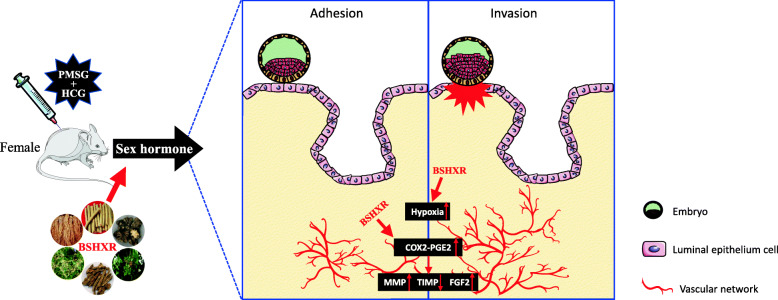
During the fresh cycles of in vitro fertilization and embryo transfer, a disturbance in the reproductive endocrine environment following controlled ovarian hyperstimulation (COH) is closely related to compromised endometrial receptivity. This is a major disadvantage for women during pregnancy. Based on the theory of traditional Chinese medicine, Bushen Huoxue recipe (BSHXR) has been indicated to facilitate embryo implantation.
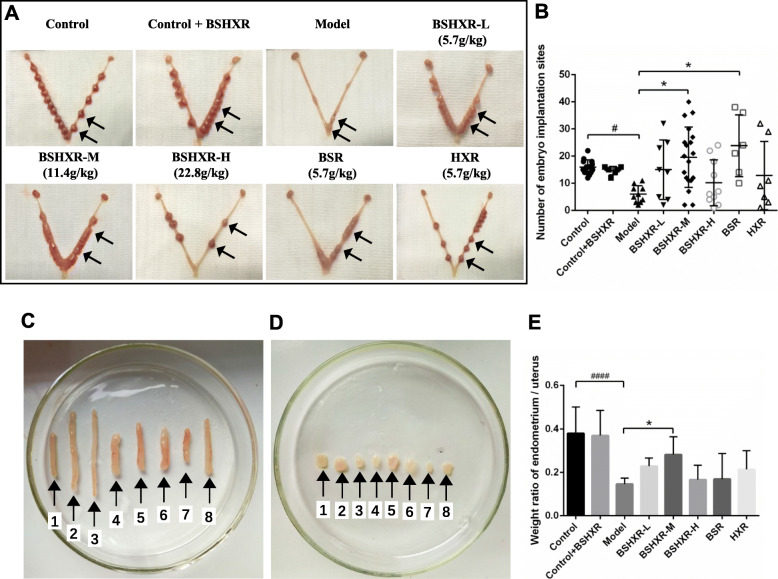
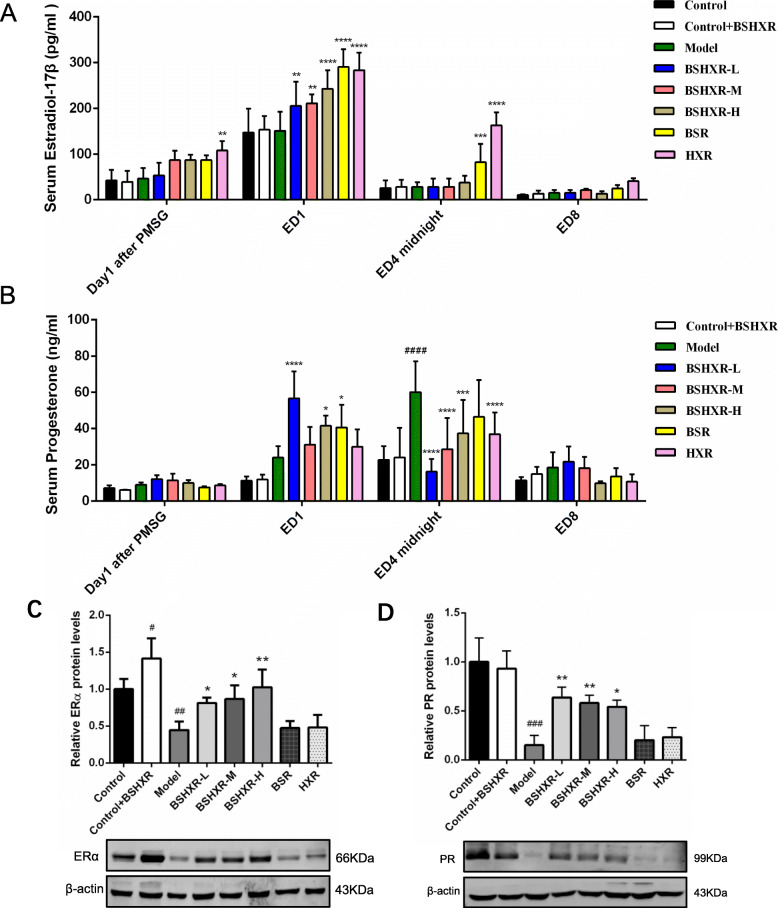
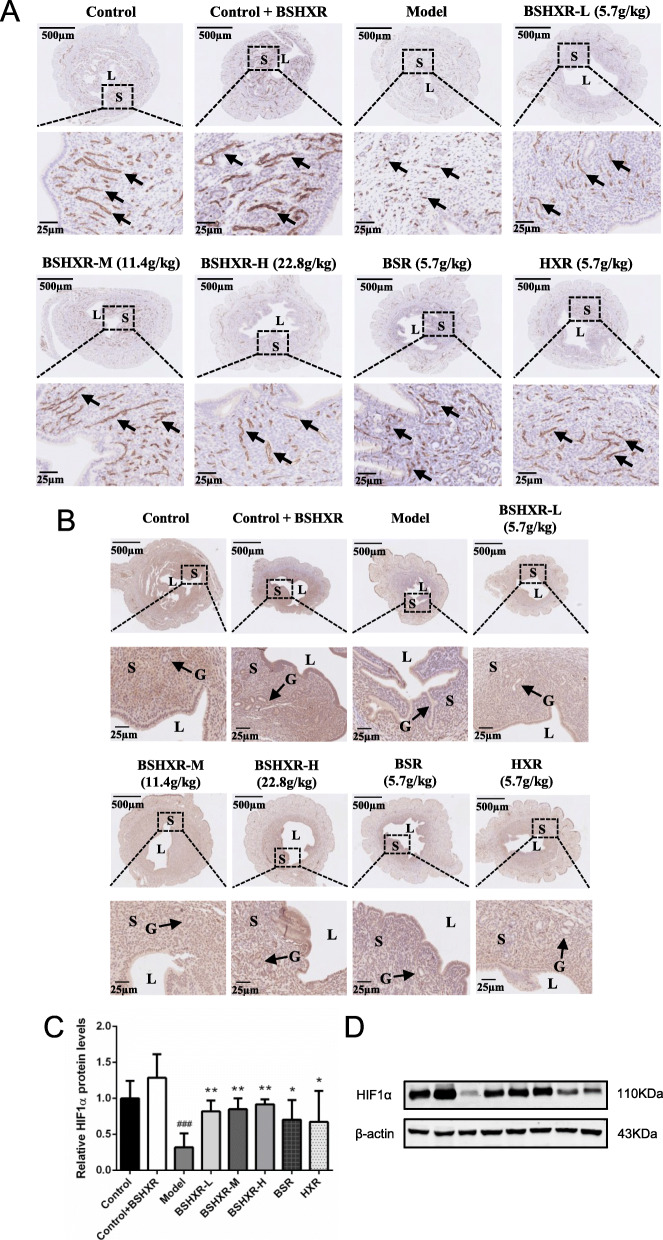
The COH model (Kunming breed) was induced by injecting mice with pregnant mare serum gonadotrophin (0.4 IU/g) and human chorionic gonadotropin (1 IU/g), followed by treatment with BSHXR at three different concentrations (5.7, 11.4, and 22.8 g/kg), Bushen recipe (BSR) (5.7 g/kg), and Huoxue recipe (HXR) (5.7 g/kg). After successful mating, the pregnancy rate and implantation sites were examined on embryo day 8 (ED8), and the weight ratio of endometrium was calculated on ED4 midnight. Serum estrogen, progesterone, and endometrial PGE2 levels were measured using enzyme-linked immunosorbent assay. The endometrial microvasculature was evaluated using CD31 immunostaining. The protein and mRNA levels of the angiogenic factors in the endometrium were evaluated using western blot, immunohistochemistry, and polymerase chain reaction.
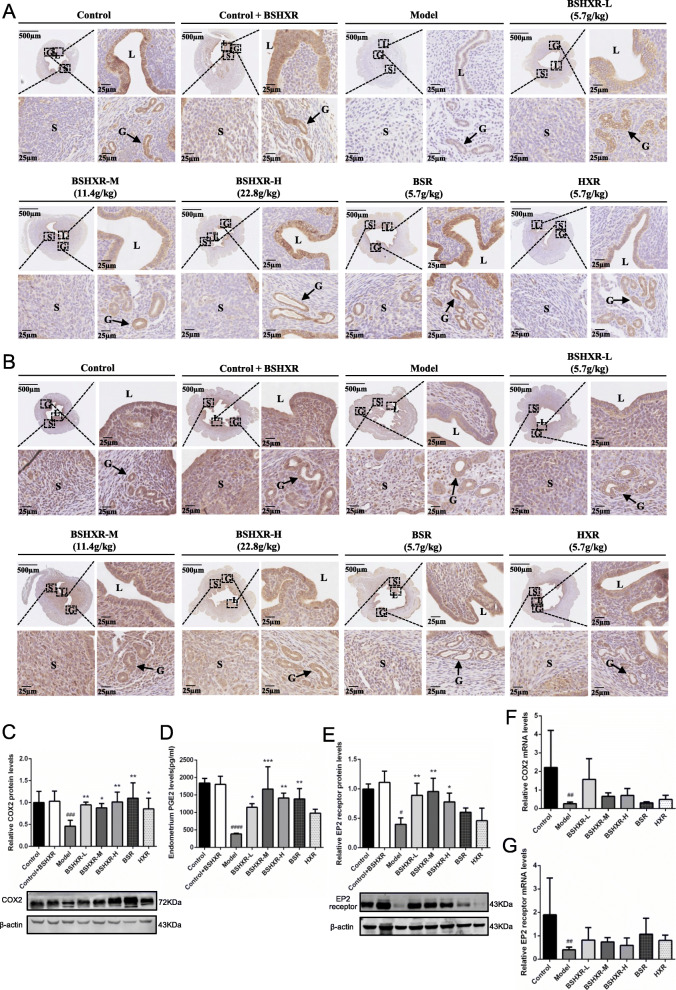
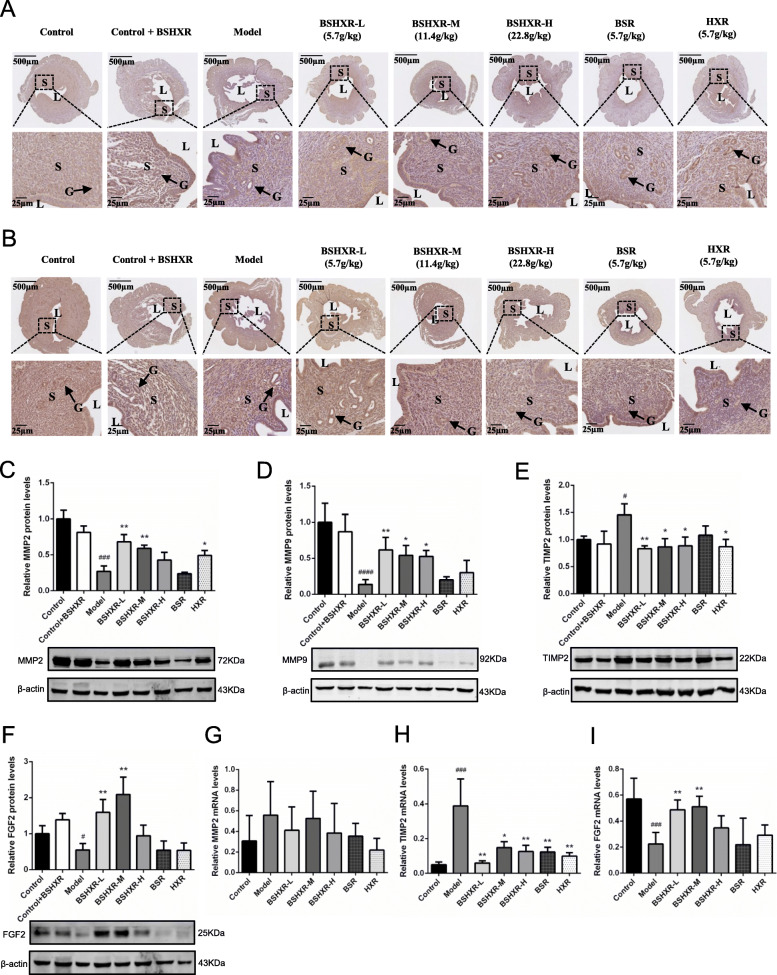
In the COH group, the pregnancy rate and implantation sites were significantly decreased, and abnormal serum hormone levels and impaired endometrial vascular development were observed. After BSHXR treatment, the supraphysiological serum progesterone level in COH mice was restored to normalcy. Moreover, the abnormal expression of the endometrial pro-angiogenic factors, including HIF1α, COX2-PGE2 pathway, and the down-stream factors, namely, MMP2, MMP9, TIMP2, and FGF2 after subjecting mice to COH was significantly improved after BSHXR treatment.
BSHXR could improve embryo implantation by regulating hormonal balance and modulating endometrial angiogenesis in mice, without inducing any side effects in normal pregnancy.
在体外受精和胚胎移植的新鲜周期中,控制性卵巢过度刺激(COH)后生殖内分泌环境的紊乱与子宫内膜容受性受损密切相关。这是女性在怀孕期间的一个主要劣势。基于中医理论,补肾活血方(BSHXR)已被证明有助于胚胎着床。
用孕马血清促性腺激素(0.4IU/g)和人绒毛膜促性腺激素(1IU/g)注射昆明种小鼠诱导 COH 模型,然后用 BSHXR 三个不同浓度(5.7、11.4 和 22.8g/kg)、补肾方(BSR)(5.7g/kg)和活血方(HXR)(5.7g/kg)进行治疗。成功交配后,在胚胎第 8 天(ED8)检查妊娠率和着床部位,并在 ED4 午夜计算子宫内膜重量比。用酶联免疫吸附试验检测血清雌激素、孕激素和子宫内膜 PGE2 水平。用 CD31 免疫组化法评估子宫内膜微血管。用 Western blot、免疫组化和聚合酶链反应评估子宫内膜中血管生成因子的蛋白和 mRNA 水平。
在 COH 组中,妊娠率和着床部位明显下降,血清激素水平异常,子宫内膜血管发育受损。用 BSHXR 治疗后,COH 小鼠超生理血清孕激素水平恢复正常。此外,BSHXR 治疗后,COH 小鼠子宫内膜中促血管生成因子,包括 HIF1α、COX2-PGE2 通路及其下游因子 MMP2、MMP9、TIMP2 和 FGF2 的异常表达得到显著改善。
BSHXR 可通过调节激素平衡和调节小鼠子宫内膜血管生成来改善胚胎着床,而不会在正常妊娠中引起任何副作用。