Department of Radiation Oncology, Cancer Center and State Key Laboratory of Biotherapy, West China Hospital, Sichuan University, Chengdu, China.
College of Physics, Sichuan University, Chengdu, 610065, China.
Radiat Oncol. 2021 Jan 14;16(1):13. doi: 10.1186/s13014-020-01729-7.
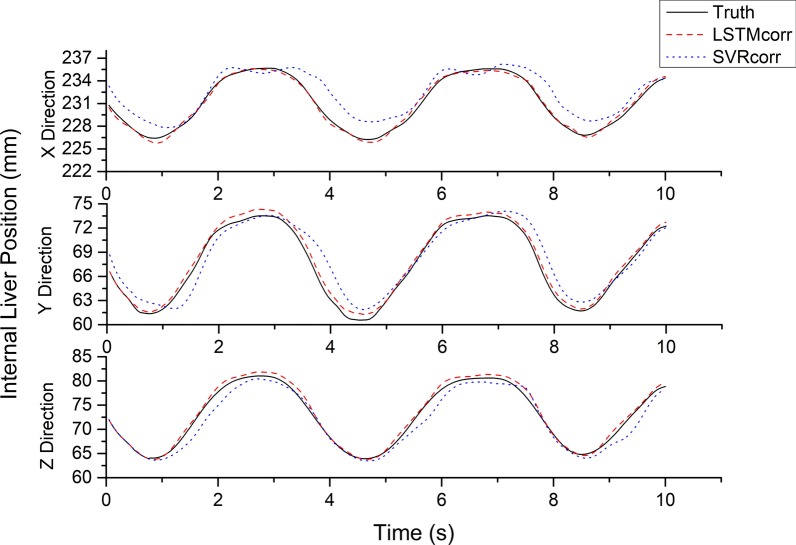
Surface-guided radiation therapy can be used to continuously monitor a patient's surface motions during radiotherapy by a non-irradiating, noninvasive optical surface imaging technique. In this study, machine learning methods were applied to predict external respiratory motion signals and predict internal liver motion in this therapeutic context.
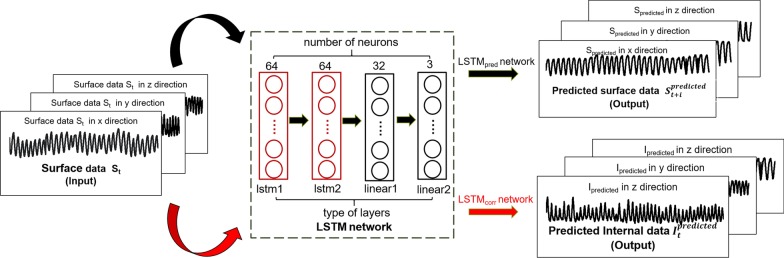
Seven groups of interrelated external/internal respiratory liver motion samples lasting from 5 to 6 min collected simultaneously were used as a dataset, D. Long short-term memory (LSTM) and support vector regression (SVR) networks were then used to establish external respiratory signal prediction models (LSTMpred/SVRpred) and external/internal respiratory motion correlation models (LSTMcorr/SVRcorr). These external prediction and external/internal correlation models were then combined into an integrated model. Finally, the LSTMcorr model was used to perform five groups of model updating experiments to confirm the necessity of continuously updating the external/internal correlation model. The root-mean-square error (RMSE), mean absolute error (MAE), and maximum absolute error (MAX_AE) were used to evaluate the performance of each model.
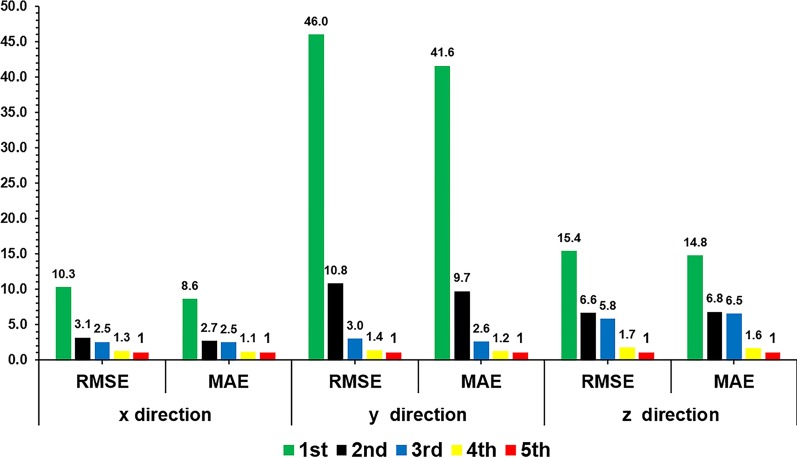
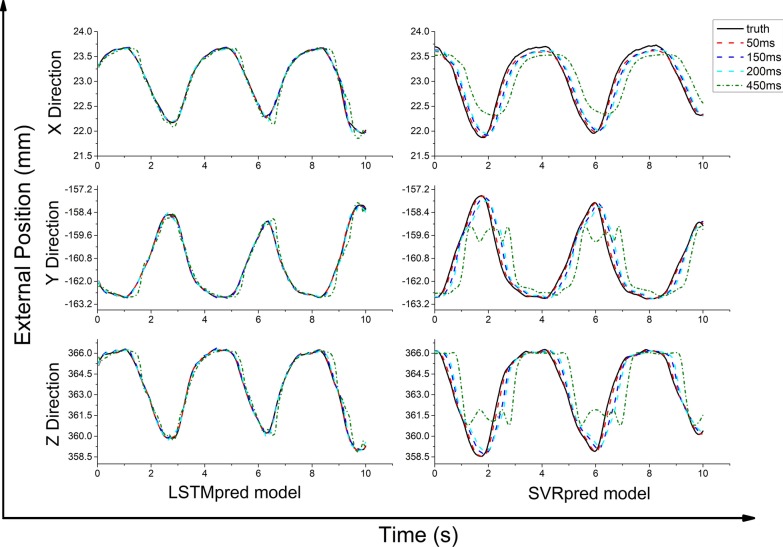
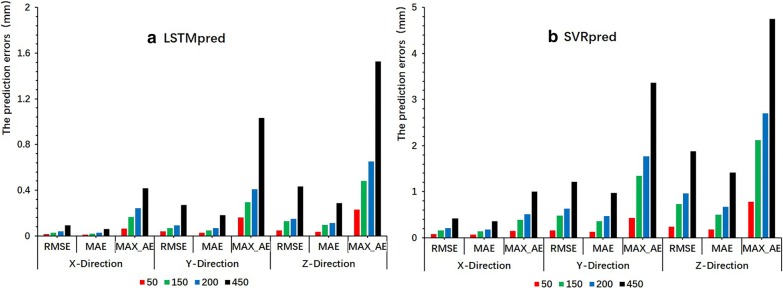
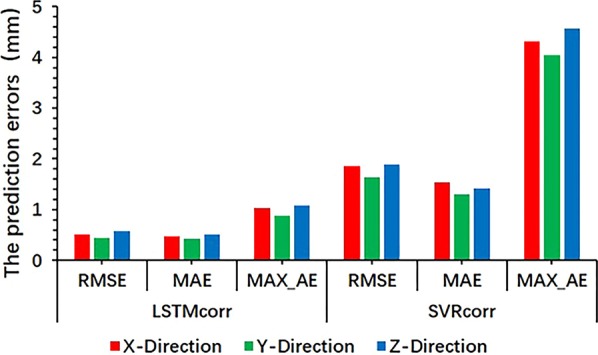
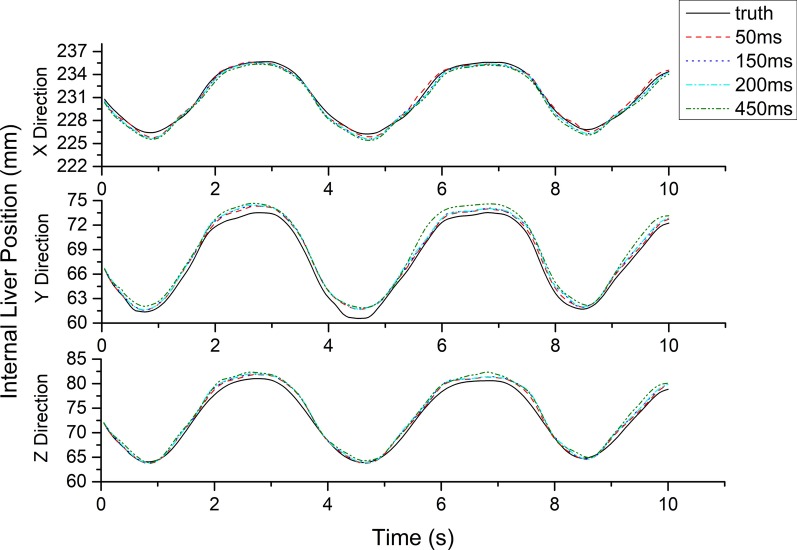
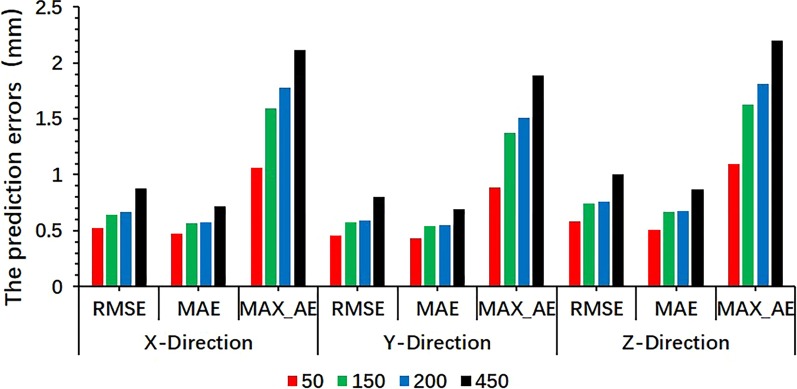
The models established using the LSTM neural network performed better than those established using the SVR network in the tasks of predicting external respiratory signals for latency-compensation (RMSE < 0.5 mm at a latency of 450 ms) and predicting internal liver motion using external signals (RMSE < 0.6 mm). The prediction errors of the integrated model (RMSE ≤ 1.0 mm) were slightly higher than those of the external prediction and external/internal correlation models. The RMSE/MAE of the fifth model update was approximately ten times smaller than that of the first model update.
The LSTM networks outperform SVR networks at predicting external respiratory signals and internal liver motion because of LSTM's strong ability to deal with time-dependencies. The LSTM-based integrated model performs well at predicting liver motion from external respiratory signals with system latencies of up to 450 ms. It is necessary to update the external/internal correlation model continuously.
表面引导放射治疗可以通过非辐射、非侵入性的光学表面成像技术,在放射治疗过程中连续监测患者的表面运动。在这项研究中,机器学习方法被应用于预测外部呼吸运动信号,并在这种治疗环境下预测内部肝脏运动。
使用 7 组相互关联的持续 5 到 6 分钟的外部/内部呼吸肝脏运动样本作为数据集,然后使用长短期记忆(LSTM)和支持向量回归(SVR)网络来建立外部呼吸信号预测模型(LSTMpred/SVRpred)和外部/内部呼吸运动相关模型(LSTMcorr/SVRcorr)。然后将这些外部预测和外部/内部相关模型组合成一个集成模型。最后,使用 LSTMcorr 模型进行 5 组模型更新实验,以确认连续更新外部/内部相关模型的必要性。使用均方根误差(RMSE)、平均绝对误差(MAE)和最大绝对误差(MAX_AE)来评估每个模型的性能。
在预测外部呼吸信号以进行潜伏期补偿(潜伏期为 450 毫秒时 RMSE<0.5 毫米)和使用外部信号预测内部肝脏运动的任务中,基于 LSTM 神经网络建立的模型比基于 SVR 网络建立的模型表现更好(RMSE<0.6 毫米)。集成模型的预测误差(RMSE≤1.0 毫米)略高于外部预测和外部/内部相关模型的预测误差。第五次模型更新的 RMSE/MAE 大约是第一次模型更新的十分之一。
LSTM 网络在预测外部呼吸信号和内部肝脏运动方面优于 SVR 网络,因为 LSTM 具有处理时间依赖性的强大能力。基于 LSTM 的集成模型在预测外部呼吸信号的肝脏运动方面表现良好,系统潜伏期可达 450 毫秒。有必要连续更新外部/内部相关模型。