Department of Radiology, Stanford University School of Medicine, Stanford, CA, USA.
Molecular Imaging Program at Stanford, Stanford University School of Medicine, Stanford, CA, USA.
Sci Rep. 2021 Jan 14;11(1):1341. doi: 10.1038/s41598-020-78947-2.
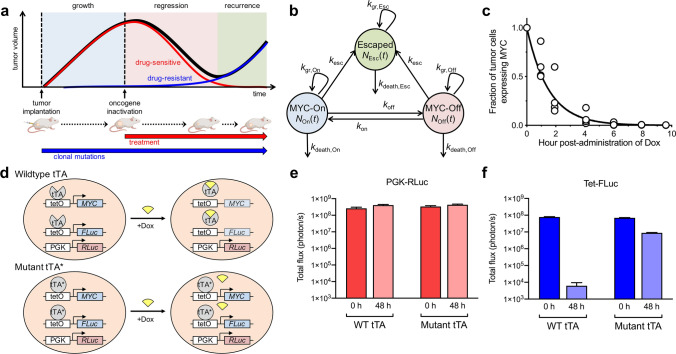
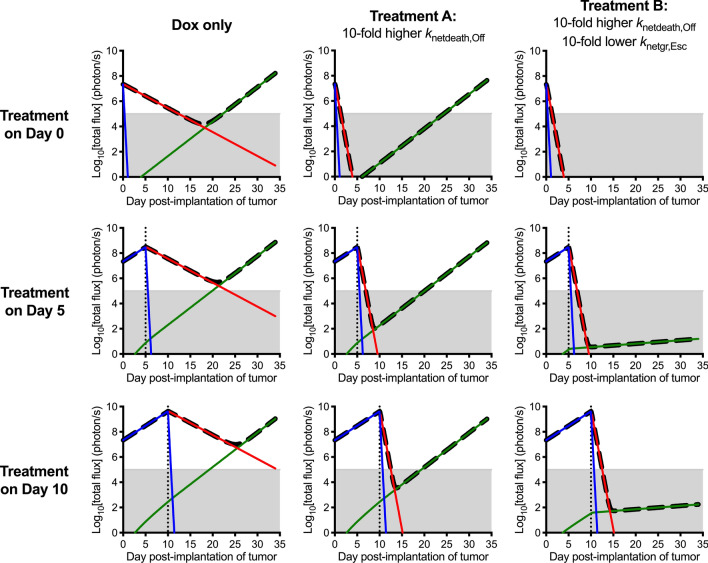
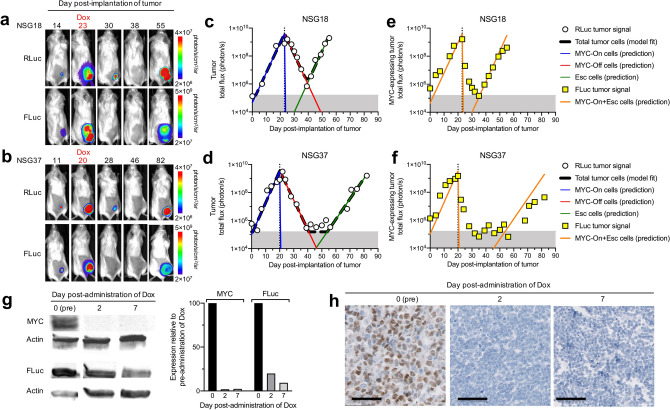
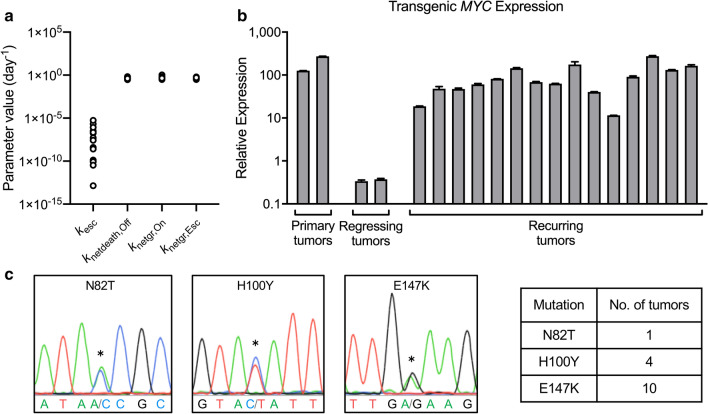
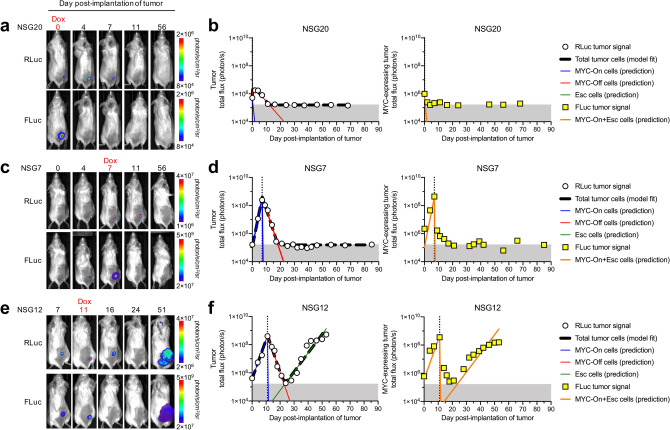
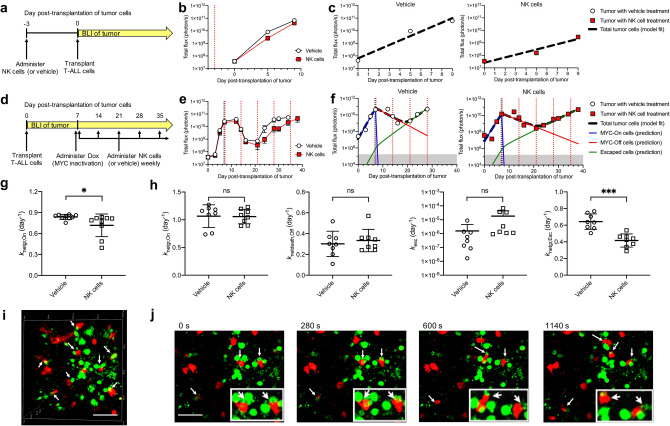
The targeted inactivation of individual oncogenes can elicit regression of cancers through a phenomenon called oncogene addiction. Oncogene addiction is mediated by cell-autonomous and immune-dependent mechanisms. Therapeutic resistance to oncogene inactivation leads to recurrence but can be counteracted by immune surveillance. Predicting the timing of resistance will provide valuable insights in developing effective cancer treatments. To provide a quantitative understanding of cancer response to oncogene inactivation, we developed a new 3-compartment mathematical model of oncogene-driven tumor growth, regression and recurrence, and validated the model using a MYC-driven transgenic mouse model of T-cell acute lymphoblastic leukemia. Our mathematical model uses imaging-based measurements of tumor burden to predict the relative number of drug-sensitive and drug-resistant cancer cells in MYC-dependent states. We show natural killer (NK) cell adoptive therapy can delay cancer recurrence by reducing the net-growth rate of drug-resistant cells. Our studies provide a novel way to evaluate combination therapy for personalized cancer treatment.
通过一种称为癌基因成瘾的现象,靶向敲除个别癌基因可以促使癌症消退。癌基因成瘾是由细胞自主和免疫依赖的机制介导的。对癌基因失活的治疗抵抗会导致复发,但可以通过免疫监视来对抗。预测抵抗的时机将为开发有效的癌症治疗方法提供有价值的见解。为了定量理解癌症对癌基因失活的反应,我们开发了一种新的三隔间癌基因驱动肿瘤生长、消退和复发的数学模型,并使用 MYC 驱动的 T 细胞急性淋巴细胞白血病转基因小鼠模型验证了该模型。我们的数学模型使用基于成像的肿瘤负担测量来预测在 MYC 依赖性状态下药物敏感和药物耐药癌细胞的相对数量。我们表明自然杀伤 (NK) 细胞过继疗法可以通过降低耐药细胞的净增长率来延迟癌症复发。我们的研究为个性化癌症治疗的联合治疗评估提供了一种新方法。