School of Psychology, University of Kent, Canterbury, UK.
School of Psychology, University of Kent, Canterbury, CT2 7NP, UK.
Sci Rep. 2021 Jan 14;11(1):1382. doi: 10.1038/s41598-020-80866-1.
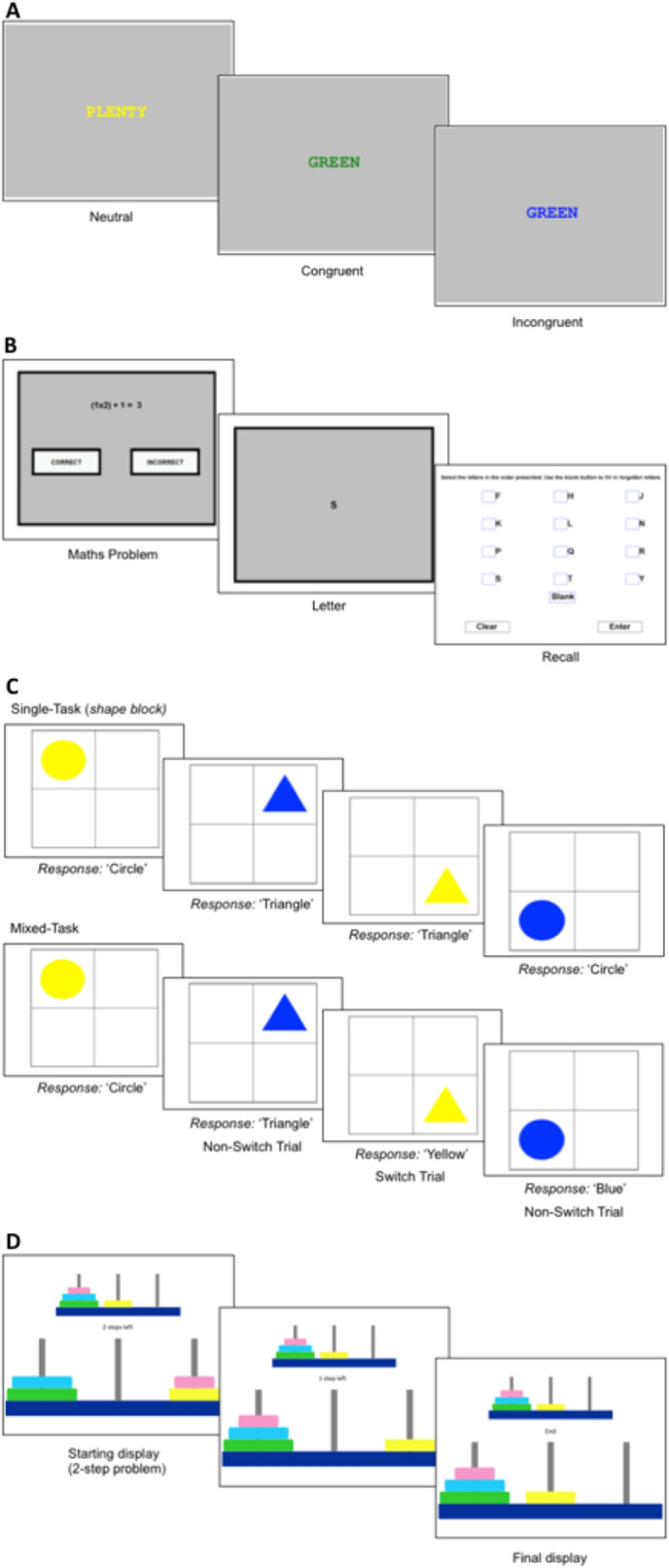
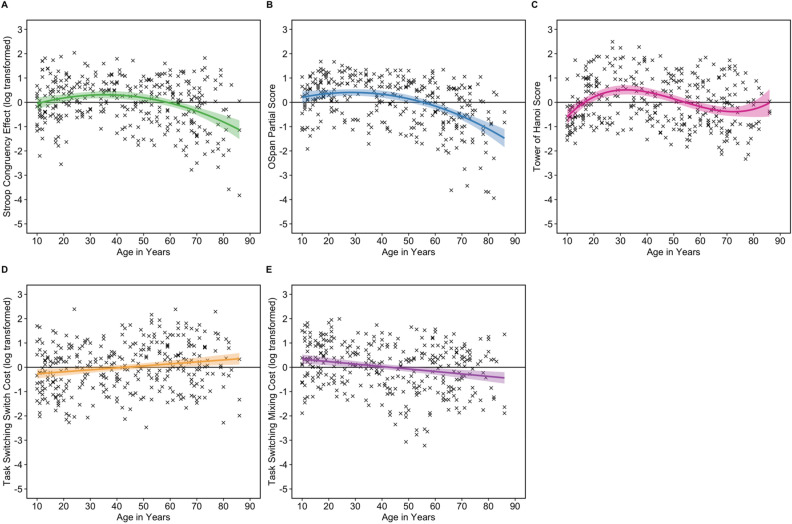
Executive functions demonstrate variable developmental and aging profiles, with protracted development into early adulthood and declines in older age. However, relatively few studies have specifically included middle-aged adults in investigations of age-related differences in executive functions. This study explored the age-related differences in executive function from late childhood through to old age, allowing a more informed understanding of executive functions across the lifespan. Three hundred and fifty participants aged 10 to 86 years-old completed a battery of tasks assessing the specific roles of inhibitory control, working memory, cognitive flexibility, and planning. Results highlighted continued improvement in working memory capacity across adolescence and into young adulthood, followed by declines in both working memory and inhibitory control, beginning from as early as 30-40 years old and continuing into older age. Analyses of planning abilities showed continued improvement across adolescence and into young adulthood, followed by a decline in abilities across adulthood, with a small (positive) change in older age. Interestingly, a dissociation was found for cognitive flexibility; switch costs decreased, yet mixing costs increased across the lifespan. The results provide a description of the developmental differences in inhibitory control, working memory, cognitive flexibility and planning, above any effects of IQ or SES, and highlight the importance of including middle-aged adults in studies seeking to establish a more comprehensive picture of age-related differences in executive function.
执行功能表现出可变的发展和衰老模式,在成年早期之前持续发展,然后在老年时下降。然而,相对较少的研究特别将中年成年人纳入执行功能与年龄相关的差异的研究中。本研究探讨了从儿童后期到老年的执行功能的年龄相关差异,从而更深入地了解整个生命周期的执行功能。350 名年龄在 10 至 86 岁之间的参与者完成了一系列任务,评估了抑制控制、工作记忆、认知灵活性和计划的特定作用。结果强调了工作记忆能力在青春期和青年期持续提高,然后在 30-40 岁左右开始,一直持续到老年,工作记忆和抑制控制都出现下降。对计划能力的分析表明,随着青春期和青年期的发展,计划能力不断提高,然后在成年期下降,老年时略有(积极)改善。有趣的是,发现认知灵活性存在差异;整个生命周期中,转换成本降低,而混合成本增加。这些结果描述了抑制控制、工作记忆、认知灵活性和计划方面的发展差异,超过了智商或 SES 的任何影响,并强调了在研究中纳入中年成年人的重要性,以便更全面地了解执行功能与年龄相关的差异。