Department of Orthopaedics, Sichuan Provincial People's Hospital, University of Electronic Science and Technology of China, Chengdu, China.
Orthop Surg. 2021 Feb;13(1):244-252. doi: 10.1111/os.12915. Epub 2021 Jan 15.
To assess the long-term clinical efficacy of TiRobot-assisted percutaneous cannulated screw fixation in the treatment of femoral neck fractures.
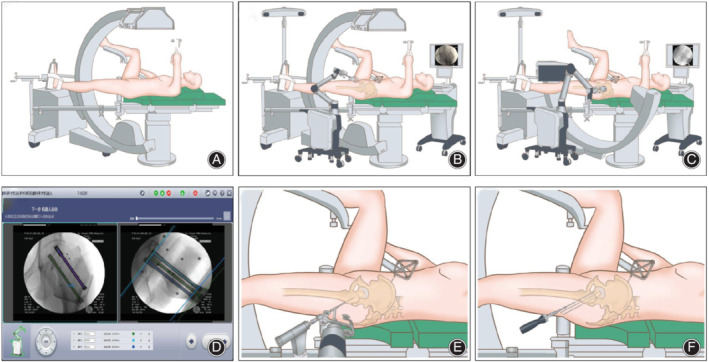
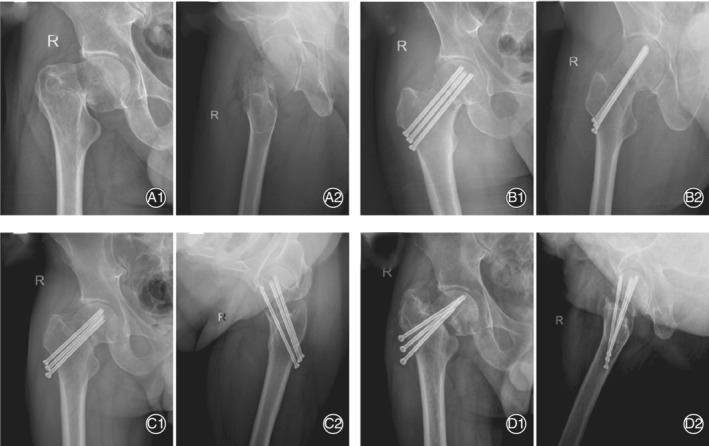
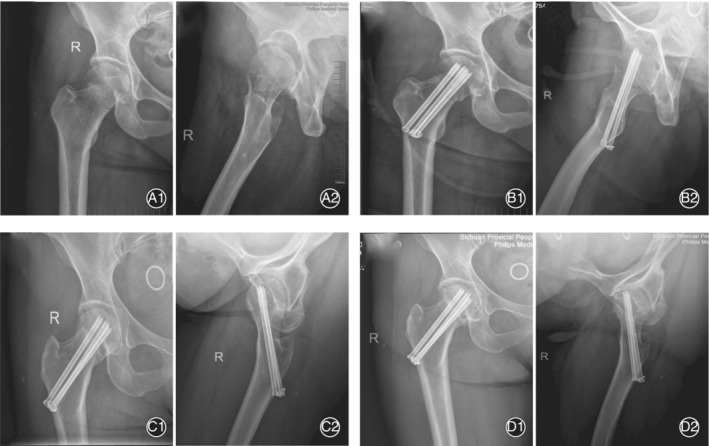
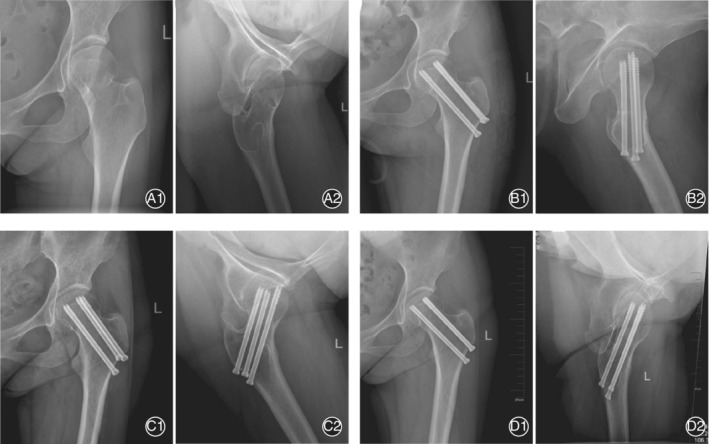
This retrospective study included 50 patients with unilateral femoral neck fractures who were treated with TiRobot-assisted percutaneous cannulated screw fixation from September 2017 to May 2018. After at least 2 years of follow-up, the results of treatment, including operation duration, frequency of fluoroscopy use, intraoperative bleeding, hospital stay, medical expense, screw placement accuracy, rate of fracture healing and necrosis of the femoral head, and Harris hip scores at the last follow up, were recorded and compared with those of 83 matched patients who underwent conventional manual positioning surgery.
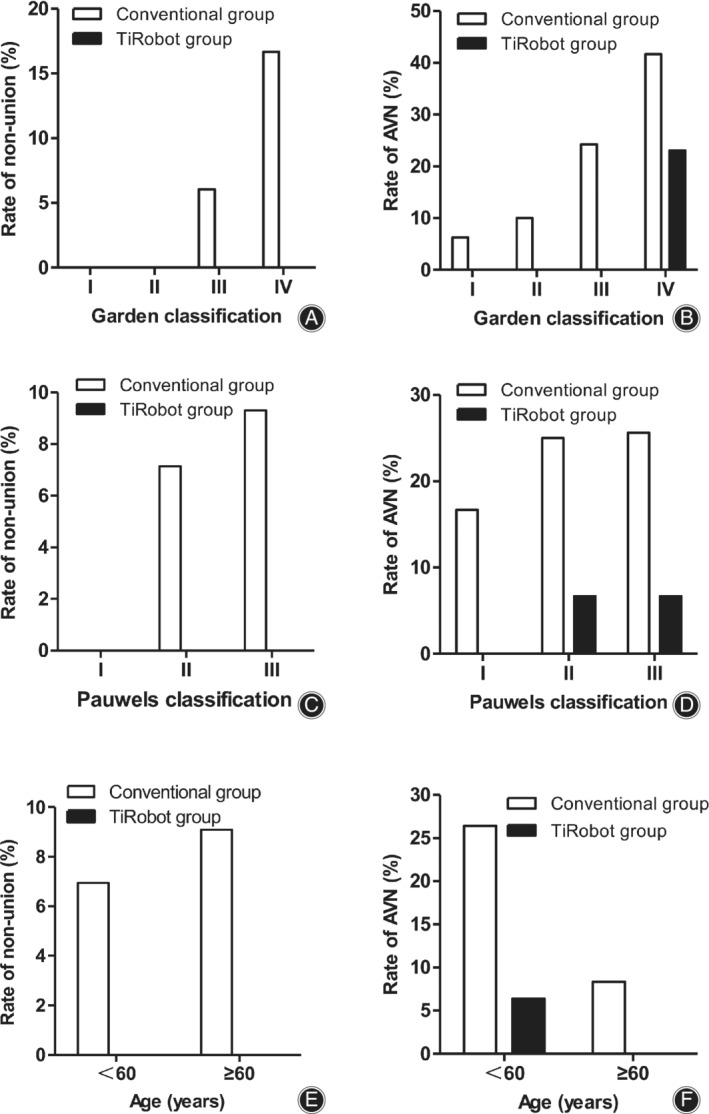
The TiRobot group had longer operation duration (83.3 ± 31.2 min vs 44.1 ± 14.8 min) and higher medical expenses (28,407.1 ± 7498.0 yuan vs 22,672.3 ± 4130.3 yuan) than the conventional group. The TiRobot group had significantly less intraoperative bleeding (11.3 ± 7.3 mL vs 51.6 ± 40.4 mL) and shorter hospital stay (8.6 ± 2.8 days vs 11.1 ± 3.41 days) than the conventional group. Screw parallelism (1.32° ± 1.85° vs 2.54° ± 2.99° on anteroposterior radiograph; 1.42° ± 2.25° vs 3.09° ± 3.63° on lateral radiograph) and distance between screws (58.44 ± 10.52 mm vs 39.69 ± 12.17 mm) were significantly improved. No significant difference was found between the two groups in terms of the use of fluoroscopy (40.1 ± 28.5 times vs 38.6 ± 21.0 times) and Harris hip scores at the last follow-up (93.2 ± 10.3 points vs 88.4 ± 11.9 points). Two cannulated screws penetrated the femoral head during manual insertion in the conventional group but not in the TiRobot group. The rate of nonunion and necrosis of the femoral head in the TiRobot group was reduced compared with that in the conventional group (0 vs 7.2%; 6.0% vs 24.1%).
TiRobot-assisted percutaneous cannulated screw fixation of femoral neck fractures is accurate and minimally invasive and helps in reducing late complications, particularly necrosis of the femoral head and nonunion of fractures.
评估钛机器人辅助经皮空心螺钉固定治疗股骨颈骨折的长期临床疗效。
本回顾性研究纳入了 2017 年 9 月至 2018 年 5 月期间采用钛机器人辅助经皮空心螺钉固定治疗的 50 例单侧股骨颈骨折患者。至少随访 2 年,记录并比较两组患者的治疗结果,包括手术时间、透视使用频率、术中出血量、住院时间、医疗费用、螺钉放置准确性、骨折愈合率和股骨头坏死率,以及末次随访时的 Harris 髋关节评分。并与 83 例采用传统手动定位手术治疗的匹配患者的结果进行比较。
与常规组相比,钛机器人组手术时间更长(83.3 ± 31.2 分钟比 44.1 ± 14.8 分钟),医疗费用更高(28407.1 ± 7498.0 元比 22672.3 ± 4130.3 元)。钛机器人组术中出血量更少(11.3 ± 7.3 毫升比 51.6 ± 40.4 毫升),住院时间更短(8.6 ± 2.8 天比 11.1 ± 3.41 天)。与常规组相比,钛机器人组螺钉平行度(前后位 X 线片 1.32°±1.85°比 2.54°±2.99°;侧位 X 线片 1.42°±2.25°比 3.09°±3.63°)和螺钉间距(58.44 ± 10.52 毫米比 39.69 ± 12.17 毫米)明显改善。两组患者透视使用频率(40.1 ± 28.5 次比 38.6 ± 21.0 次)和末次随访时 Harris 髋关节评分(93.2 ± 10.3 分比 88.4 ± 11.9 分)差异无统计学意义。在常规组中,有 2 根空心螺钉在手动插入时穿透了股骨头,而在钛机器人组中没有。与常规组相比,钛机器人组的骨折不愈合和股骨头坏死发生率降低(0%比 7.2%;6.0%比 24.1%)。
钛机器人辅助经皮空心螺钉固定治疗股骨颈骨折准确、微创,有助于减少晚期并发症,特别是股骨头坏死和骨折不愈合。