Blyuss K B, Kyrychko Y N
Department of Mathematics, University of Sussex, Brighton BN1 9QH, UK.
Department of Mathematics, University of Sussex, Brighton BN1 9QH, UK.
J Theor Biol. 2021 Mar 21;513:110587. doi: 10.1016/j.jtbi.2021.110587. Epub 2021 Jan 13.
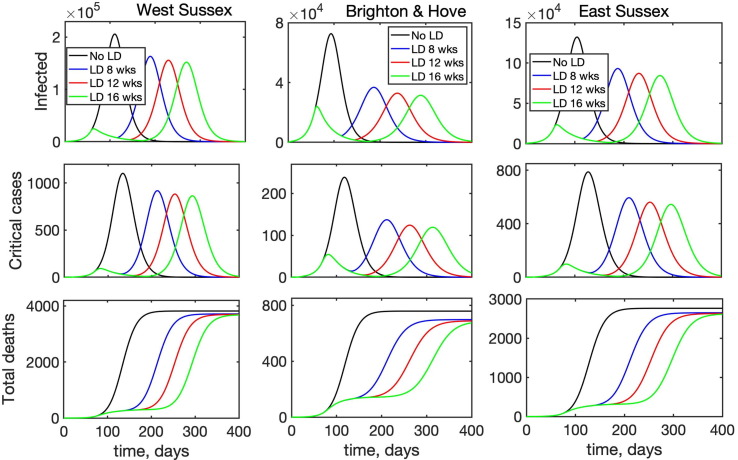
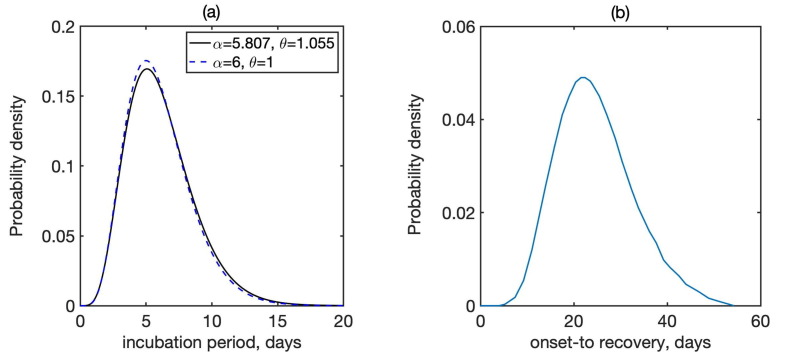
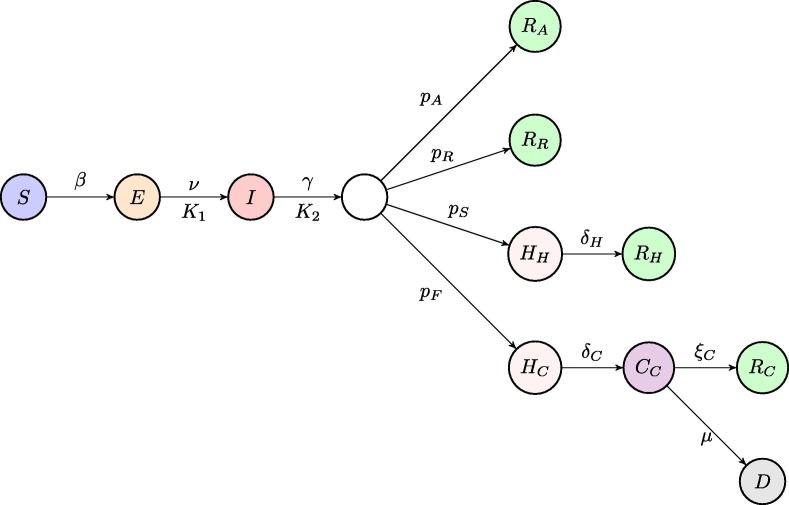
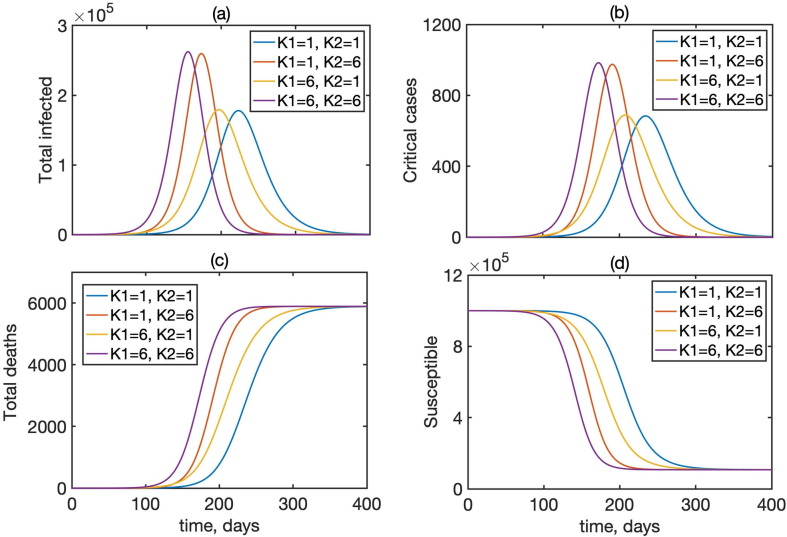
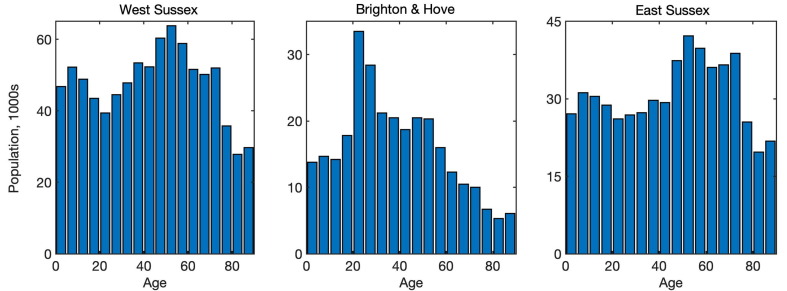
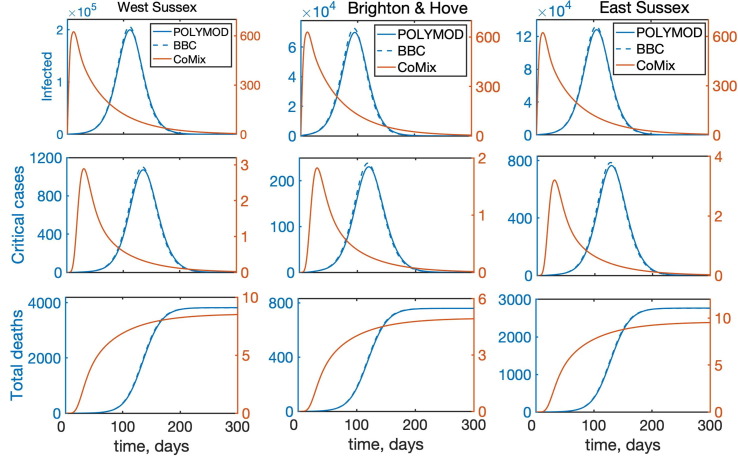
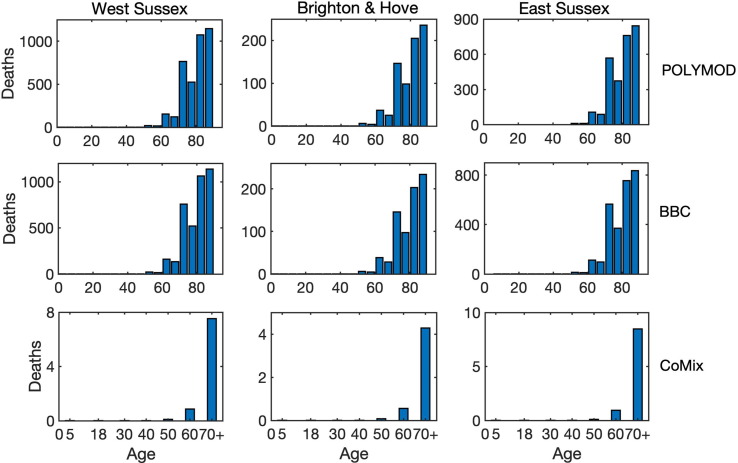
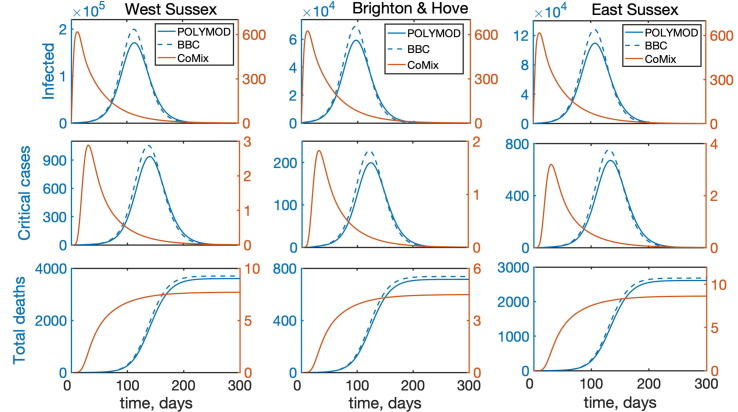
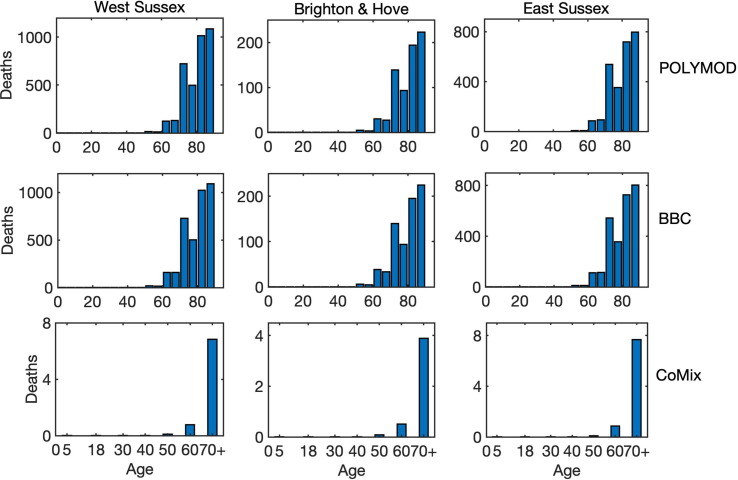
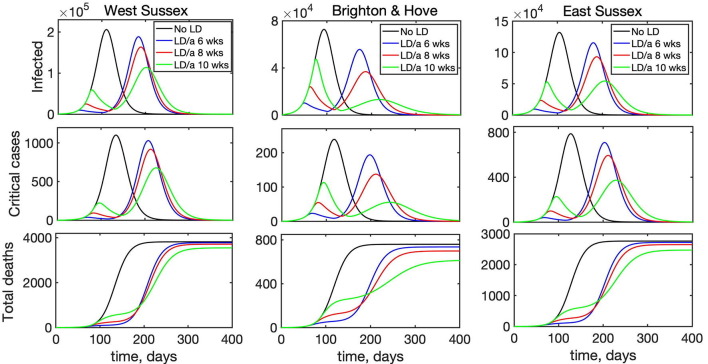
In this paper we develop an SEIR-type model of COVID-19, with account for two particular aspects: non-exponential distribution of incubation and recovery periods, as well as age structure of the population. For the mean-field model, which does not distinguish between different age groups, we demonstrate that including a more realistic Gamma distribution of incubation and recovery periods may not have an effect on the total number of deaths and the overall size of an epidemic, but it has a major effect in terms of increasing the peak numbers of infected and critical care cases, as well as on changing the timescales of an epidemic, both in terms of time to reach the peak, and the overall duration of an outbreak. In order to obtain more accurate estimates of disease progression and investigate different strategies for introducing and lifting the lockdown, we have also considered an age-structured version of the model, which has allowed us to include more accurate data on age-specific rates of hospitalisation and COVID-19 related mortality. Applying this model to three comparable neighbouring regions in the UK has delivered some fascinating insights regarding the effect of lockdown in regions with different population structure. We have discovered that for a fixed lockdown duration, the timing of its start is very important in the sense that the second epidemic wave after lifting the lockdown can be significantly smaller or larger depending on the specific population structure. Also, the later the fixed-duration lockdown is introduced, the smaller is the resulting final number of deaths at the end of the outbreak. When the lockdown is introduced simultaneously for all regions, increasing lockdown duration postpones and slightly reduces the epidemic peak, though without noticeable differences in peak magnitude between different lockdown durations.
在本文中,我们建立了一个新冠肺炎的SEIR型模型,该模型考虑了两个特殊方面:潜伏期和康复期的非指数分布以及人群的年龄结构。对于不区分不同年龄组的平均场模型,我们证明,采用更符合实际的潜伏期和康复期伽马分布可能对死亡总数和疫情总体规模没有影响,但在增加感染和重症病例的峰值数量方面有重大影响,并且在改变疫情的时间尺度方面也有重大影响,包括达到峰值的时间和疫情爆发的总持续时间。为了更准确地估计疾病进展并研究实施和解除封锁的不同策略,我们还考虑了该模型的年龄结构版本,这使我们能够纳入关于特定年龄住院率和新冠肺炎相关死亡率的更准确数据。将该模型应用于英国三个具有可比性的相邻地区,得出了一些关于不同人口结构地区封锁效果的有趣见解。我们发现,对于固定的封锁持续时间,其开始时间非常重要,因为解除封锁后的第二波疫情可能会根据特定的人口结构显著变小或变大。此外,引入固定持续时间封锁的时间越晚,疫情爆发结束时最终的死亡人数就越少。当所有地区同时实施封锁时,延长封锁持续时间会推迟并略微降低疫情峰值,不过不同封锁持续时间之间的峰值幅度没有明显差异。