Department of Preventive Medicine and Public Health, University of Zaragoza, Fundación Instituto de Investigación Sanitaria de Aragón (IIS Aragón), Zaragoza, Spain.
Grupo de Investigación en Servicios Sanitarios de Aragón (GRISSA), Zaragoza, Spain.
PLoS One. 2021 Jan 15;16(1):e0245610. doi: 10.1371/journal.pone.0245610. eCollection 2021.
To analyze patterns of antihypertensive drug use among new users in a Southern European population, and identify patient- and treatment-related factors that influence persistence.
This is a retrospective observational study of new antihypertensive drug users aged ≥40 years in Aragón, Spain. Information on antihypertensive drugs (2014-2016) prescribed and dispensed at pharmacies via the public health system were collected from a regional electronic population-based pharmacy database. Persistence was assessed using the gap method. Kaplan-Meier and Cox regression analyses were conducted to analyze patterns of use and factors that influence persistence.
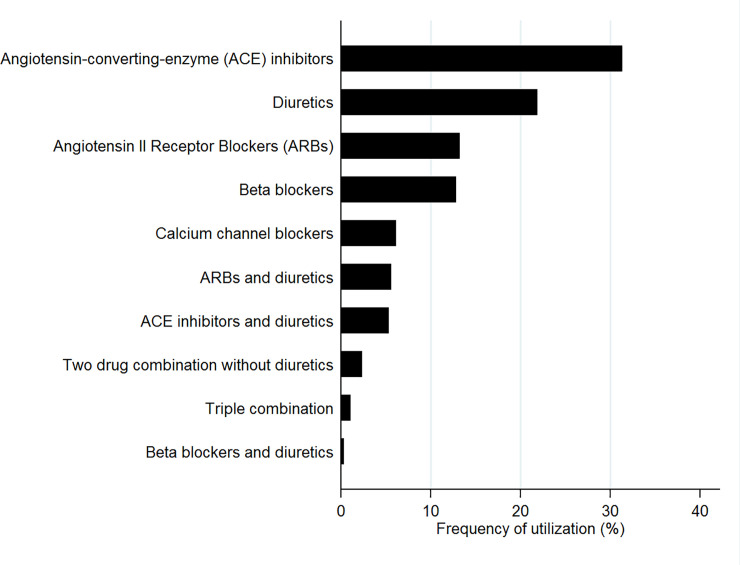
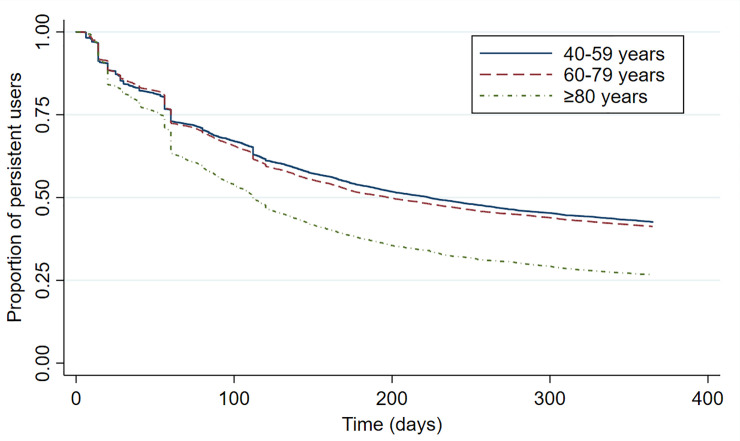
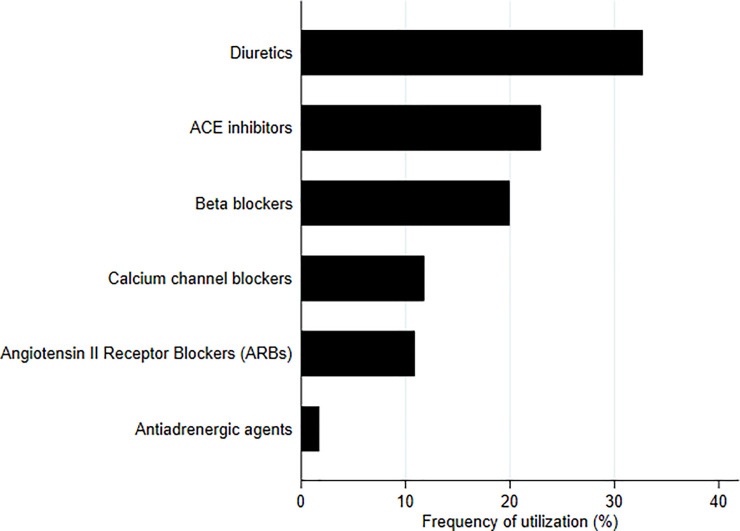
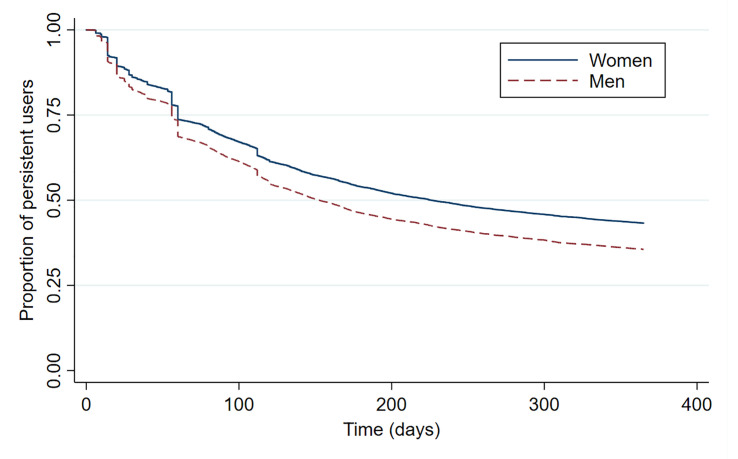
The 25,582 new antihypertensive drug users in Aragón during the study period were prescribed antihypertensive drugs in monotherapy (73.3%), fixed combination (13.9%), free combination (9.1%), or other (3.7%). One in five received antihypertensive drugs within 15 days of the prescription date, but not after. During the first year of follow-up, 38.6% of the study population remained persistent. The likelihood of treatment discontinuation was higher for participants who were male, aged ≥80 years, and received an antihypertensive drug in monotherapy compared with fixed combination.
Overall persistence with antihypertensive therapy was poor, and was influenced by the sex, age and type of therapy. Fixed combinations appear to be a good choice for initial therapy, especially in patients with a higher risk of discontinuation. Nonetheless, adverse drug effects and the patient's preferences and clinical profile should be taken into account.
分析在南欧人群中新使用抗高血压药物的模式,并确定影响持续性的患者和治疗相关因素。
这是一项回顾性观察研究,纳入了西班牙阿拉贡地区≥40 岁的新使用抗高血压药物的患者。通过区域电子人群基于药房的数据库,从公共卫生系统药房收集了 2014 年至 2016 年期间开具和分发的抗高血压药物信息。使用差距法评估持续性。进行 Kaplan-Meier 和 Cox 回归分析,以分析使用模式和影响持续性的因素。
在研究期间,阿拉贡的 25582 名新抗高血压药物使用者接受了单药治疗(73.3%)、固定复方制剂(13.9%)、自由复方制剂(9.1%)或其他(3.7%)。五分之一的人在处方日期后 15 天内收到了抗高血压药物,但之后没有收到。在第一年的随访中,研究人群中有 38.6%的人仍然持续治疗。与固定复方制剂相比,男性、年龄≥80 岁和接受单药治疗的患者停止治疗的可能性更高。
总体上,抗高血压治疗的持续性较差,受性别、年龄和治疗类型的影响。固定复方制剂似乎是初始治疗的不错选择,尤其是在停药风险较高的患者中。然而,应考虑药物不良反应以及患者的偏好和临床特征。