Institute of Psychology, School of Psychology, Jiangxi Normal University, Nanchang 330022, China.
Int J Environ Res Public Health. 2021 Jan 13;18(2):625. doi: 10.3390/ijerph18020625.
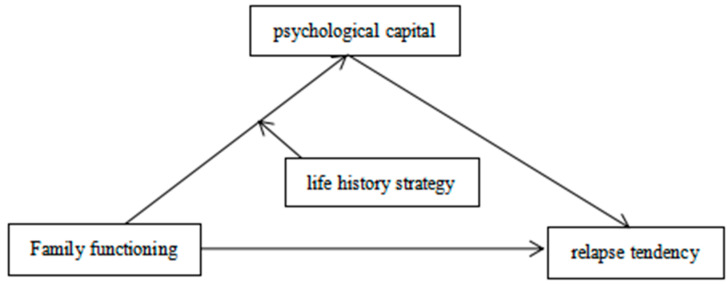
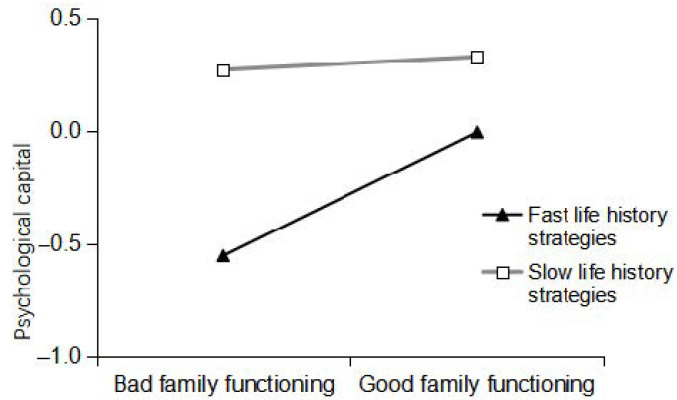
To explore the relationship between family functioning, psychological capital, life history strategy, and relapse tendency of individuals with drug addiction, 842 individuals with drug addiction completed a questionnaire. The results showed that (1) there was a significant negative correlation between the family functioning of individuals with drug addiction and their relapse tendency; (2) psychological capital played an intermediary role between family functioning and relapse tendency; and (3) life history strategy regulated the mediating effect of psychological capital. The results of this study suggest that family members should collaborate with drug addiction treatment centers and participate in the education and treatment process to help reduce drug relapse tendency. Increasing the psychological capital and self-efficacy of individuals with drug addiction through group psychological counseling and psychological education courses could also reduce drug relapse tendency.
为了探讨吸毒者的家庭功能、心理资本、生活史策略与复吸倾向之间的关系,对 842 名吸毒者进行了问卷调查。结果表明:(1)吸毒者的家庭功能与复吸倾向之间存在显著负相关;(2)心理资本在家庭功能与复吸倾向之间起中介作用;(3)生活史策略调节了心理资本的中介作用。本研究结果提示,家庭成员应与戒毒治疗中心合作,参与教育和治疗过程,以帮助降低吸毒者的复吸倾向。通过团体心理咨询和心理教育课程,提高吸毒者的心理资本和自我效能感,也可以降低吸毒者的复吸倾向。