Abdelazim Nema M, Fong Matthew J, McGrath Thomas, Woodhead Christopher S, Al-Saymari Furat, Bagci Ibrahim E, Jones Alex T, Wang Xintai, Young Robert J
Department of Physics, Lancaster University, Bailrigg, LA1 4YB, UK.
School of Electronic and Computer Science, University of Southampton, Southampton, SO17 1BJ, UK.
Sci Rep. 2021 Jan 15;11(1):1528. doi: 10.1038/s41598-020-79644-w.
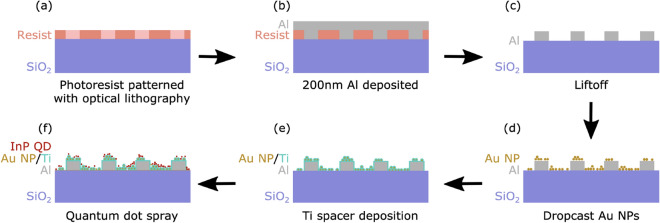
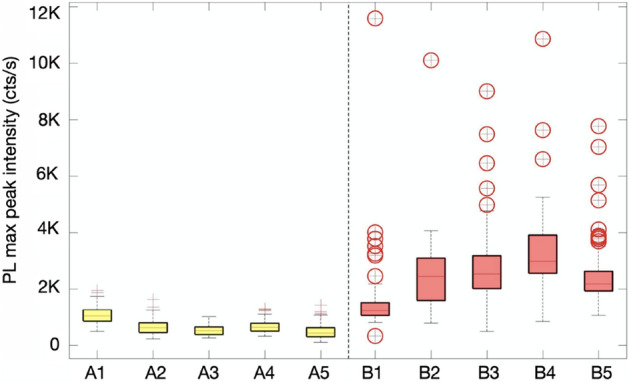
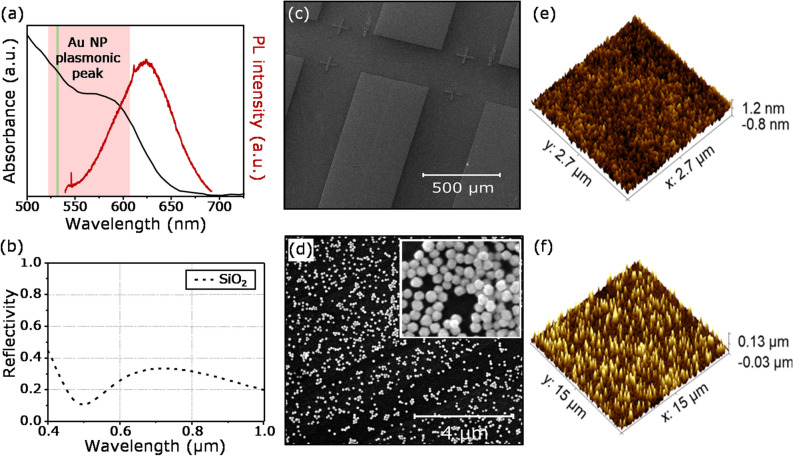
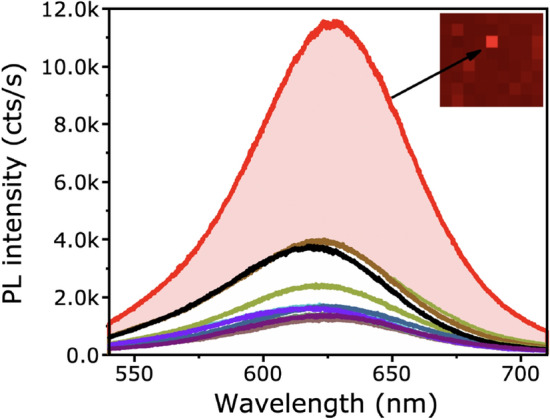
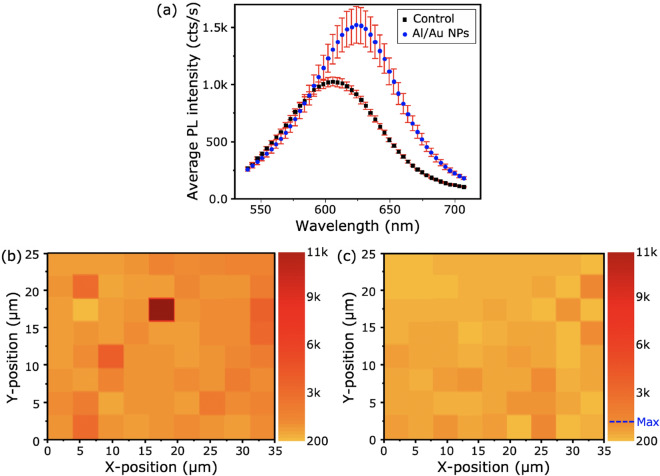
Nanoscale variations in the structure and composition of an object are an enticing basis for verifying its identity, due to the physical complexity of attempting to reproduce such a system. The biggest practical challenge for nanoscale authentication lies in producing a system that can be assessed with a facile measurement. Here, a system is presented in which InP/ZnS quantum dots (QDs) are randomly distributed on a surface of an aluminium-coated substrate with gold nanoparticles (Au NPs). Variations in the local arrangement of the QDs and NPs is shown to lead to interactions between them, which can suppress or enhance fluorescence from the QDs. This position-dependent interaction can be mapped, allowing intensity, emission dynamics, and/or wavelength variations to be used to uniquely identify a specific sample at the nanoscale with a far-field optical measurement. This demonstration could pave the way to producing robust anti-counterfeiting devices.
由于试图重现这样一个系统的物理复杂性,物体结构和组成的纳米级变化是验证其身份的诱人基础。纳米级认证面临的最大实际挑战在于生产一种可以通过简便测量进行评估的系统。在此,展示了一种系统,其中磷化铟/硫化锌量子点(QDs)与金纳米颗粒(Au NPs)随机分布在涂有铝的基板表面。量子点和纳米颗粒的局部排列变化被证明会导致它们之间的相互作用,这可以抑制或增强量子点的荧光。这种位置依赖性相互作用可以被映射,从而允许利用强度、发射动力学和/或波长变化,通过远场光学测量在纳米尺度上唯一地识别特定样本。这一演示可为生产强大的防伪装置铺平道路。