Physics Department, Lancaster University, Bailrigg, LA1 4YB, UK.
School of Electronics and Computer Science, University of Southampton, Southampton, SO17 1BJ, UK.
Sci Rep. 2022 Oct 8;12(1):16919. doi: 10.1038/s41598-022-20596-8.
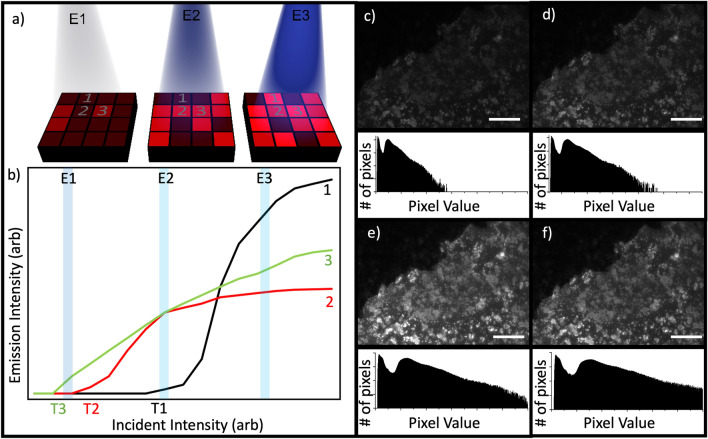
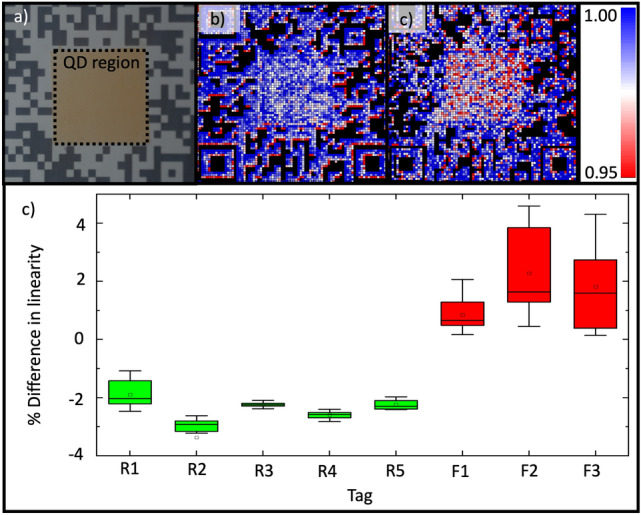
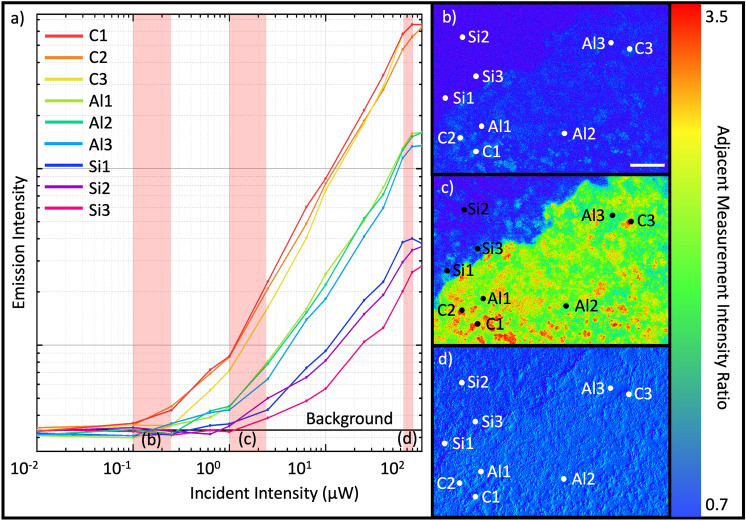
Unique identification of optical devices is important for anti-counterfeiting. Physical unclonable functions (PUFs), which use random physical characteristics for authentication, are advantageous over existing optical solutions, such as holograms, due to the inherent asymmetry in their fabrication and reproduction complexity. However, whilst unique, PUFs are potentially vulnerable to replication and simulation. Here we introduce an additional benefit of a small modification to an established model of nanoparticle PUFs by using a second measurement parameter to verify their authenticity. A randomly deposited array of quantum dots is encapsulated in a transparent polymer, forming a tag. Photoluminescence is measured as a function of excitation power to assess uniqueness as well as the intrinsic nonlinear response of the quantum material. This captures a fingerprint, which is non-trivial to clone or simulate. To demonstrate this concept practically, we show that these tags can be read using an unmodified smartphone, with its built-in flash for excitation. This development over constellation-style optical PUFs paves the way for more secure, facile authentication of devices without requiring complex fabrication or characterisation techniques.
光学器件的唯一标识对于防伪至关重要。物理不可克隆函数(PUF)利用随机物理特性进行身份验证,与现有光学解决方案(如全息图)相比具有优势,因为它们的制造和复制复杂性存在固有不对称性。然而,尽管 PUF 是独特的,但它们可能容易受到复制和模拟的影响。在这里,我们通过使用第二个测量参数来验证其真实性,对已建立的纳米粒子 PUF 模型进行了小的修改,从而引入了一个额外的好处。将随机沉积的量子点阵列封装在透明聚合物中,形成标签。通过测量光致发光作为激发功率的函数来评估独特性以及量子材料的固有非线性响应。这捕获了一个难以克隆或模拟的指纹。为了实际演示这个概念,我们展示了这些标签可以使用未修改的智能手机读取,智能手机的内置闪光灯用于激发。这种发展超越了星座式光学 PUF,为设备的更安全、更便捷认证铺平了道路,而无需复杂的制造或表征技术。