Laboratory for Neuroimmunology, Department of Neurosciences, KU Leuven, Herestraat 49, Box 1022, 3000, Leuven, Belgium.
Leuven Brain Institute KU Leuven, Leuven, Belgium.
Sci Rep. 2021 Jan 15;11(1):1573. doi: 10.1038/s41598-021-81035-8.
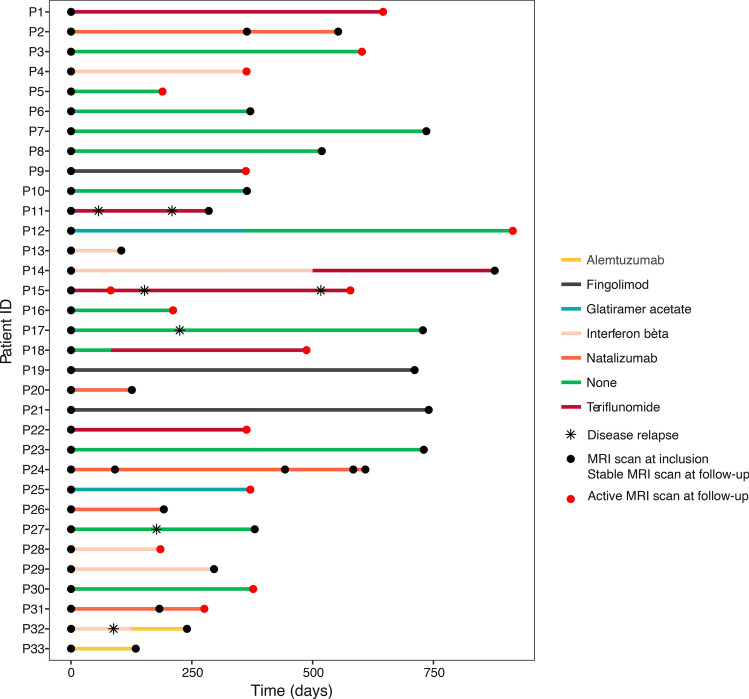
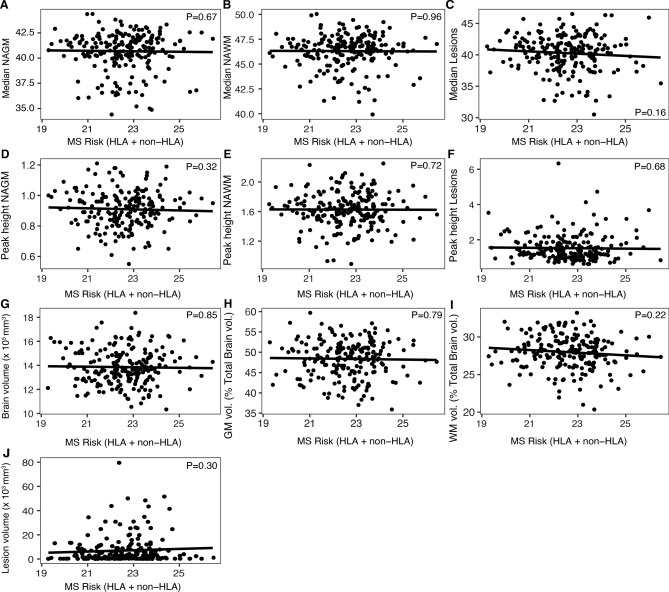
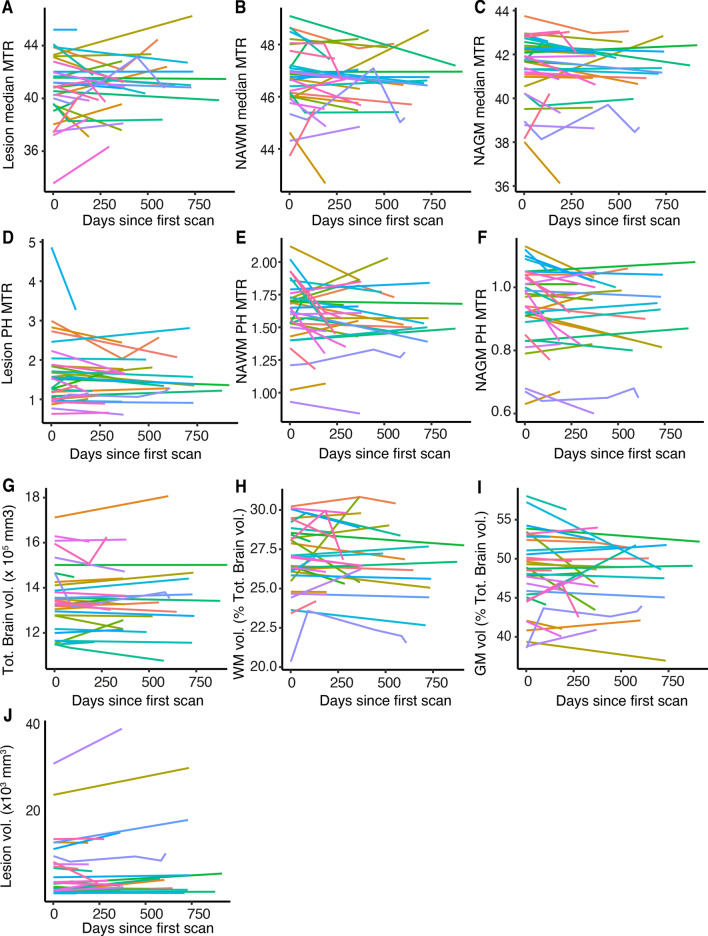
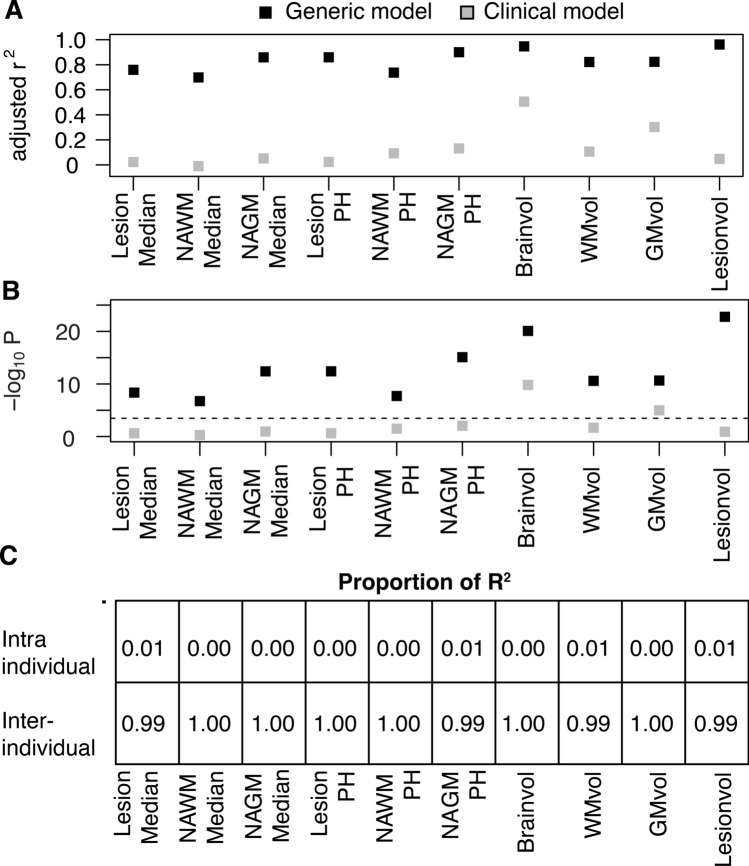
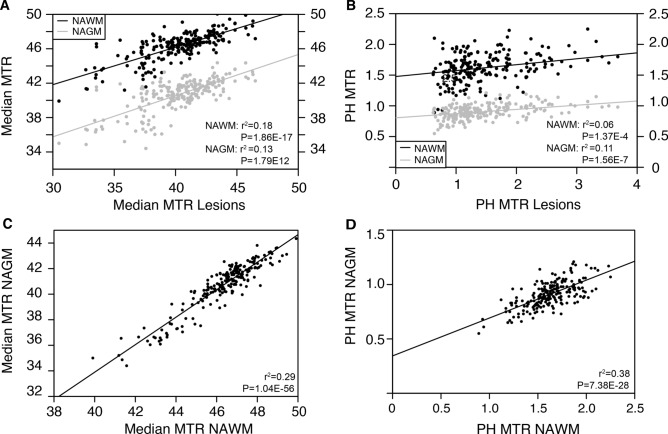
Magnetization transfer ratio (MTR) and brain volumetric imaging are (semi-)quantitative MRI markers capturing demyelination, axonal degeneration and/or inflammation. However, factors shaping variation in these traits are largely unknown. In this study, we collected a longitudinal cohort of 33 multiple sclerosis (MS) patients and extended it cross-sectionally to 213. We measured MTR in lesions, normal-appearing white matter (NAWM), normal-appearing grey matter (NAGM) and total brain, grey matter, white matter and lesion volume. We also calculated the polygenic MS risk score. Longitudinally, inter-patient differences at inclusion and intra-patient changes during follow-up together explained > 70% of variance in MRI, with inter-patient differences at inclusion being the predominant source of variance. Cross-sectionally, we observed a moderate correlation of MTR between NAGM and NAWM and, less pronounced, with lesions. Age and gender explained about 30% of variance in total brain and grey matter volume. However, they contributed less than 10% to variance in MTR measures. There were no significant associations between MRI traits and the genetic risk score. In conclusion, (semi-)quantitative MRI traits change with ongoing disease activity but this change is modest in comparison to pre-existing inter-patient differences. These traits reflect individual variation in biological processes, which appear different from those involved in genetic MS susceptibility.
磁化传递率(MTR)和脑容积成像(半)定量 MRI 标志物可捕获脱髓鞘、轴突变性和/或炎症。然而,影响这些特征变化的因素在很大程度上尚不清楚。在这项研究中,我们收集了 33 例多发性硬化症(MS)患者的纵向队列,并将其扩展为 213 例横向队列。我们测量了病变、正常表现的白质(NAWM)、正常表现的灰质(NAGM)和全脑、灰质、白质和病变体积的 MTR。我们还计算了多基因 MS 风险评分。纵向分析表明,纳入时的患者间差异和随访期间的患者内变化共同解释了 MRI 中超过 70%的变异性,其中纳入时的患者间差异是变异性的主要来源。横向分析显示,NAGM 与 NAWM 之间存在中等程度的 MTR 相关性,与病变之间的相关性较小。年龄和性别解释了全脑和灰质体积变异性的约 30%。然而,它们对 MTR 测量的变异性贡献不到 10%。MRI 特征与遗传风险评分之间没有显著关联。总之,(半)定量 MRI 特征随疾病活动的持续而变化,但与预先存在的患者间差异相比,这种变化是适度的。这些特征反映了个体生物学过程的差异,与涉及遗传 MS 易感性的过程不同。