Department of Surgery, The First Affiliated Hospital, Zhejiang University School of Medicine, Hangzhou, China.
Department of Pathology, The First Affiliated Hospital, Zhejiang University School of Medicine, Hangzhou, China.
J Cell Mol Med. 2021 Feb;25(3):1750-1758. doi: 10.1111/jcmm.16281. Epub 2021 Jan 16.
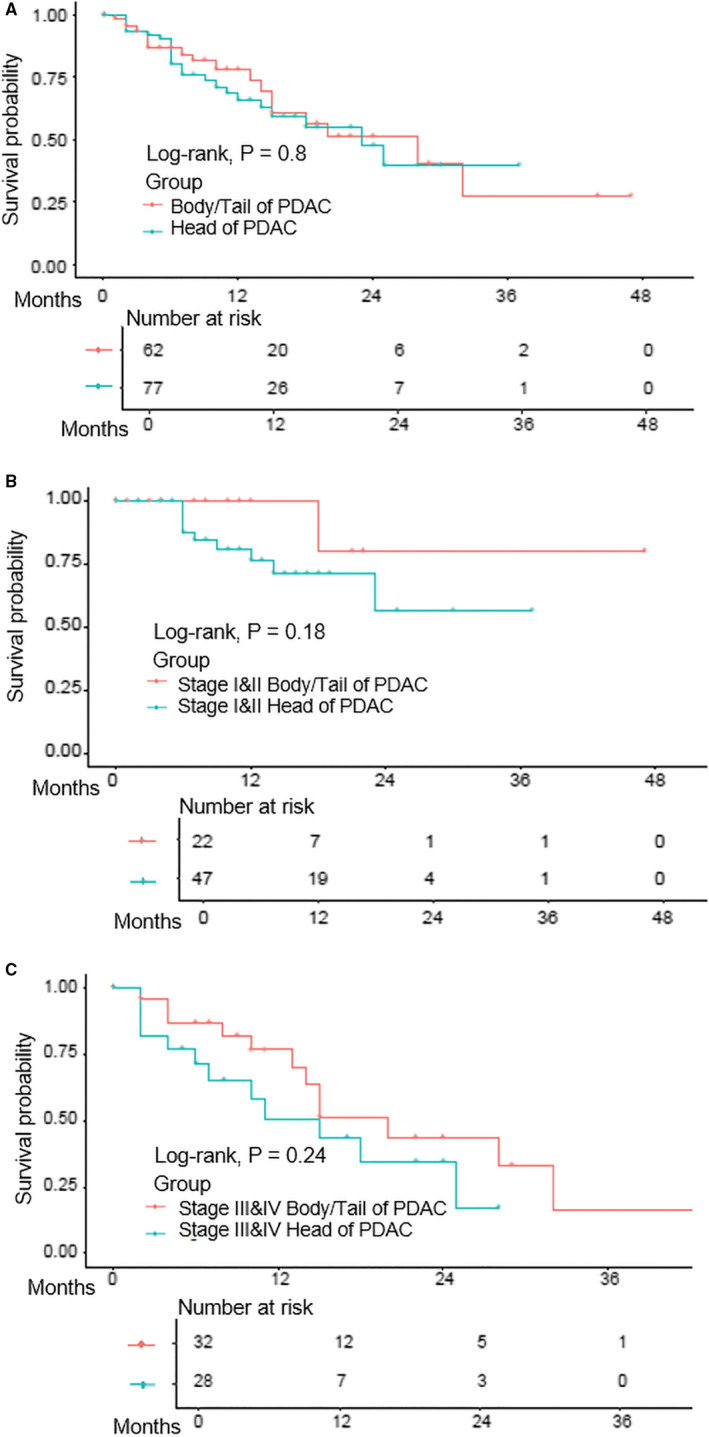
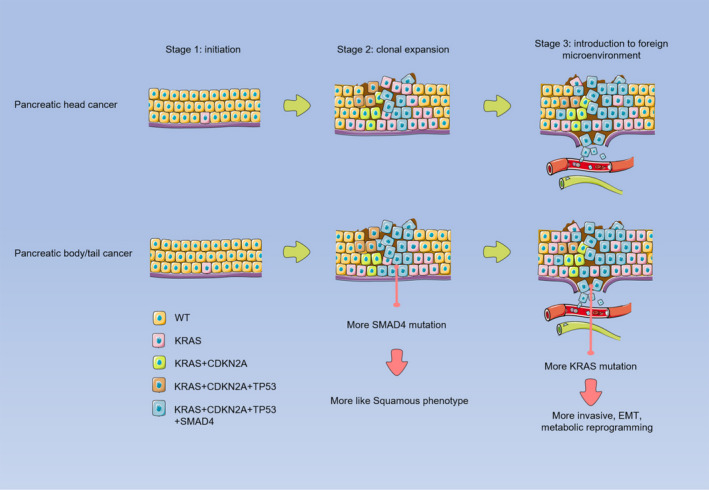
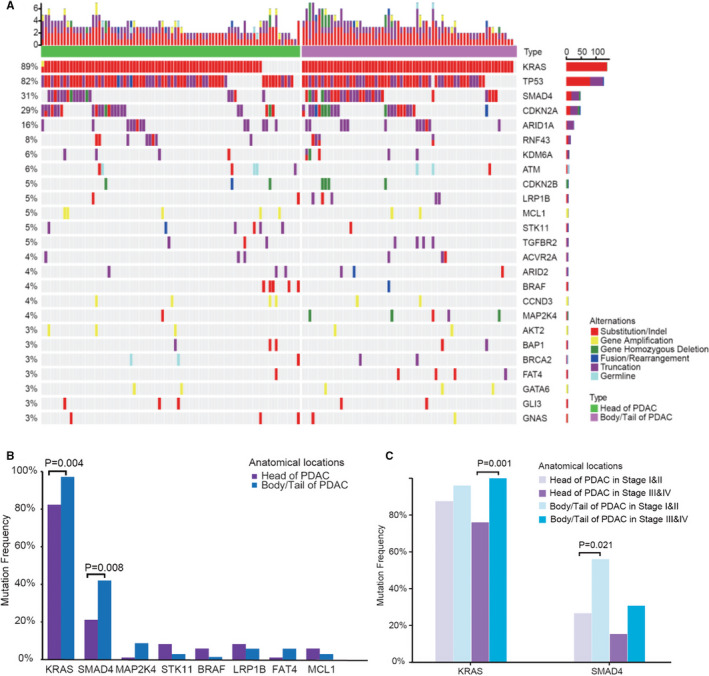
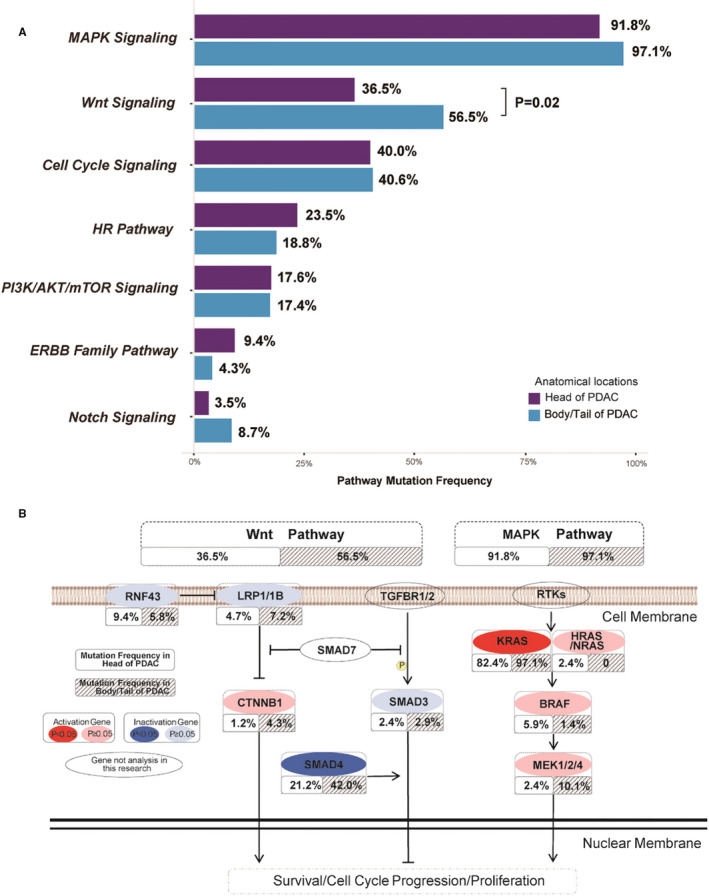
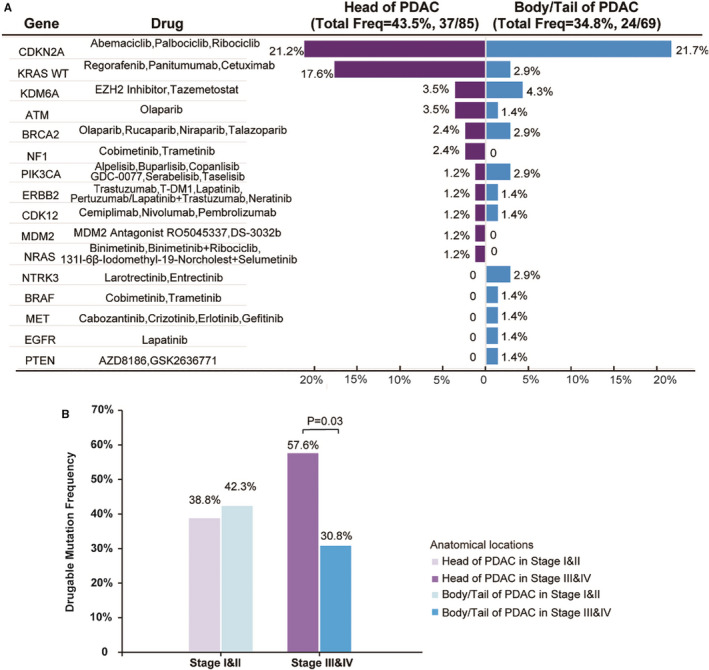
Pancreatic ductal adenocarcinoma (PDAC), one of the most lethal human cancers, can be divided into head and body/tail cancers anatomically. We previously reported a prognostic relevance of tumour location in resectable PDAC. This study aimed to further explore the mechanism underlying the molecular diversity between the head and body/tail of PDACs. We detected tumour genomes in 154 resectable (surgery) and non-resectable (biopsy) PDACs using a next-generation sequencing panel. Wilcoxon's rank test or Fisher's exact test was used for evaluating associations between clinical characteristics, mutation frequency and survival probability between the two cohorts. Compared with pancreatic head cancers, pancreatic body/tail cancers showed significantly more enriched genomic alterations in KRAS (97.1% vs 82.4%, P = 0.004) and SMAD4 (42.0% vs 21.2%, P = 0.008). At early stages (I-II), the SMAD4 mutation rate was significantly higher in pancreatic body/tail cancers than pancreatic head cancers (56.0% vs 26.5%, P = 0.021). At late stages (III-IV), pancreatic body/tail cancers presented significantly higher KRAS mutation rate (100.0% vs 75.8%, P = 0.001), higher frequency of MAPK pathway mutation (100% vs 87.8%, P = 0.040) and lower rates of druggable genomic alterations (30.8% vs 57.6%, P = 0.030) than pancreatic head cancers. Our work points out that pancreatic body/tail cancer seems to be more malignant than pancreatic head cancer at late stages.
胰腺导管腺癌(PDAC)是最致命的人类癌症之一,可根据解剖位置分为头、体/尾癌。我们之前报道过可切除 PDAC 中肿瘤位置与预后的相关性。本研究旨在进一步探索 PDAC 头、体/尾之间分子多样性的潜在机制。我们使用下一代测序 panel 检测了 154 例可切除(手术)和不可切除(活检)PDAC 的肿瘤基因组。Wilcoxon 秩检验或 Fisher 确切检验用于评估两组之间临床特征、突变频率和生存概率之间的相关性。与胰腺头癌相比,胰腺体/尾癌在 KRAS(97.1%比 82.4%,P=0.004)和 SMAD4(42.0%比 21.2%,P=0.008)中的基因组改变更为丰富。在早期(I-II 期),胰腺体/尾癌中 SMAD4 突变率明显高于胰腺头癌(56.0%比 26.5%,P=0.021)。在晚期(III-IV 期),胰腺体/尾癌 KRAS 突变率显著升高(100.0%比 75.8%,P=0.001),MAPK 通路突变频率更高(100%比 87.8%,P=0.040),可药物治疗的基因组改变率更低(30.8%比 57.6%,P=0.030)。我们的工作表明,在晚期,胰腺体/尾癌似乎比胰腺头癌更具恶性。