Department of Orthopedics, Union Hospital, Tongji Medical College, Huazhong University of Science and Technology, Wuhan, Hubei, China (mainland).
Department of Orthopedic Surgery, Shanghai Key Laboratory of Orthopedic Implants, Shanghai Ninth People's Hospital, Shanghai Jiaotong University School of Medicine, Shanghai, China (mainland).
Med Sci Monit. 2021 Jan 16;27:e927920. doi: 10.12659/MSM.927920.
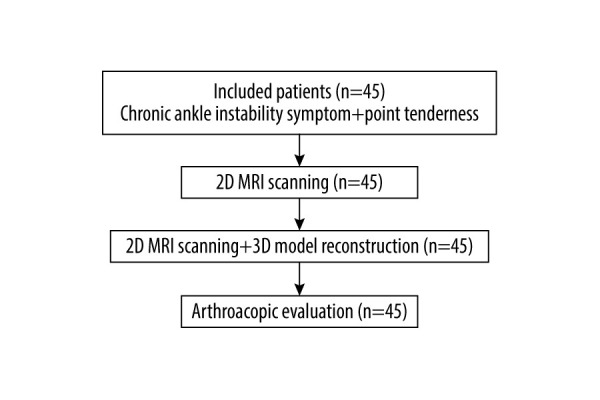
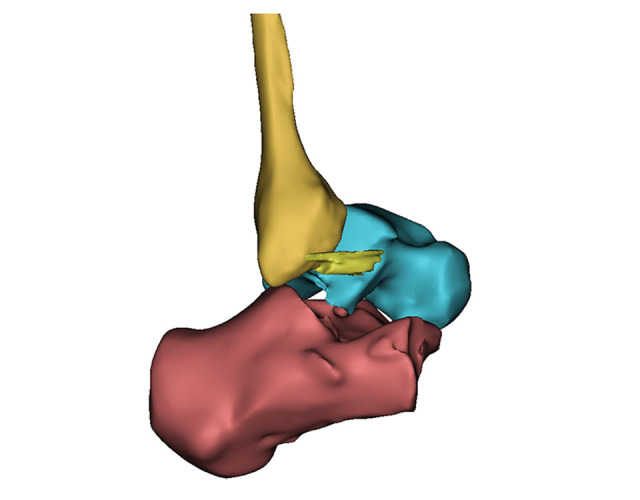
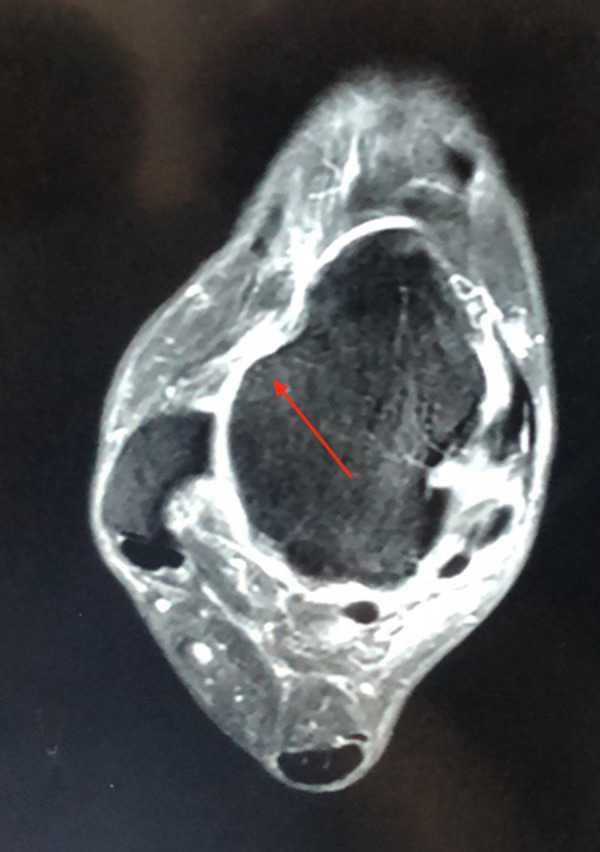
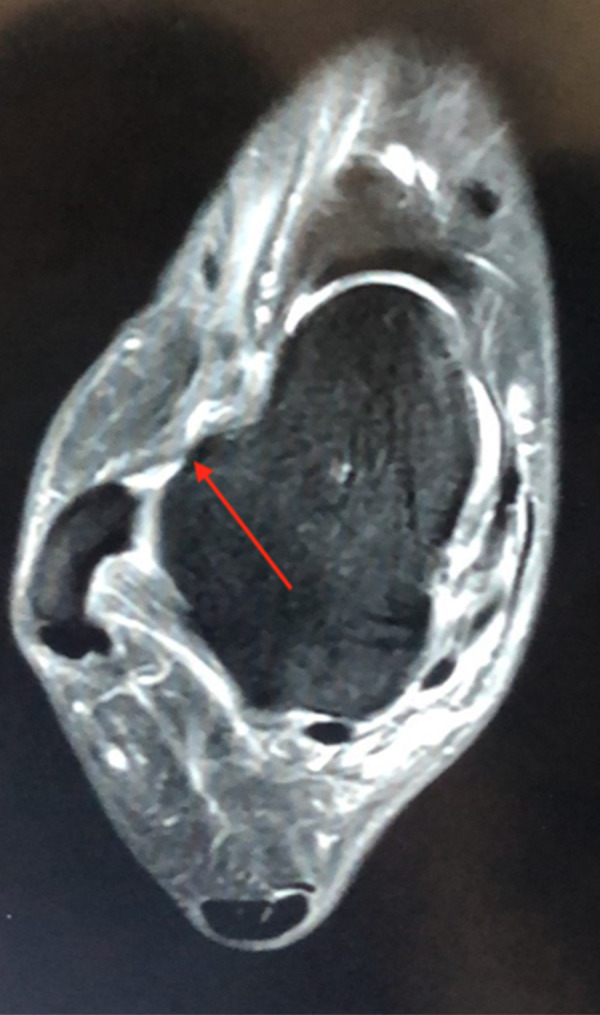
BACKGROUND It is challenging to entirely show the anterior talofibular ligament (ATFL) and accurately diagnose ATFL injury with traditional 2-dimensional (2D) magnetic resonance imaging (MRI). With the introduction of 3.0T MRI, a 3-dimensional (3D) MRI sequence can achieve images with high spatial resolution. This study aimed to evaluate the accuracy of 3D MRI and compare it with 2D MRI in diagnosing ATFL injury. MATERIAL AND METHODS This was a prospective study in which 45 patients with clinically suspected ATFL injury underwent 2D MRI, 3D MRI, and 3D model reconstruction followed by arthroscopic surgery between February 2018 and April 2019. Two radiologists who had over 11 and 13 years of musculoskeletal experience assessed the injury of ATFL in consensus without any clinical clues. Arthroscopic surgery results were the standard reference of MRI accuracy. RESULTS The 3D MRI results of ATFL injury showed the sensitivity of diagnosis of complete tears of 83% and specificity of 82%. The partial tears diagnosis sensitivity was 78%, and specificity was 100%. The sensitivity of diagnosis of sprains was 100%, and the specificity was 97%. The 3D MRI accuracy of diagnosis was 98% for no injury, 98% for sprain, 91% for partial tear, and 82% for complete tear. The difference in the diagnosis of sprain and partial tears by 3D MRI and 2D MRI was statistically significant (P<0.05). A 3D reconstruction model was successfully created for all patients. CONCLUSIONS 3D MRI may be a reliable and accurate method to detect ATFL injury. The 3D reconstruction model using 3D MRI sequences has excellent prospects in application.
传统二维(2D)磁共振成像(MRI)在完全显示距腓前韧带(ATFL)和准确诊断 ATFL 损伤方面具有挑战性。随着 3.0T MRI 的引入,三维(3D)MRI 序列可以实现高空间分辨率的图像。本研究旨在评估 3D MRI 的准确性,并将其与 2D MRI 诊断 ATFL 损伤进行比较。
这是一项前瞻性研究,2018 年 2 月至 2019 年 4 月期间,45 例临床疑似 ATFL 损伤的患者接受了 2D MRI、3D MRI 和 3D 模型重建,随后进行了关节镜手术。两名具有超过 11 年和 13 年肌肉骨骼经验的放射科医生在没有任何临床线索的情况下进行了共识评估。关节镜手术结果是 MRI 准确性的标准参考。
3D MRI 对 ATFL 损伤的诊断结果显示,完全撕裂的诊断敏感性为 83%,特异性为 82%。部分撕裂的诊断敏感性为 78%,特异性为 100%。扭伤的诊断敏感性为 100%,特异性为 97%。无损伤、扭伤、部分撕裂和完全撕裂的 3D MRI 诊断准确率分别为 98%、98%、91%和 82%。3D MRI 和 2D MRI 诊断扭伤和部分撕裂的差异有统计学意义(P<0.05)。所有患者均成功创建了 3D 重建模型。
3D MRI 可能是一种可靠且准确的检测 ATFL 损伤的方法。使用 3D MRI 序列的 3D 重建模型在应用方面具有广阔的前景。