Dell'Aversana C, Cuomo F, Longobardi S, D'Hooghe T, Caprio F, Franci G, Santonastaso M, Colacurci N, Barone S, Pisaturo V, Valerio D, Altucci L
Department of Precision Medicine, University of Campania 'Luigi Vanvitelli', Naples 80138, Italy.
Institute of Experimental Endocrinology and Oncology 'Gaetano Salvatore' (IEOS)-National Research Council (CNR), Naples 80131, Italy.
Hum Reprod. 2021 Apr 20;36(5):1310-1325. doi: 10.1093/humrep/deaa364.
Is the microRNA (miRNA) expression pattern of cumulus oophorus cells (COCs) in women undergoing medically assisted reproduction (MAR) procedures differentially modulated according to patient age and gonadotropin treatment strategy?
Maternal age is an independent factor impacting miRNA expression in COCs while gonadotropin treatment may affect follicular miRNA expression and IVF efficacy.
Epigenetic mechanisms in female infertility are complex and poorly studied. DNA methylation, histone modifications, miRNAs and nucleosome positioning influence cellular machinery through positive and negative feedback mechanisms either alone or interactively. miRNAs are important regulators during oogenesis, spermatogenesis and early embryogenesis, and are reported to play a role in regulating crosstalk between the oocyte and COCs. Although miRNome analysis has been performed in female human reproductive tissues (endometrium, myometrium, cervix and ovaries), epigenetic modifications in women with infertility have not been explored in detail. In addition, the impact of gonadotropin treatments during MAR on miRNA expression in COCs has not been fully investigated.
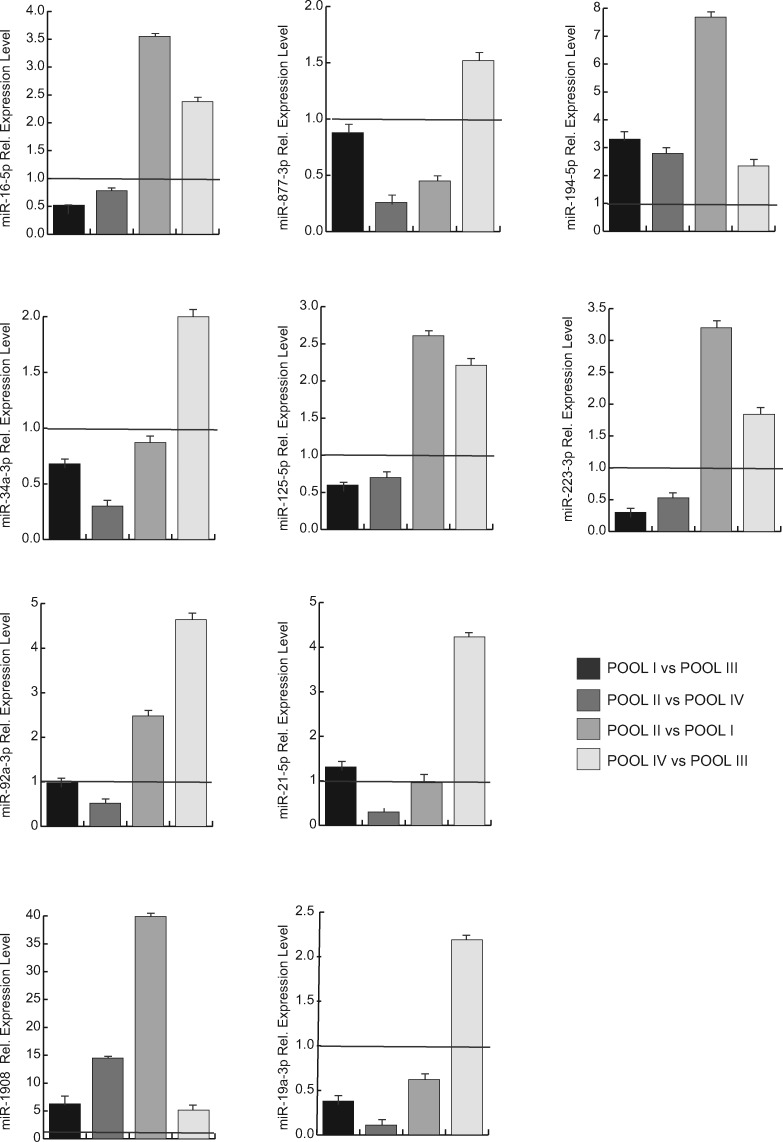
STUDY DESIGN, SIZE, DURATION: This study was carried out in 53 COC samples obtained from mature metaphase II (MII) oocytes in 53 women undergoing MAR treatment. A total of 38 samples for assay development were pooled by maternal age and gonadotropin treatment into four predetermined subgroups: ≥36 years and recombinant human FSH (r-hFSH), n = 10; ≥36 years and r-hFSH+ recombinant human-luteinizing hormone (r-hLH), n = 10; ≤35 years and r-hFSH, n = 9; ≤35 years and r-hFSH+r-hLH, n = 9. miRNome profiles were determined and compared between subgroups. Expression of defined miRNAs was validated in the remaining fifteen samples, representative of each subgroup, by quantitative polymerase chain reaction (PCR).
PARTICIPANTS/MATERIALS, SETTING, METHODS: COCs were processed for miRNA-enriched total RNA extraction and pooled in homogeneous subgroups to obtain a sufficient amount and quality of starting material to perform the analysis. Each pooled sample underwent miRNA profiling using PCR assay system to examine expression of 752 human miRNAs without pre-amplification. Data were analyzed using the delta-delta Ct method for relative quantitation and prediction of target genes (with at least four algorithms predicting the same miRNA-gene interaction pair (HIT)>4). The miRSystem database provided functional annotation enrichment (raw P-value <0.05) of co-expressed miRNAs.
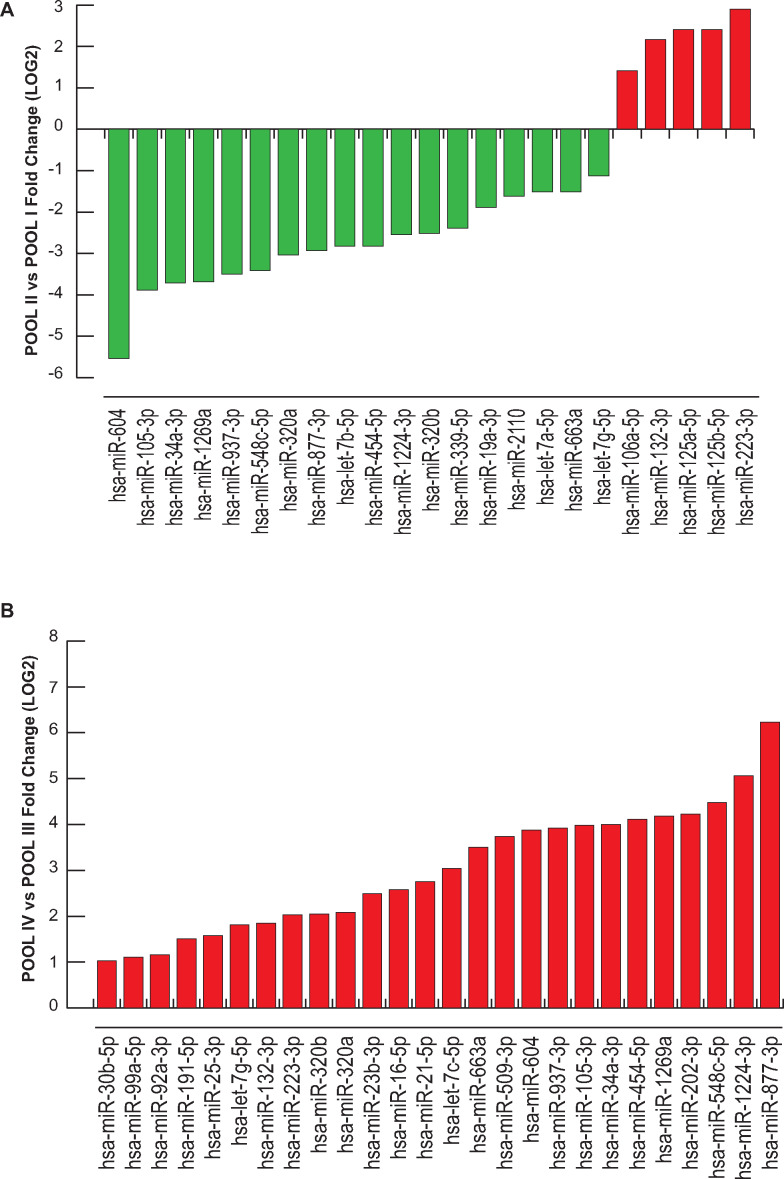
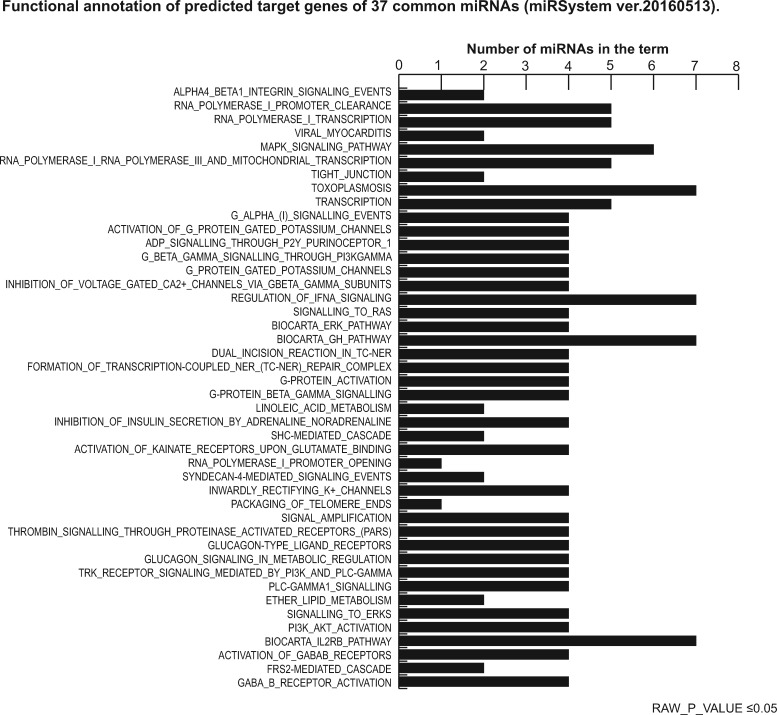
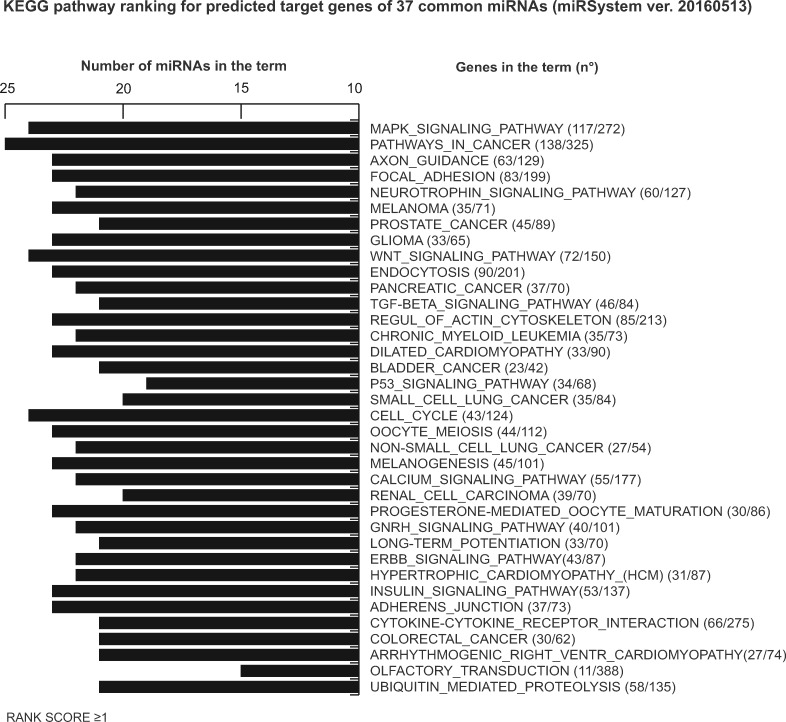
We found distinctive miRNA expression profiles in each subgroup correlating with age and MAR stimulation. In addition, a number of selective and co-expressed miRNAs were revealed by comparative analysis. A cluster of 37 miRNAs were commonly but differentially expressed in all four pools. Significant differences were observed in expression regulation of 37 miRNAs between age groups (≤35 or ≥36) in women receiving r-hFSH+r-hLH compared to those receiving r-hFSH alone. Higher concentrations and increased numbers of miRNAs were recorded in younger than in older patients, regardless of treatment. Functional and expression studies performed to retrieve common miRNome profiles revealed an enrichment of biological functions in oocyte growth and maturation, embryo development, steroidogenesis, ovarian hyperstimulation, apoptosis and cell survival, glucagon and lipid metabolism, and cell trafficking. The highest scored pathways of target genes of the 37 common miRNAs were associated with mitogen-activated protein kinase (MAPK) signaling pathways, G alpha signaling, transcription regulation, tight junctions, RNA polymerase I and III, and mitochondrial transcription. We identified a potential age- and MAR stimulation-dependent signature in the miRNA landscape of COCs.
LIMITATIONS, REASONS FOR CAUTION: We cannot rule out the possibility that other unknown individual genetic or clinical factors may have interfered with the reported results. Since miRNA profiling was conducted with a predefined array of target probes, other miRNA molecules, potentially modulated by age and hormonal stimulation, may have been missed in this study.
miRNA expression in COCs is modulated by gonadotropin treatment and correlates strongly with age. A better understanding of the expression patterns and functions of miRNAs may lead to the development of novel therapeutics to treat ovarian dysfunction and improve fertility in older women.
STUDY FUNDING/COMPETING INTEREST: This study was funded by Merck KGaA, Darmstadt, Germany. All authors declared no competing interest, except SL and TD who are fully employed by Merck KGaA.
N/A.
接受医学辅助生殖(MAR)治疗的女性,其卵丘细胞(COC)中的微小RNA(miRNA)表达模式是否会根据患者年龄和促性腺激素治疗策略而受到不同调节?
母亲年龄是影响COC中miRNA表达的独立因素,而促性腺激素治疗可能会影响卵泡miRNA表达及体外受精(IVF)效果。
女性不孕症中的表观遗传机制复杂且研究较少。DNA甲基化、组蛋白修饰、miRNA和核小体定位通过正反馈和负反馈机制单独或相互作用影响细胞机制。miRNA在卵子发生、精子发生和早期胚胎发育过程中是重要的调节因子,据报道在调节卵母细胞与COC之间的相互作用中发挥作用。尽管已对女性生殖组织(子宫内膜、子宫肌层、子宫颈和卵巢)进行了miRNome分析,但尚未详细探究不孕症女性的表观遗传修饰。此外,MAR期间促性腺激素治疗对COC中miRNA表达的影响尚未得到充分研究。
研究设计、规模、持续时间:本研究对53名接受MAR治疗的女性成熟中期II(MII)卵母细胞获取的53个COC样本进行了研究。根据母亲年龄和促性腺激素治疗,将总共38个用于分析开发的样本合并为四个预定亚组:≥36岁且使用重组人促卵泡激素(r-hFSH),n = 10;≥36岁且使用r-hFSH + 重组人促黄体生成素(r-hLH),n = 10;≤35岁且使用r-hFSH,n = 9;≤35岁且使用r-hFSH + r-hLH,n = 9。确定并比较了亚组之间的miRNome谱。通过定量聚合酶链反应(PCR)在其余15个代表每个亚组的样本中验证了特定miRNA的表达。
参与者/材料、设置、方法:对COC进行处理以提取富含miRNA的总RNA,并合并为同质亚组,以获得足够数量和质量的起始材料进行分析。每个合并样本使用PCR检测系统进行miRNA谱分析,以检测752种人类miRNA的表达,无需预扩增。使用delta-delta Ct方法进行数据分析以进行相对定量和靶基因预测(至少四种算法预测相同的miRNA-基因相互作用对(命中数)>4)。miRSystem数据库提供了共表达miRNA的功能注释富集(原始P值<0.05)。
我们在每个亚组中发现了与年龄和MAR刺激相关的独特miRNA表达谱。此外,通过比较分析揭示了一些选择性和共表达的miRNA。一组37种miRNA在所有四个样本库中普遍但差异表达。与单独接受r-hFSH的女性相比,接受r-hFSH + r-hLH的女性年龄组(≤35岁或≥36岁)中37种miRNA的表达调控存在显著差异。无论治疗如何,年轻患者中记录的miRNA浓度更高且数量更多。为检索常见miRNome谱而进行的功能和表达研究表明,在卵母细胞生长和成熟、胚胎发育、类固醇生成、卵巢过度刺激、细胞凋亡和细胞存活、胰高血糖素和脂质代谢以及细胞运输等生物学功能方面存在富集。37种常见miRNA的靶基因得分最高的途径与丝裂原活化蛋白激酶(MAPK)信号通路、Gα信号、转录调控、紧密连接、RNA聚合酶I和III以及线粒体转录相关。我们在COC的miRNA图谱中确定了一种潜在的年龄和MAR刺激依赖性特征。
局限性、注意事项:我们不能排除其他未知的个体遗传或临床因素可能干扰报告结果的可能性。由于miRNA谱分析是使用预定义的靶标探针阵列进行的,本研究可能遗漏了其他可能受年龄和激素刺激调节的miRNA分子。
COC中的miRNA表达受促性腺激素治疗调节,并与年龄密切相关。更好地了解miRNA的表达模式和功能可能会导致开发新的疗法来治疗卵巢功能障碍并提高老年女性的生育能力。
研究资金/利益冲突:本研究由德国达姆施塔特的默克集团资助。除SL和TD受雇于默克集团外,所有作者均声明无利益冲突。
无。