Betancor M B, MacEwan A, Sprague M, Gong X, Montero D, Han L, Napier J A, Norambuena F, Izquierdo M, Tocher D R
Institute of Aquaculture, Faculty of Natural Sciences, University of Stirling, Stirling FK9 4LA, United Kingdom.
Grupo de Investigación en Acuicultura (GIA), Instituto Universitario Ecoaqua, Universidad de Las Palmas de Gran Canaria, Ctra. Taliarte s/n, 35214 Telde, Las Palmas, Canary Islands, Spain.
Aquaculture. 2021 Jan 15;530:735759. doi: 10.1016/j.aquaculture.2020.735759.
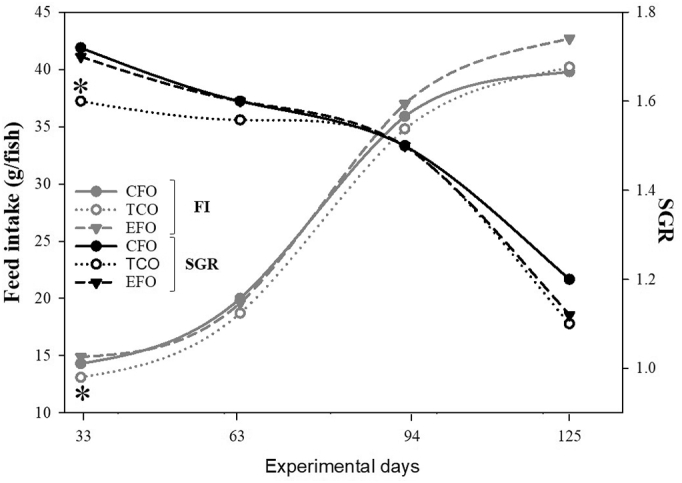
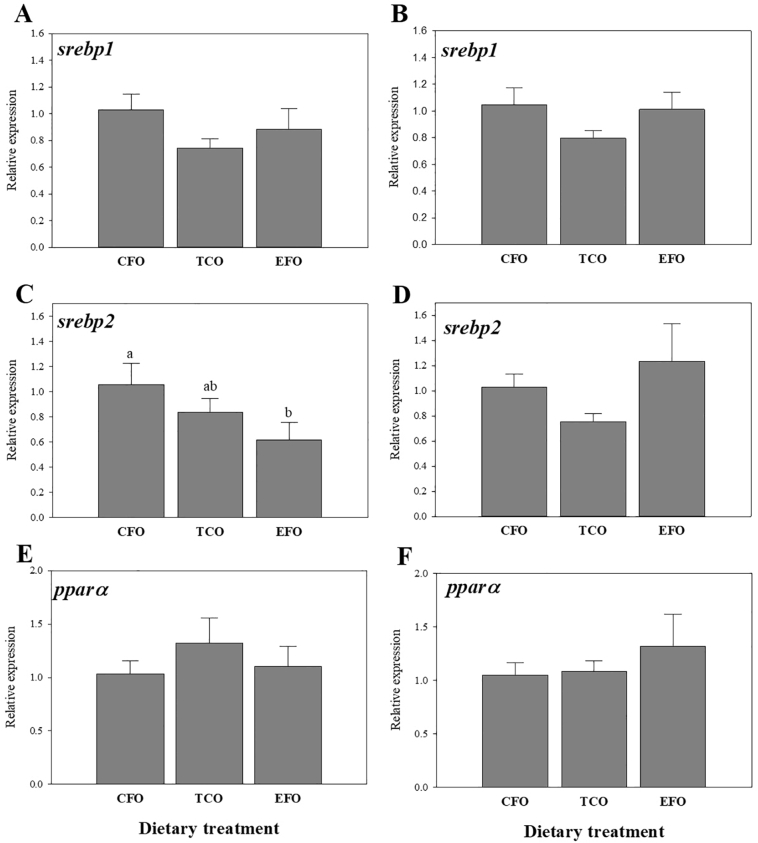
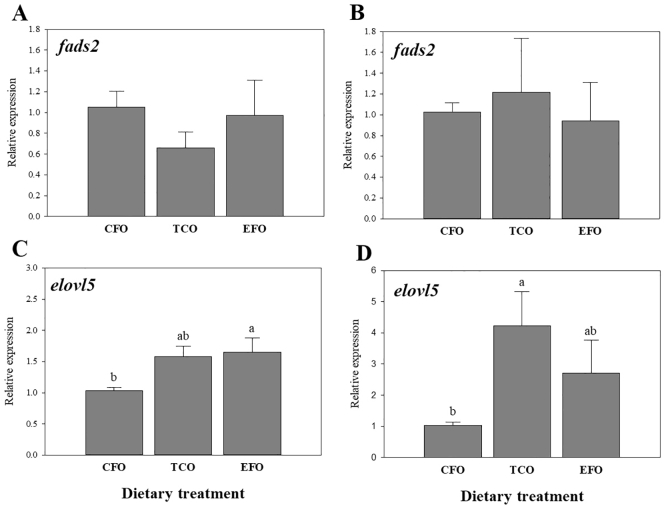
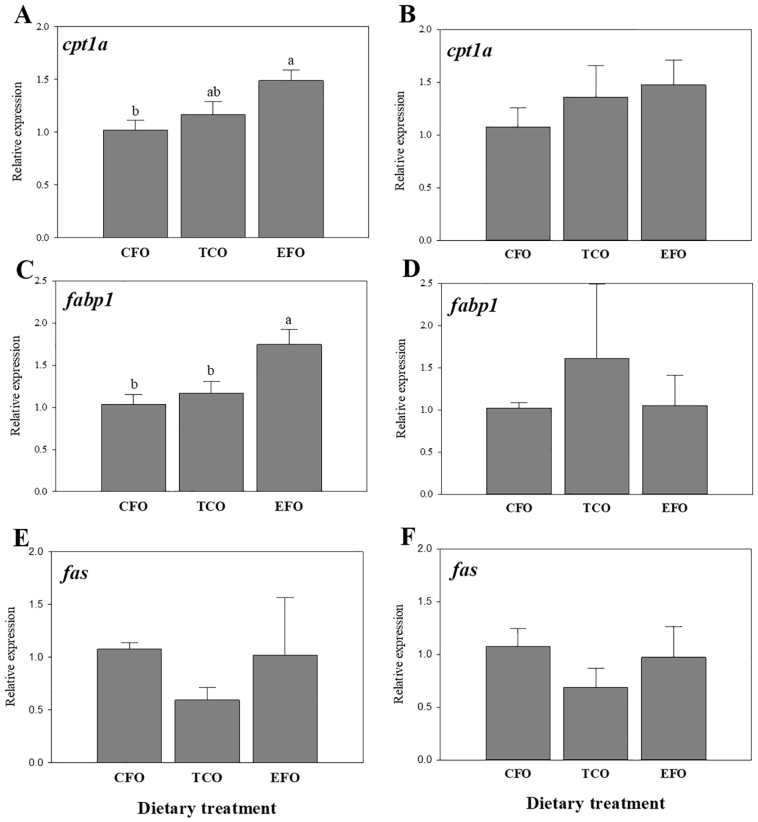
Aquaculture, the fastest growing food production sector cannot continue to rely on finite stocks of marine fish as the primary source of the omega-3 (n-3) long-chain polyunsaturated fatty acids (LC-PUFA), eicosapentaenoic acid (EPA; 20:5n3) and docosahexaenoic acid (DHA; 22:6n-3), for feeds. A four-month feeding trial was conducted to investigate the impact of a oil, with high levels of EPA and DHA, obtained from transgenic on growth performance, tissue fatty acid profiles, and expression of lipid metabolism genes when used as a replacement for fish oil in feed for European seabass (). Triplicate groups of 50 juvenile fish (initial weight 16.7 ± 0.92 g) per tank were fed for 4 months with one of three isolipidic and isoproteic experimental diets consisting of a standard diet containing a commercial blend of fish oil and rapeseed oil (CFO), a diet containing transgenic oil (TCO), or a blend of fish oil and rapeseed oil with enhanced levels of EPA and DHA (EFO) formulated to match the n-3 LC-PUFA profile of the TCO feed. Final weight of fish fed the GM-derived oil was not different to fish fed either CFO or EFO. Slight lower growth performance of fish fed TCO at the beginning of the trial was related to transient reduced feed intake, possibly caused by glucosinolates in the raw oil. The GM-derived oil improved the nutritional quality of the fish fillet by enhancing total n-3 PUFA levels compared to the fish fed the other two feeds, and maintained flesh EPA and DHA at the same levels as in fish fed the diets containing fish oil. The metabolic response in liver and intestine was generally relatively mild although diets TCO and EFO seemed to trigger a metabolic response consisting of an up-regulation of both β-oxidation () and fatty acid transport (), possibly reflecting higher levels of LC-PUFA. Overall, the present study indicated that an oil of terrestrial origin, , when engineered to contain high levels of EPA and DHA can replace fish oil in feeds for European seabass with no detrimental impact on growth or feed efficiency, while also maintaining or increasing tissue n-3 LC-PUFA contents.
水产养殖作为增长最快的食品生产部门,不能继续依赖有限的海洋鱼类资源作为ω-3(n-3)长链多不饱和脂肪酸(LC-PUFA)、二十碳五烯酸(EPA;20:5n3)和二十二碳六烯酸(DHA;22:6n-3)饲料的主要来源。进行了一项为期四个月的饲养试验,以研究从转基因[具体名称未给出]中获得的富含高水平EPA和DHA的油,在用作欧洲海鲈([具体名称未给出])饲料中鱼油替代品时,对其生长性能、组织脂肪酸谱以及脂质代谢基因表达的影响。每个水箱中每组50尾幼鱼(初始体重16.7±0.92克),一式三份,分别投喂三种等脂等蛋白的实验饲料中的一种,为期4个月。这三种饲料分别为:含有鱼油和菜籽油商业混合物的标准饲料(CFO)、含有转基因[具体名称未给出]油的饲料(TCO),或含有经强化的EPA和DHA水平的鱼油和菜籽油混合物(EFO),其配方旨在匹配TCO饲料的n-3 LC-PUFA谱。投喂转基因来源油的鱼的最终体重与投喂CFO或EFO的鱼没有差异。试验开始时,投喂TCO的鱼生长性能略有下降,这与饲料摄入量暂时减少有关,可能是由生[具体名称未给出]油中的硫代葡萄糖苷引起的。与投喂其他两种饲料的鱼相比,转基因来源的油通过提高总n-3 PUFA水平改善了鱼片的营养质量,并使鱼肉中的EPA和DHA含量维持在与投喂含鱼油饲料的鱼相同的水平。肝脏和肠道中的代谢反应总体上相对温和,尽管TCO和EFO饲料似乎引发了一种代谢反应,包括β-氧化([具体名称未给出])和脂肪酸转运([具体名称未给出])的上调,这可能反映了较高水平的LC-PUFA。总体而言,本研究表明,一种陆地来源的油,即[具体名称未给出],经改造使其含有高水平的EPA和DHA后,可以替代欧洲海鲈饲料中的鱼油,而对生长或饲料效率没有不利影响,同时还能维持或增加组织中n-3 LC-PUFA的含量。