Wang Bin, Huang Jin, Li Shanshan, Pan Zhanyu, Guo Yongming, Yang Yinli, Li Ling, Wang Cong, Gong Yinan, Wang Jiaqi, Lu Shanshan, Xu Zhifang, Guo Yi
Tianjin Medical University Cancer Institute and Hospital, National Clinical Research Center for Cancer, Key Laboratory of Cancer Prevention and Therapy, Tianjin's Clinical Research Center for Cancer, Tianjin 300060, China.
Research Center of Experimental Acupuncture Science, Tianjin University of Traditional Chinese Medicine, Tianjin 301617, China.
Evid Based Complement Alternat Med. 2020 Dec 29;2020:3170803. doi: 10.1155/2020/3170803. eCollection 2020.
As a first-line treatment for non-small cell lung cancer (NSCLC), the efficacy of chemotherapy is still unsatisfactory. Moxibustion has been shown to improve the side effects of radiotherapy and chemotherapy and regulate immune function. This study aimed to explore the antitumor effects and potential mechanisms of combinatorial cisplatin and moxibustion treatment for NSCLC by targeting the tumor microenvironment.
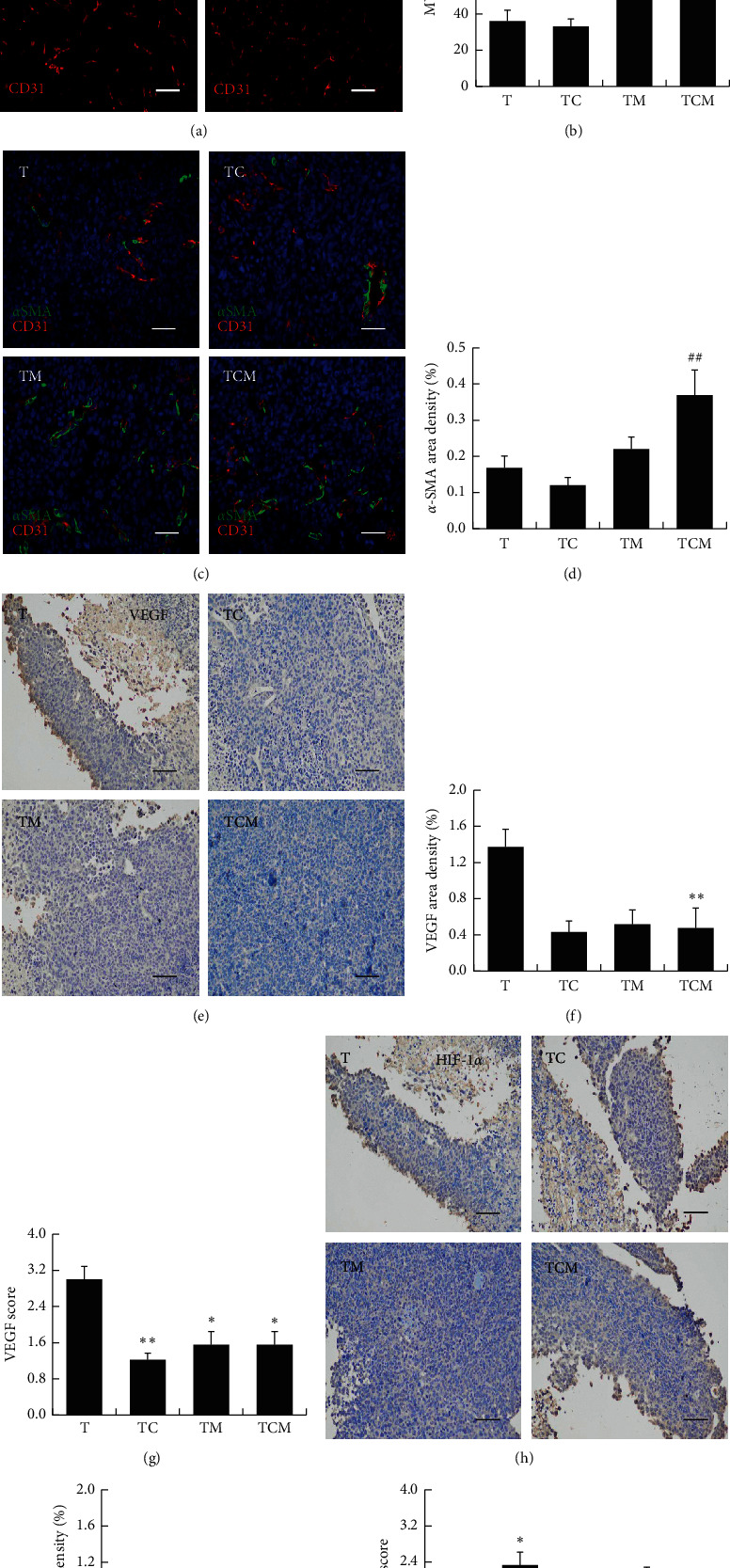
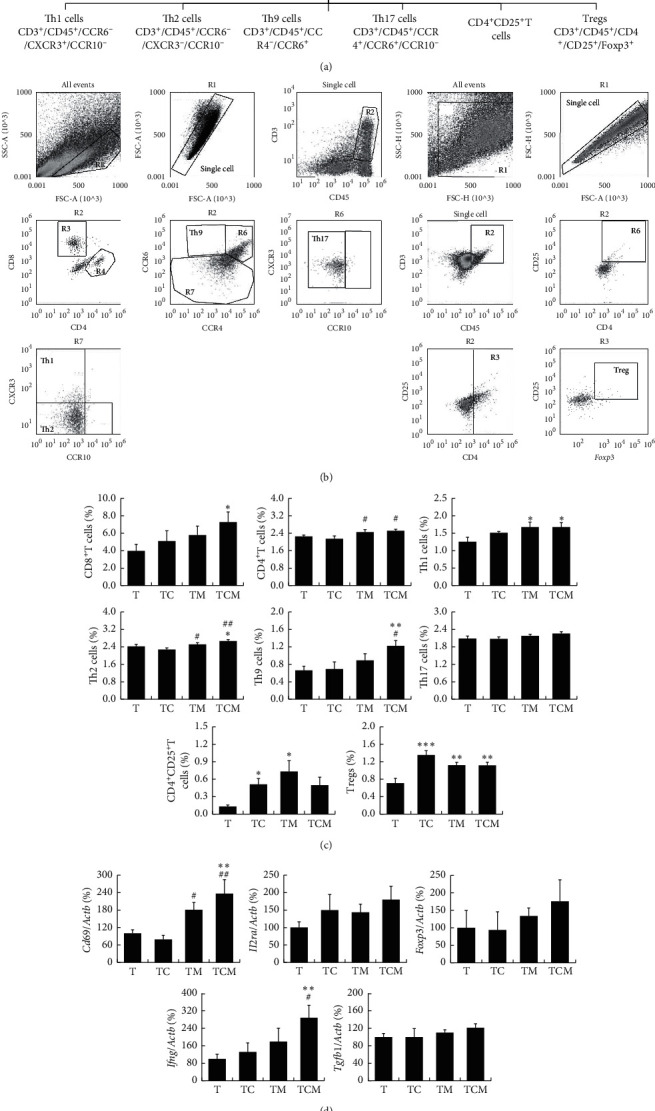
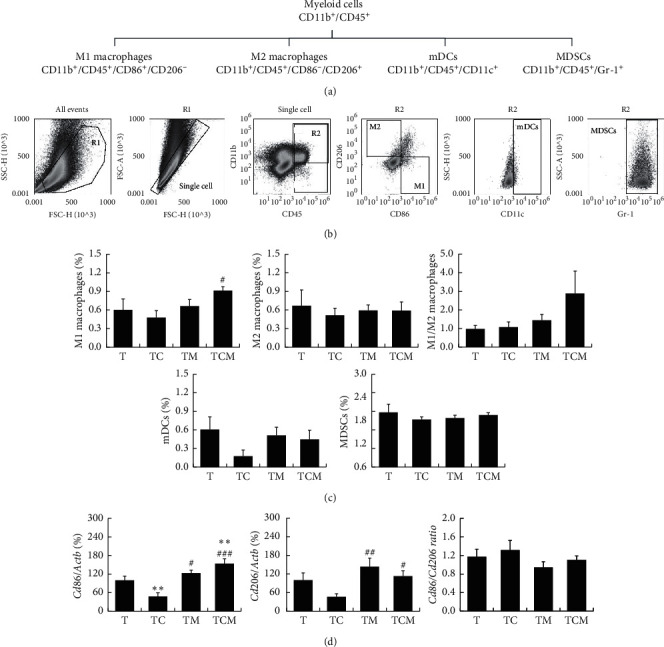
Lewis lung cancer (LLC)-bearing mice were induced and treated with cisplatin or/and moxibustion at ST36 (Zusanli), and the growth, weight, and area of the tumor were evaluated. The numbers of various T cell subsets and myeloid cells in the tumor were assessed by flow cytometry, and the gene expression of related markers and cytokines was detected with real-time quantitative polymerase chain reaction (RT-qPCR). In addition, the tumor vascular structure was investigated using CD31 and -smooth muscle actin (-SMA) immunofluorescence staining. The expression of the vascular endothelial growth factor (VEGF) and hypoxia-inducible factor-1 (HIF-1) was detected by immunohistochemical staining.
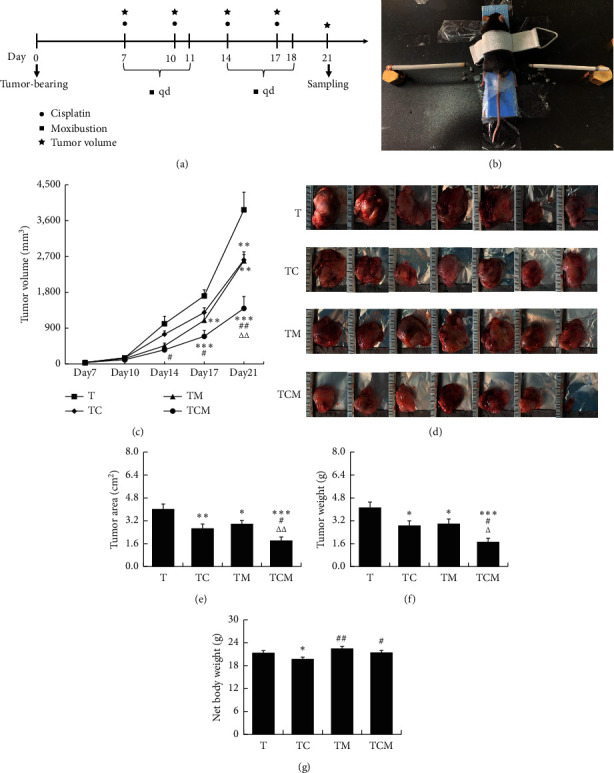
Both cisplatin and moxibustion inhibited LLC tumor growth and reduced both the tumor area and weight, with the combinatorial therapy showing superior outcomes. Moxibustion upregulated the infiltration of CD4 T cells and Th1 cells in the tumor, and the combinatorial therapy increased the proportion of CD8 cytotoxic T cells (CTLs), CD4T cells, Th1, Th9 cells, and M1 macrophages, as well as the expression of , , and mRNA. The combinatorial therapy improved vascular normalization by increasing both the microvessel density (MVD) and pericyte coverage (-SMA area density) and inhibiting the expression of the VEGF.
Combinatorial cisplatin and moxibustion treatment inhibited the LLC tumor growth by mechanisms related to the improvement of the tumor immune microenvironment and vascular normalization, providing an effective combinatorial therapy beneficial for patients with NSCLC.
作为非小细胞肺癌(NSCLC)的一线治疗方法,化疗的疗效仍不尽人意。艾灸已被证明可改善放疗和化疗的副作用并调节免疫功能。本研究旨在通过靶向肿瘤微环境探索顺铂与艾灸联合治疗NSCLC的抗肿瘤作用及潜在机制。
诱导荷Lewis肺癌(LLC)小鼠,在足三里(ST36)给予顺铂或/和顺铂联合艾灸治疗,评估肿瘤的生长、重量和面积。通过流式细胞术评估肿瘤中各种T细胞亚群和髓系细胞的数量,并用实时定量聚合酶链反应(RT-qPCR)检测相关标志物和细胞因子的基因表达。此外,采用CD31和平滑肌肌动蛋白(α-SMA)免疫荧光染色研究肿瘤血管结构。通过免疫组织化学染色检测血管内皮生长因子(VEGF)和缺氧诱导因子-1(HIF-1)的表达。
顺铂和艾灸均抑制LLC肿瘤生长,减小肿瘤面积和重量,联合治疗效果更佳。艾灸上调肿瘤中CD4 T细胞和Th1细胞的浸润,联合治疗增加了CD8细胞毒性T细胞(CTL)、CD4T细胞、Th1、Th9细胞和M1巨噬细胞的比例,以及 、 和 mRNA的表达。联合治疗通过增加微血管密度(MVD)和周细胞覆盖率(α-SMA面积密度)并抑制VEGF的表达改善血管正常化。
顺铂与艾灸联合治疗通过改善肿瘤免疫微环境和血管正常化相关机制抑制LLC肿瘤生长,为NSCLC患者提供了一种有效的联合治疗方法。