School of Cancer & Pharmaceutical Sciences, King's College London, U.K.
Department of Academic Surgery, Imperial College London, U.K.
Nanotheranostics. 2021 Jan 1;5(2):125-142. doi: 10.7150/ntno.52168. eCollection 2021.
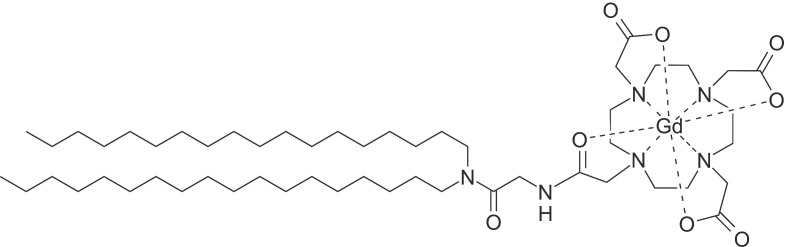
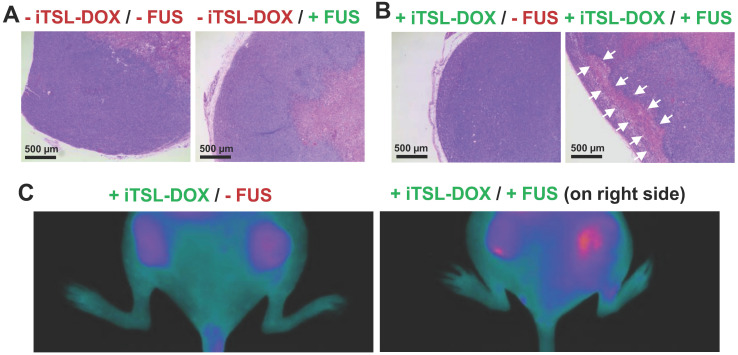
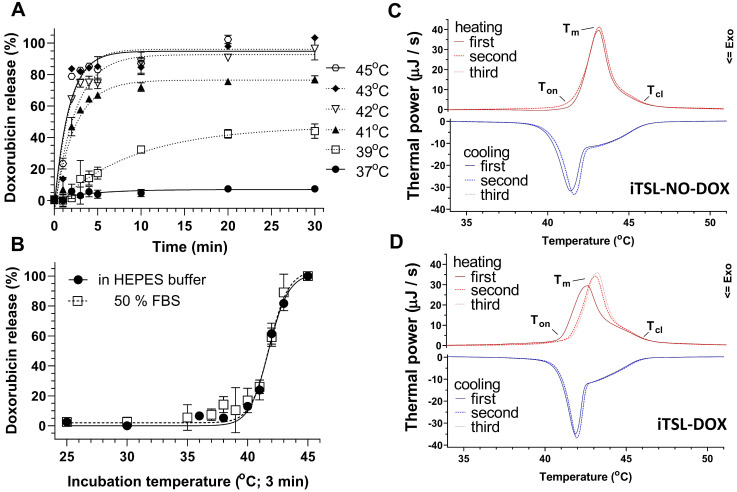
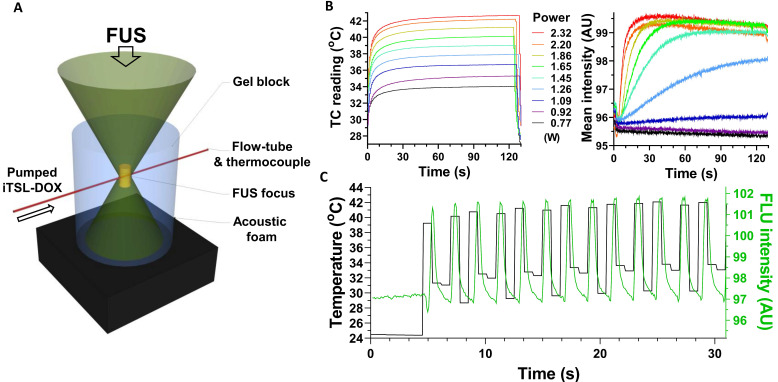
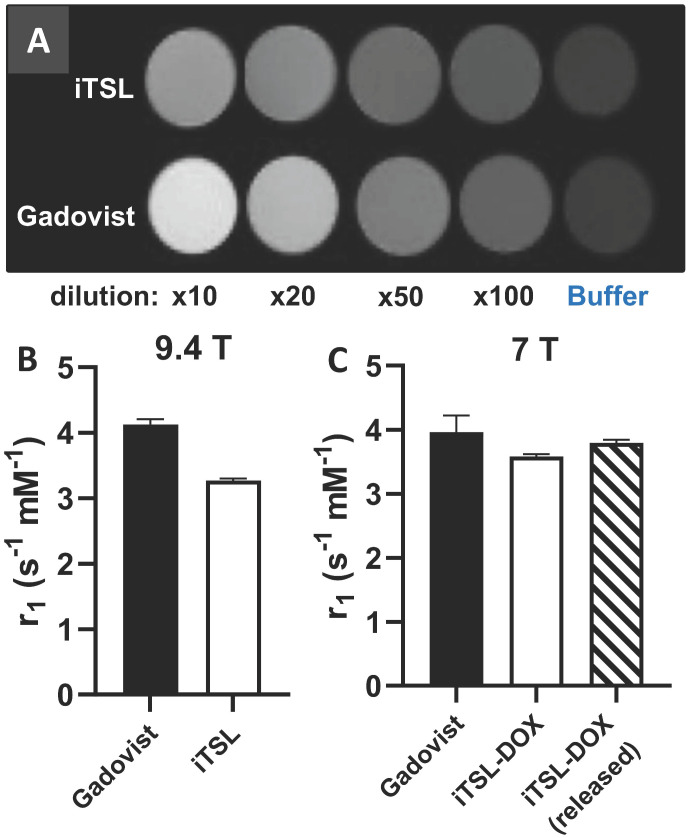
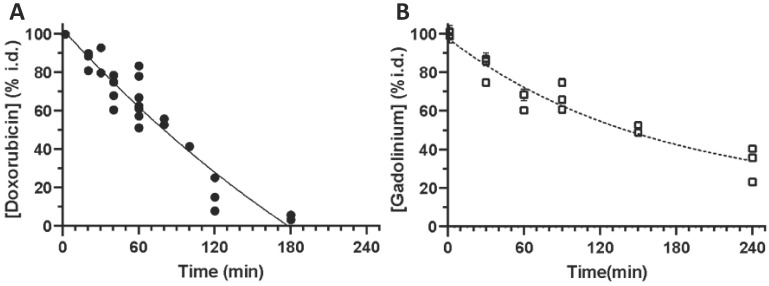
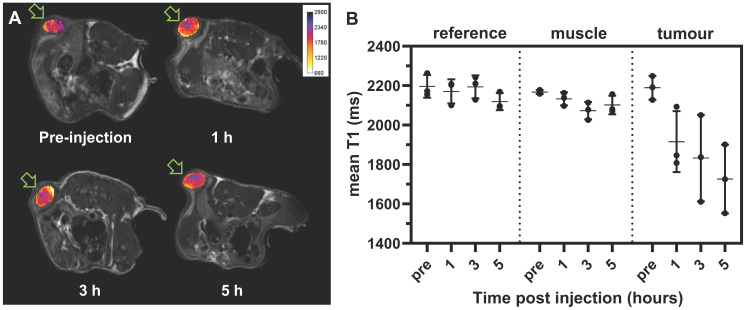
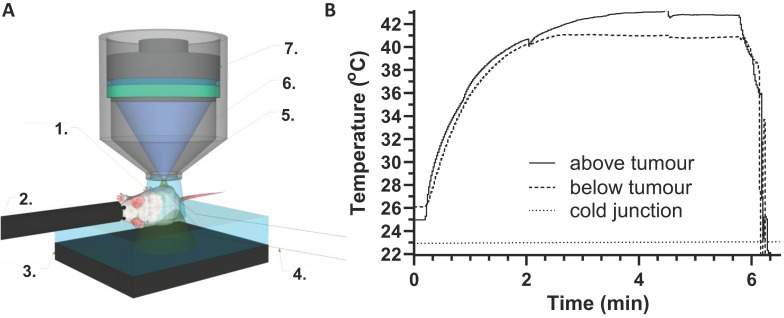
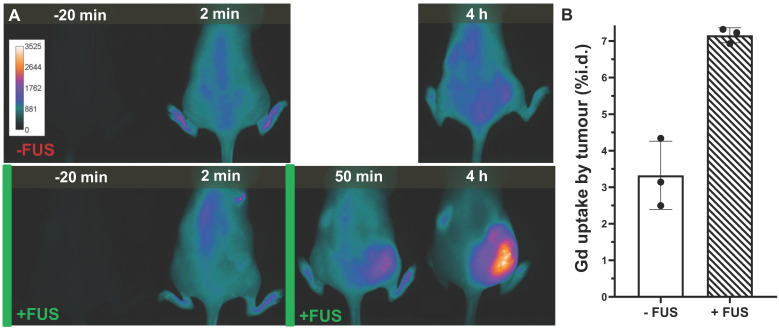
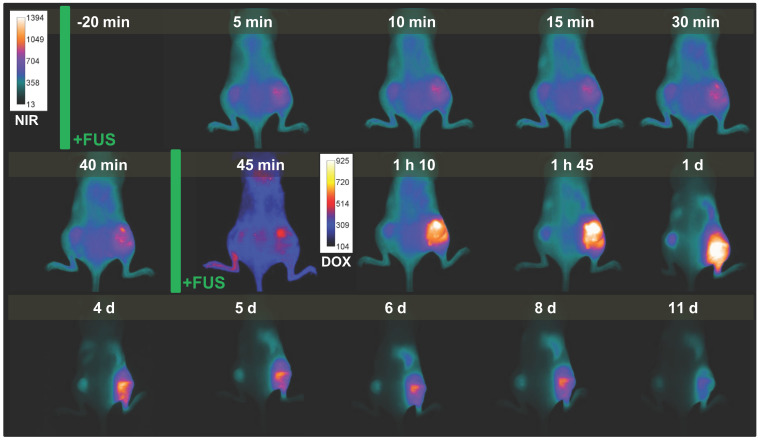
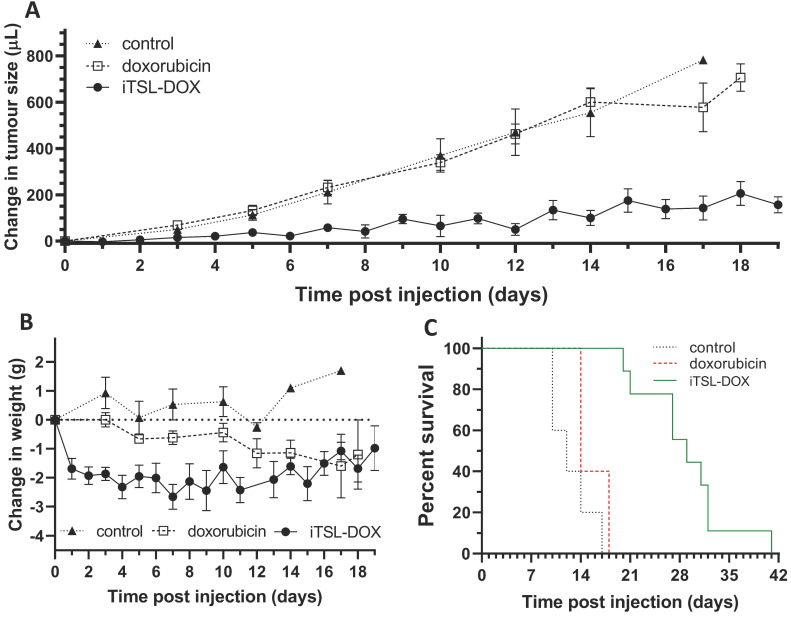
Image-guided, triggerable, drug delivery systems allow for precisely placed and highly localised anti-cancer treatment. They contain labels for spatial mapping and tissue uptake tracking, providing key location and timing information for the application of an external stimulus to trigger drug release. High Intensity Focused Ultrasound (HIFU or FUS) is a non-invasive approach for treating small tissue volumes and is particularly effective at inducing drug release from thermosensitive nanocarriers. Here, we present a novel MR-imageable thermosensitive liposome (iTSL) for drug delivery to triple-negative breast cancers (TNBC). A macrocyclic gadolinium-based Magnetic Resonance Imaging (MRI) contrast agent was covalently linked to a lipid. This was incorporated at 30 mol% into the lipid bilayer of a thermosensitive liposome that was also encapsulating doxorubicin. The resulting iTSL-DOX formulation was assessed for physical and chemical properties, storage stability, leakage of gadolinium or doxorubicin, and thermal- or FUS-induced drug release. Its effect on MRI relaxation time was tested in phantoms. Mice with tumours were used for studies to assess both tumour distribution and contrast enhancement over time. A lipid-conjugated near-infrared fluorescence (NIRF) probe was also included in the liposome to facilitate the real time monitoring of iTSL distribution and drug release in tumours by NIRF bioimaging. TNBC (MDA-MB-231) tumour-bearing mice were then used to demonstrate the efficacy at retarding tumour growth and increasing survival. : iTSL-DOX provided rapid FUS-induced drug release that was dependent on the acoustic power applied. It was otherwise found to be stable, with minimum leakage of drug and gadolinium into buffers or under challenging conditions. In contrast to the usually suggested longer FUS treatment we identified that brief (~3 min) FUS significantly enhanced iTSL-DOX uptake to a targeted tumour and triggered near-total release of encapsulated doxorubicin, causing significant growth inhibition in the TNBC mouse model. A distinct reduction in the tumours' average T relaxation times was attributed to the iTSL accumulation. We demonstrate that tracking iTSL in tumours using MRI assists the application of FUS for precise drug release and therapy.
图像引导、触发式药物输送系统可实现精确定位和高度局部化的抗癌治疗。它们包含用于空间映射和组织摄取跟踪的标签,为应用外部刺激以触发药物释放提供关键位置和时间信息。高强度聚焦超声(HIFU 或 FUS)是一种用于治疗小组织体积的非侵入性方法,尤其擅长诱导热敏纳米载体释放药物。在这里,我们提出了一种用于三阴性乳腺癌(TNBC)药物输送的新型磁共振成像(MRI)可成像热敏脂质体(iTSL)。一种大环钆基磁共振成像对比剂通过共价键与脂质相连。将其以 30mol%的比例掺入热敏脂质体的脂质双层中,该脂质体还包封了阿霉素。评估了所得 iTSL-DOX 制剂的物理和化学性质、储存稳定性、钆或阿霉素的泄漏以及热或 FUS 诱导的药物释放。在体模中测试了其对 MRI 弛豫时间的影响。使用携带肿瘤的小鼠进行研究,以评估随时间推移肿瘤的分布和对比增强。脂质偶联的近红外荧光(NIRF)探针也包含在脂质体中,以便通过 NIRF 生物成像实时监测肿瘤中 iTSL 的分布和药物释放。然后使用携带 TNBC(MDA-MB-231)肿瘤的小鼠来证明延缓肿瘤生长和提高存活率的疗效。:iTSL-DOX 提供了快速的 FUS 诱导药物释放,该释放依赖于所施加的声功率。否则,它被发现是稳定的,药物和钆的泄漏最小,进入缓冲液或在具有挑战性的条件下。与通常建议的较长的 FUS 治疗相反,我们发现短暂(约 3 分钟)的 FUS 可显著增加靶向肿瘤对 iTSL-DOX 的摄取,并触发包裹的阿霉素几乎完全释放,导致 TNBC 小鼠模型中的肿瘤生长显著抑制。肿瘤平均 T 弛豫时间的明显降低归因于 iTSL 的积累。我们证明使用 MRI 跟踪肿瘤中的 iTSL 有助于应用 FUS 进行精确的药物释放和治疗。