Hernandez Victor, Saez Jordi, Pasler Marlies, Jurado-Bruggeman Diego, Jornet Nuria
Department of Medical Physics, Hospital Universitari Sant Joan de Reus, IISPV, Tarragona, Spain.
Department of Radiation Oncology, Hospital Clínic de Barcelona, Spain.
Phys Imaging Radiat Oncol. 2018 Feb 22;5:37-43. doi: 10.1016/j.phro.2018.02.002. eCollection 2018 Jan.
It is known that intensity-modulated radiotherapy plans that are highly complex might be less accurate in dose calculation and treatment delivery. Multiple complexity metrics have been proposed, but the relationships between them have not been thoroughly investigated. This study investigated these relationships in multi-institutional comparisons of treatment plans, where plans from multiple treatment planning systems (TPSs) are typically evaluated.
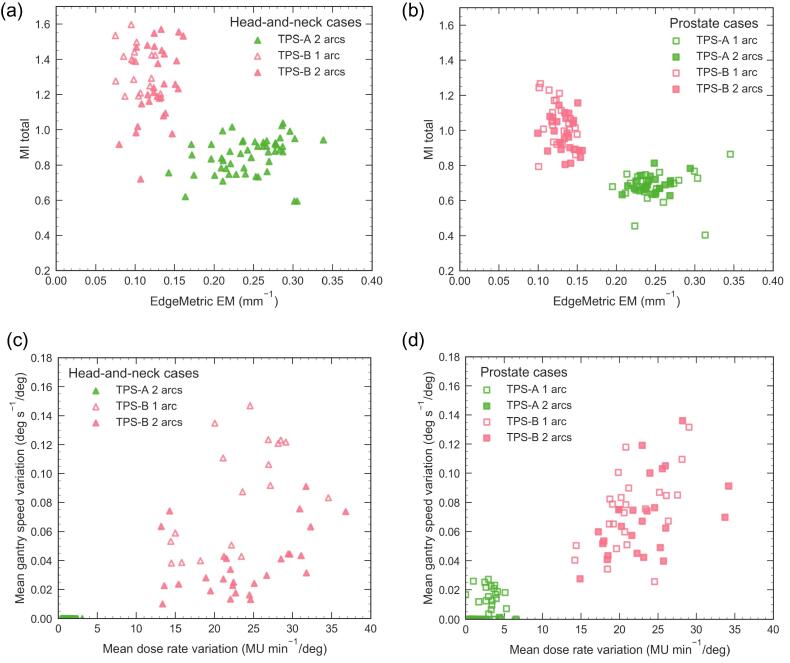
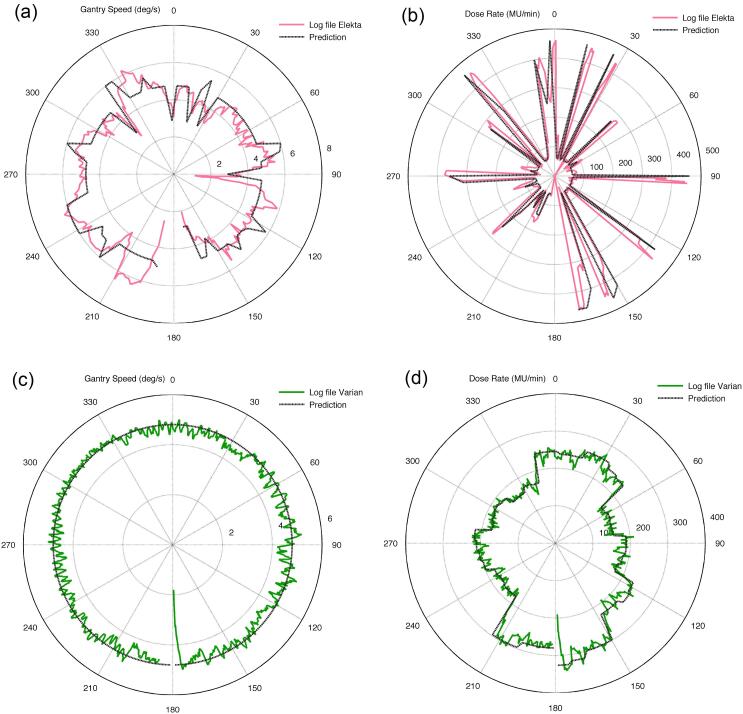
A program was developed to compute several complexity indices and provide analysis of dynamic plan parameters. This in-house software was used to analyse plans from a recent multi-institutional audit. Additionally, 100 clinical volumetric modulated arc therapy (VMAT) plans from two institutions using different TPSs were analysed.
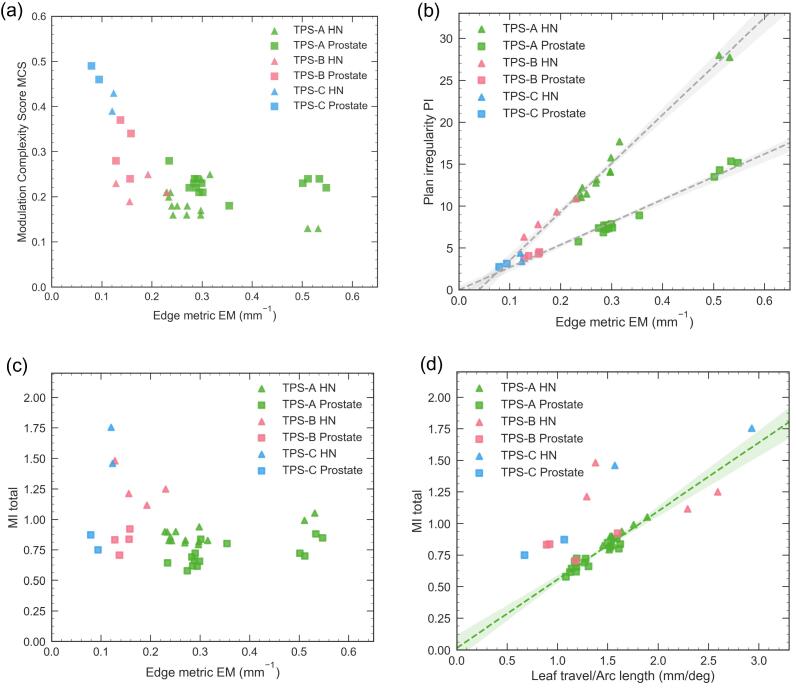
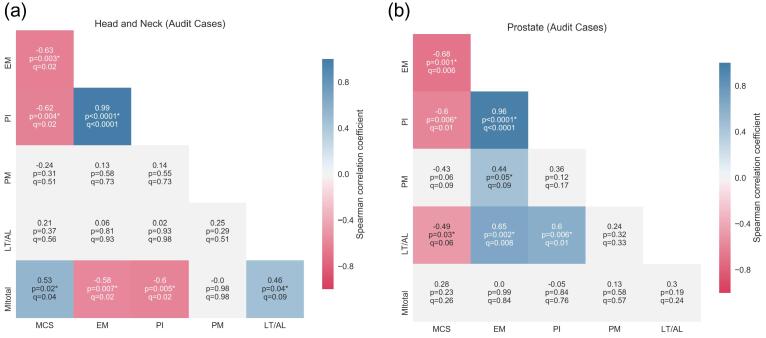
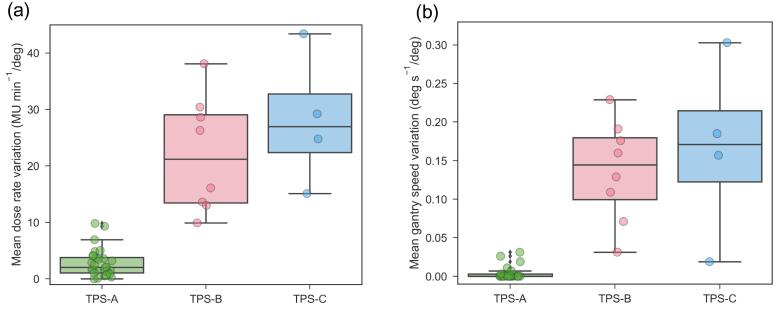
All plans produced satisfactory pre-treatment verification results and, hence, complexity metrics could not be used to predict plans failing QA. Regarding the relationship among complexity indices, some very strong correlations were found (r > 0.9 with p < 0.01). However, some relevant discrepancies between complexity indices were obtained, even with negative correlation coefficients ( ∼ -0.6) which were expected to be positive. These discrepancies could be explained because each complexity index focused on different features of the plan and different TPSs prioritised modulation of different plan parameters.
Some complexity indices provided similar information and can be considered equivalent. However, indices that focused on different plan parameters yielded different results and it was unclear which complexity index should be used. Careful consideration should be given to the use of complexity metrics in multi-institutional studies.
众所周知,高度复杂的调强放射治疗计划在剂量计算和治疗实施方面可能不太准确。已经提出了多种复杂性指标,但它们之间的关系尚未得到充分研究。本研究在多机构治疗计划比较中调查了这些关系,在这种比较中,通常会评估来自多个治疗计划系统(TPS)的计划。
开发了一个程序来计算几个复杂性指数并提供动态计划参数分析。这个内部软件用于分析最近一次多机构审核中的计划。此外,还分析了来自两个使用不同TPS的机构的100个临床容积调强弧形治疗(VMAT)计划。
所有计划都产生了令人满意的治疗前验证结果,因此,复杂性指标不能用于预测未能通过质量保证的计划。关于复杂性指数之间的关系,发现了一些非常强的相关性(r>0.9,p<0.01)。然而,即使是预期为正的负相关系数(约-0.6),复杂性指数之间也存在一些相关差异。这些差异可以解释为每个复杂性指数关注计划的不同特征,不同的TPS对不同计划参数的调制有不同的优先级。
一些复杂性指数提供了相似的信息,可以认为是等效的。然而,关注不同计划参数的指数产生了不同的结果,并且不清楚应该使用哪个复杂性指数。在多机构研究中使用复杂性指标时应谨慎考虑。