Winkel Dennis, Bol Gijsbert H, Werensteijn-Honingh Anita M, Kiekebosch Ilse H, van Asselen Bram, Intven Martijn P W, Eppinga Wietse S C, Raaymakers Bas W, Jürgenliemk-Schulz Ina M, Kroon Petra S
Department of Radiotherapy, University Medical Center, Utrecht, the Netherlands.
Phys Imaging Radiat Oncol. 2019 Mar 1;9:58-64. doi: 10.1016/j.phro.2019.02.003. eCollection 2019 Jan.
Recent studies have shown that the use of magnetic resonance (MR) guided online plan adaptation yields beneficial dosimetric values and reduces unplanned violations of the dose constraints for stereotactic body radiation therapy (SBRT) of lymph node oligometastases. The purpose of this R-IDEAL stage 0 study was to determine the optimal plan adaptation approach for MR-guided SBRT treatment of lymph node oligometastases.
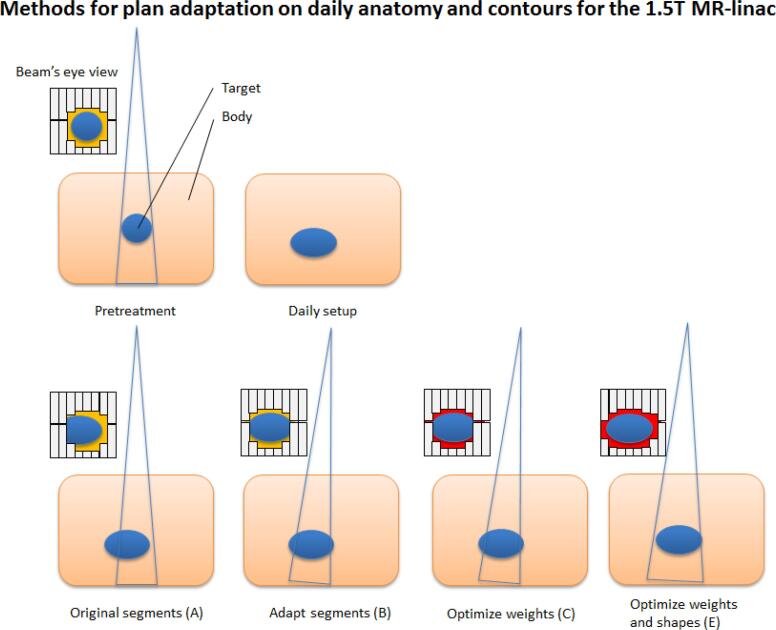
Using pre-treatment computed tomography (CT) and repeated MR data from five patients with in total 17 pathological lymph nodes, six different methods of plan adaptation were performed on the daily MRI and contours. To determine the optimal plan adaptation approach for treatment of lymph node oligometastases, the adapted plans were evaluated using clinical dose criteria and the time required for performing the plan adaptation.
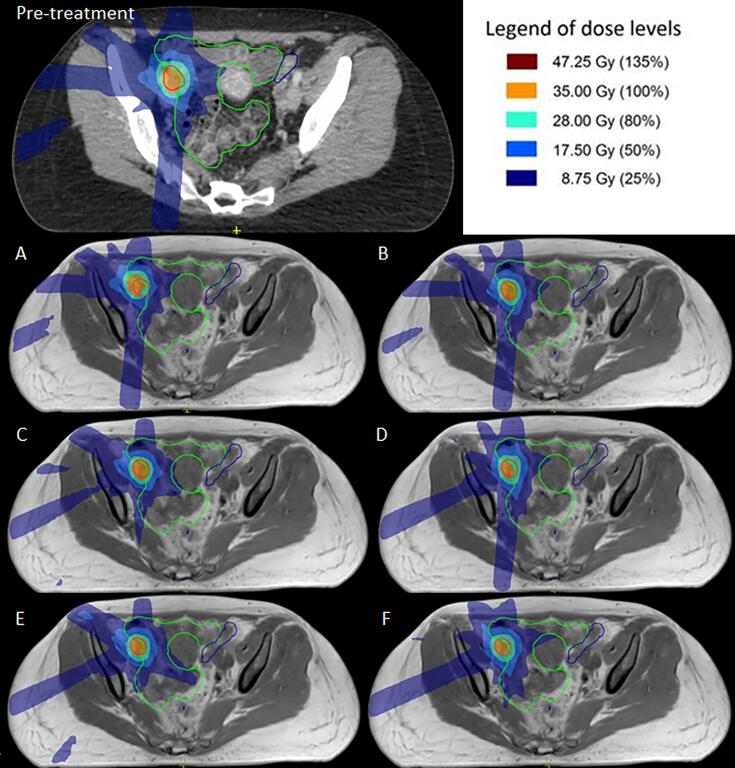
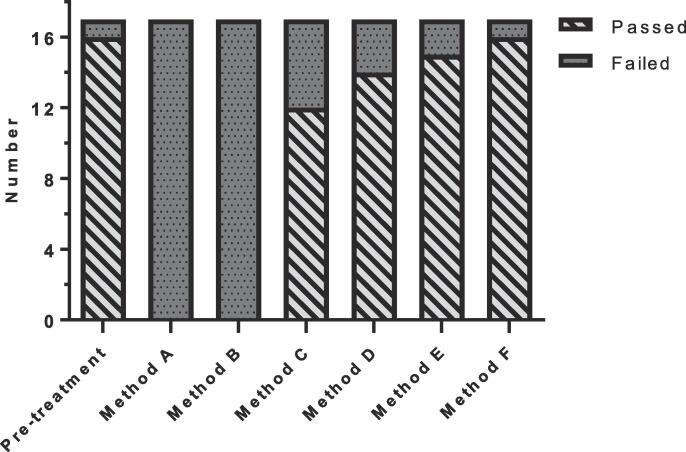
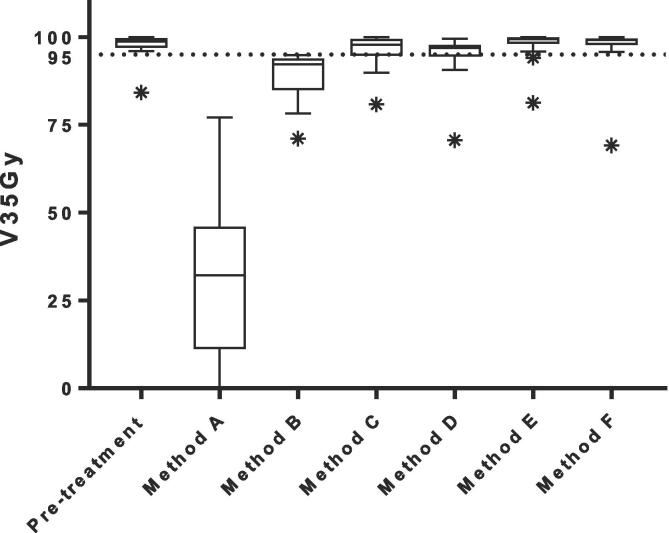
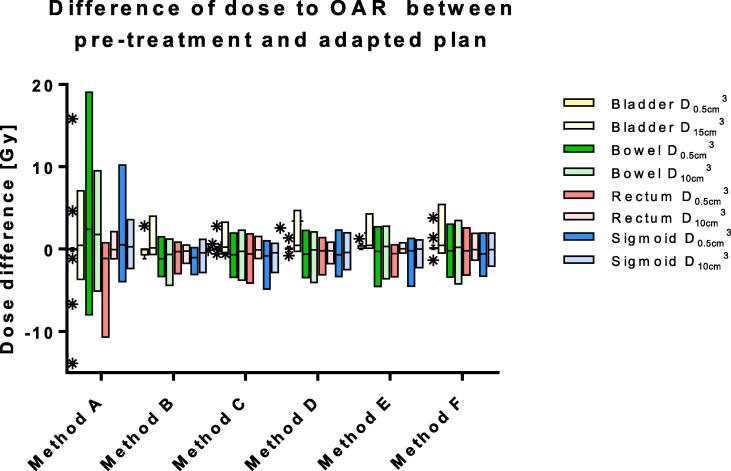
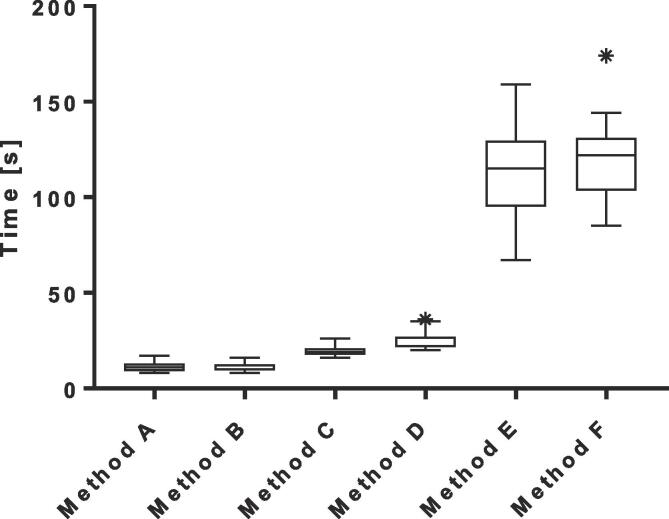
The average time needed for the different plan adaptation methods ranged between 11 and 119 s. More advanced adaptation methods resulted in more plans that met the clinical dose criteria [range, 0-16 out of 17 plans]. The results show a large difference between target coverage achieved by the different plan adaptation methods.
Results suggested that multiple plan adaptation methods, based on plan adaptation on the daily anatomy, were feasible for MR-guided SBRT treatment of lymph node oligometastases. The most advanced method, in which a full online replanning was performed by segment shape and weight optimization after fluence optimization, yielded the most favourable dosimetric values and could be performed within a time-frame acceptable (<5 min) for MR-guided treatment.
近期研究表明,在淋巴结寡转移灶的立体定向体部放射治疗(SBRT)中,使用磁共振(MR)引导的在线计划调整可产生有益的剂量学值,并减少剂量约束的意外违反情况。本R-IDEAL 0期研究的目的是确定MR引导下SBRT治疗淋巴结寡转移灶的最佳计划调整方法。
利用5例患者共17个病理淋巴结的治疗前计算机断层扫描(CT)和重复的MR数据,对每日MRI和轮廓进行6种不同的计划调整方法。为确定治疗淋巴结寡转移灶的最佳计划调整方法,使用临床剂量标准和执行计划调整所需时间对调整后的计划进行评估。
不同计划调整方法所需的平均时间在11至119秒之间。更先进的调整方法产生了更多符合临床剂量标准的计划[范围,17个计划中的0至16个]。结果显示不同计划调整方法实现的靶区覆盖存在很大差异。
结果表明,基于每日解剖结构进行计划调整的多种计划调整方法对于MR引导下SBRT治疗淋巴结寡转移灶是可行的。最先进的方法是在通量优化后通过节段形状和权重优化进行完全在线重新计划,该方法产生了最有利的剂量学值,并且可以在MR引导治疗可接受的时间范围内(<5分钟)完成。