Tan Lian, Long Yanling, Li Ziyang, Ying Xi, Ren Jiayun, Sun Cheng, Meng Xiaohong, Li Shiying
Southwest Eye Hospital/Southwest Hospital, Third Military Medical University (Army Medical University), Chongqing, 400038, China.
Key Lab of Visual Damage and Regeneration & Restoration of Chongqing, Chongqing, 400038, China.
BMC Ophthalmol. 2021 Jan 18;21(1):43. doi: 10.1186/s12886-020-01797-z.
To report the prevalence of ocular abnormalities and investigate visual acuity in a large cohort of retinitis pigmentosa (RP) patients in Western China.
The medical records and ophthalmic examination reports of 2127 eyes of 1065 RP patients at one eye hospital were retrospectively reviewed to determined the prevalence of ocular abnormalities and the relationship between best corrected visual acuity (BCVA) and macular abnormalities.
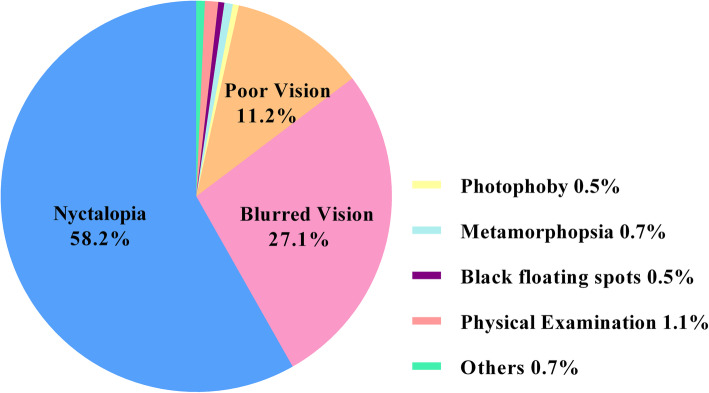
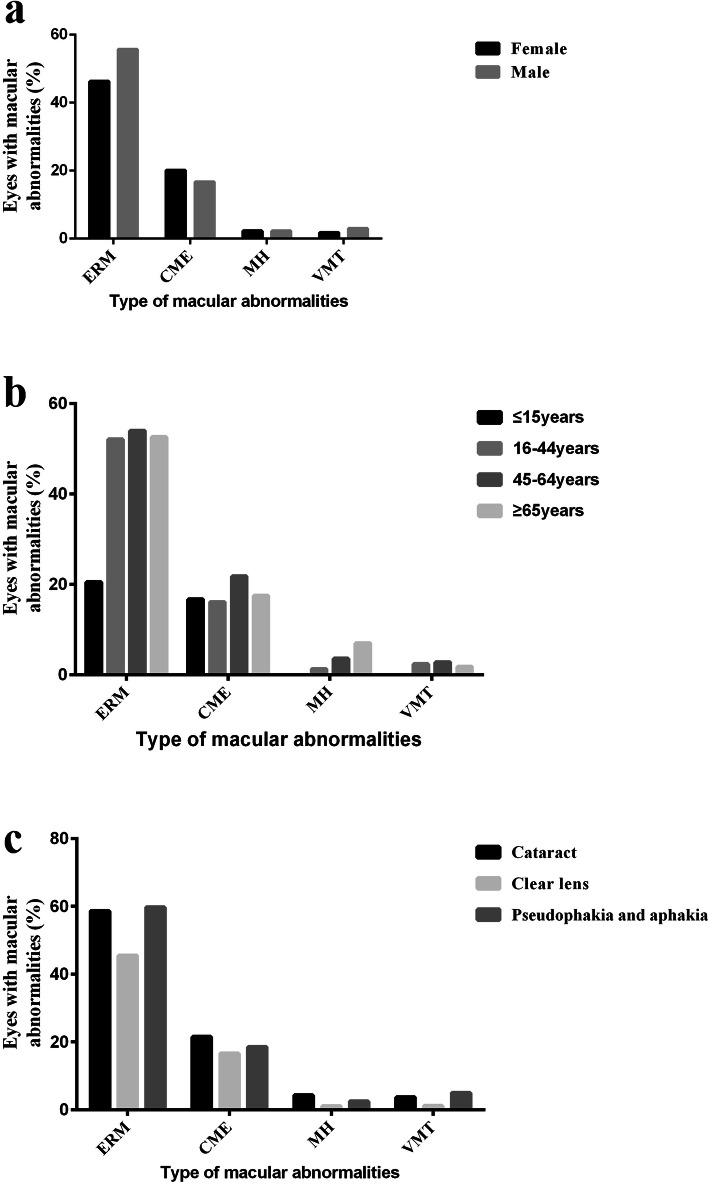
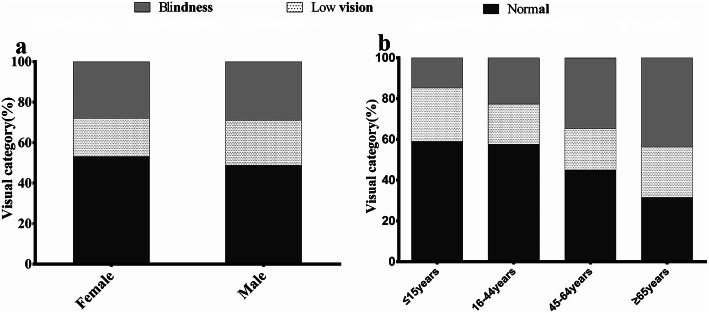
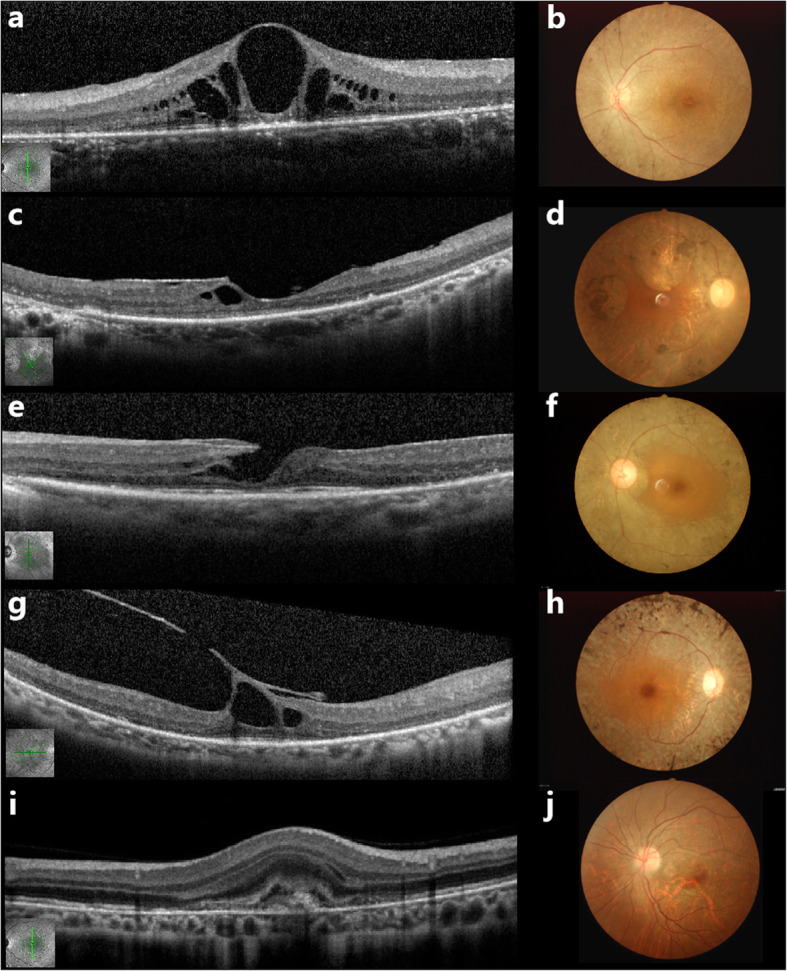
Nyctalopia (58.2%) and blurred vision (27.1%) were the leading reasons for RP patients to request an ophthalmic examination. BCVA measurements in the better eyes at first clinical presentation showed that 304 patients (28.5%) were categorised as blind and 220 patients (20.7%) as low vision. The most common ocular abnormalities were macular abnormalities (59.7%) and cataracts (43.1%). The macular abnormalities included epiretinal membranes (51.1%), cystoid macular edema (18.4%), vitreomacular traction syndrome (2.4%), macular holes (2.3%) and choroidal neovascular membranes (0.05%). Glaucoma was found in 35 eyes (1.6%). The proportions of epiretinal membranes (p = 0.001) and macular holes (p = 0.008) increased significantly with age. Cystoid macular edema was significantly associated with poorer visual acuity in RP patients with clear lens (p = 0.002).
Cataracts and macular abnormalities are common in RP patients. Of the macular abnormalities, cystoid macular edema may have a negative effect on BCVA in RP patients with clear lens. Therefore, optical coherence tomography screening in RP patients is highly recommended for early detection and treatment of maculopathy.
报告中国西部一大群视网膜色素变性(RP)患者的眼部异常患病率,并调查其视力情况。
回顾性分析一家眼科医院1065例RP患者2127只眼的病历和眼科检查报告,以确定眼部异常的患病率以及最佳矫正视力(BCVA)与黄斑异常之间的关系。
夜盲(58.2%)和视力模糊(27.1%)是RP患者要求眼科检查的主要原因。首次临床表现时较好眼的BCVA测量结果显示,304例患者(28.5%)被归类为盲人,220例患者(20.7%)为低视力。最常见的眼部异常是黄斑异常(59.7%)和白内障(43.1%)。黄斑异常包括视网膜前膜(51.1%)、黄斑囊样水肿(18.4%)、玻璃体黄斑牵引综合征(2.4%)、黄斑裂孔(2.3%)和脉络膜新生血管膜(0.05%)。发现35只眼(1.6%)患有青光眼。视网膜前膜(p = 0.001)和黄斑裂孔(p = 0.008)的比例随年龄显著增加。在晶状体透明的RP患者中,黄斑囊样水肿与较差的视力显著相关(p = 0.002)。
白内障和黄斑异常在RP患者中很常见。在黄斑异常中,黄斑囊样水肿可能对晶状体透明的RP患者的BCVA产生负面影响。因此,强烈建议对RP患者进行光学相干断层扫描筛查,以便早期发现和治疗黄斑病变。