Stone Virginia M, Ringqvist Emma E, Larsson Pär G, Domsgen Erna, Holmlund Ulrika, Sverremark-Ekström Eva, Flodström-Tullberg Malin
Center for Infectious Medicine, Department of Medicine, Karolinska Institutet, 141 52 Stockholm, Sweden.
Department of Molecular Biosciences, The Wenner-Gren Institute, Stockholm University, 106 91 Stockholm, Sweden.
Microorganisms. 2021 Jan 5;9(1):105. doi: 10.3390/microorganisms9010105.
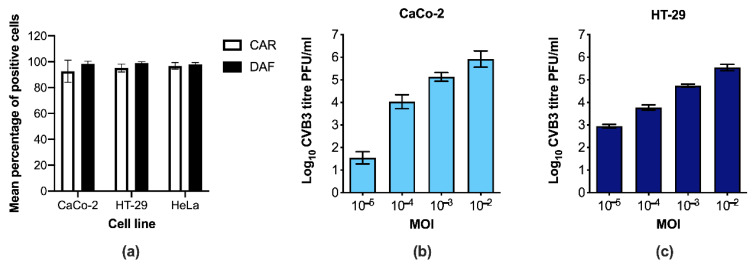
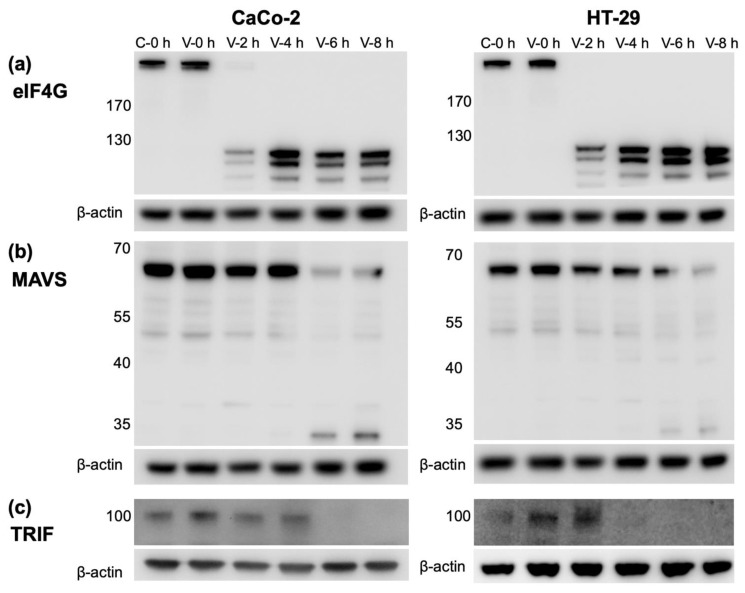
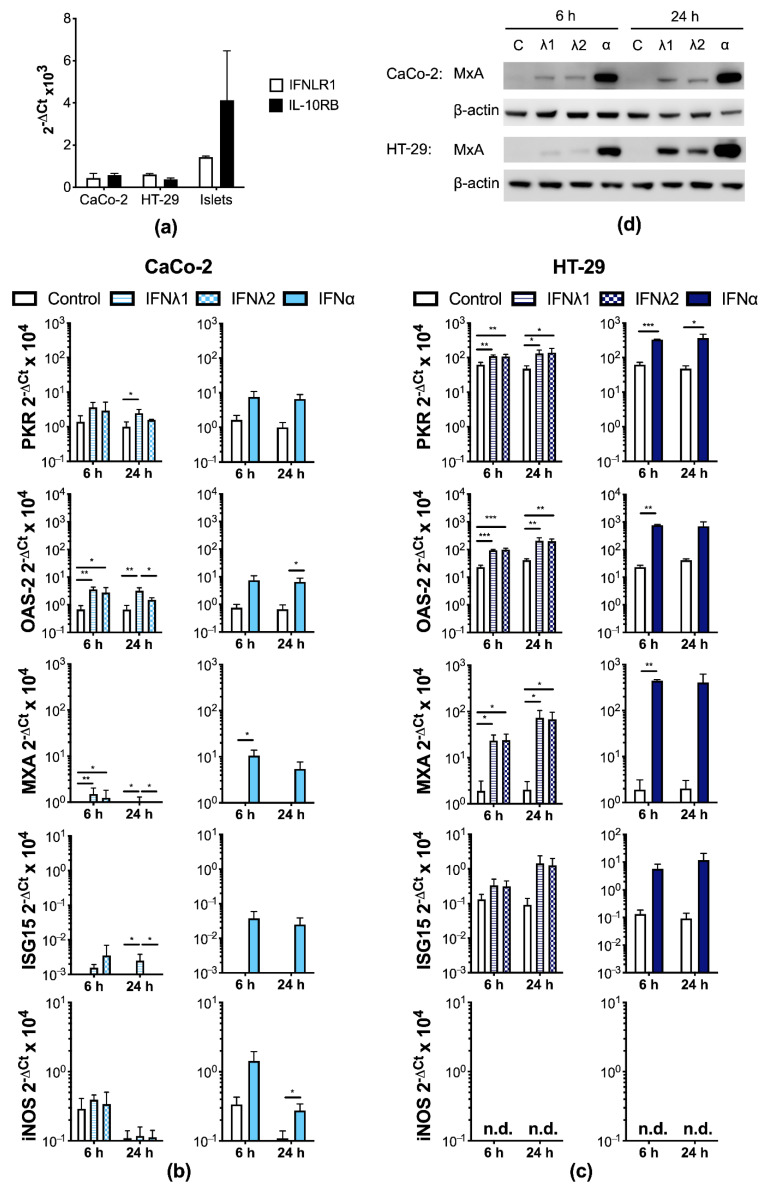
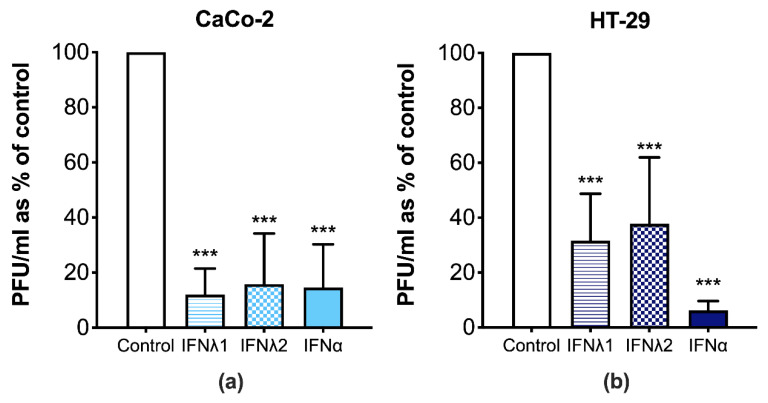
Increasing evidence highlights the importance of the antiviral activities of the type III interferons (IFNλs; IL-28A, IL-28B, IL29, and IFNλ4) in the intestine. However, many viruses have developed strategies to counteract these defense mechanisms by preventing the production of IFNs. Here we use infection models, a clinical virus isolate, and several molecular biology techniques to demonstrate that both type I and III IFNs induce an antiviral state and attenuate Coxsackievirus group B (CVB) replication in human intestinal epithelial cells (IECs). While treatment of IECs with a viral mimic (poly (I:C)) induced a robust expression of both type I and III IFNs, no such up-regulation was observed after CVB infection. The blunted IFN response was paralleled by a reduction in the abundance of proteins involved in the induction of interferon gene transcription, including TIR-domain-containing adapter-inducing interferon-β (TRIF), mitochondrial antiviral-signaling protein (MAVS), and the global protein translation initiator eukaryotic translation initiation factor 4G (eIF4G). Taken together, this study highlights a potent anti-Coxsackieviral effect of both type I and III IFNs in cells located at the primary site of infection. Furthermore, we show for the first time that the production of type I and III IFNs in IECs is blocked by CVBs. These findings suggest that CVBs evade the host immune response in order to successfully infect the intestine.
越来越多的证据凸显了III型干扰素(IFNλs;IL-28A、IL-28B、IL29和IFNλ4)在肠道中的抗病毒活性的重要性。然而,许多病毒已发展出通过阻止干扰素产生来对抗这些防御机制的策略。在此,我们使用感染模型、一种临床病毒分离株以及多种分子生物学技术来证明I型和III型干扰素均可诱导抗病毒状态并减弱柯萨奇病毒B组(CVB)在人肠道上皮细胞(IECs)中的复制。虽然用病毒模拟物(聚肌苷酸-聚胞苷酸(poly (I:C)))处理IECs可诱导I型和III型干扰素的强烈表达,但CVB感染后未观察到这种上调。干扰素反应减弱的同时,参与干扰素基因转录诱导的蛋白质丰度降低,包括含TIR结构域的衔接蛋白诱导干扰素-β(TRIF)、线粒体抗病毒信号蛋白(MAVS)以及全局蛋白质翻译起始因子真核翻译起始因子4G(eIF4G)。综上所述,本研究凸显了I型和III型干扰素在位于感染原发部位的细胞中具有强大的抗柯萨奇病毒作用。此外,我们首次表明CVB可阻断IECs中I型和III型干扰素的产生。这些发现表明CVB为成功感染肠道而逃避宿主免疫反应。