State Key Laboratory of Virology, College of Life Sciences, Wuhan University, Wuhan, China.
School of Forensic Medicine, Kunming Medical University, Kunming, China.
mBio. 2020 Nov 17;11(6):e02540-20. doi: 10.1128/mBio.02540-20.
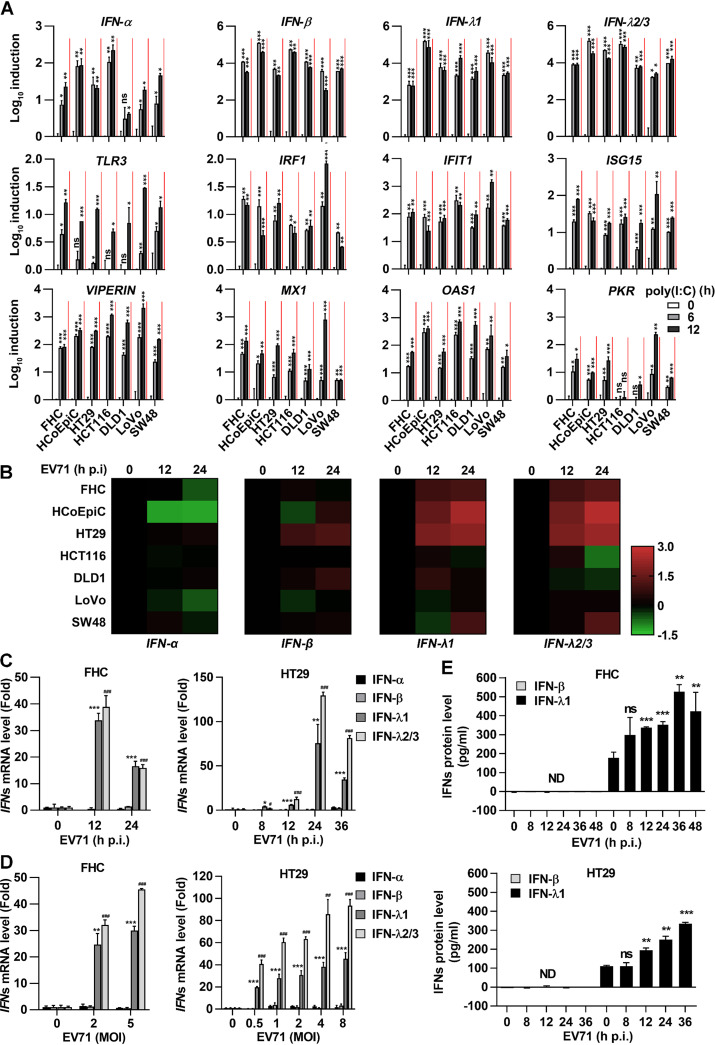
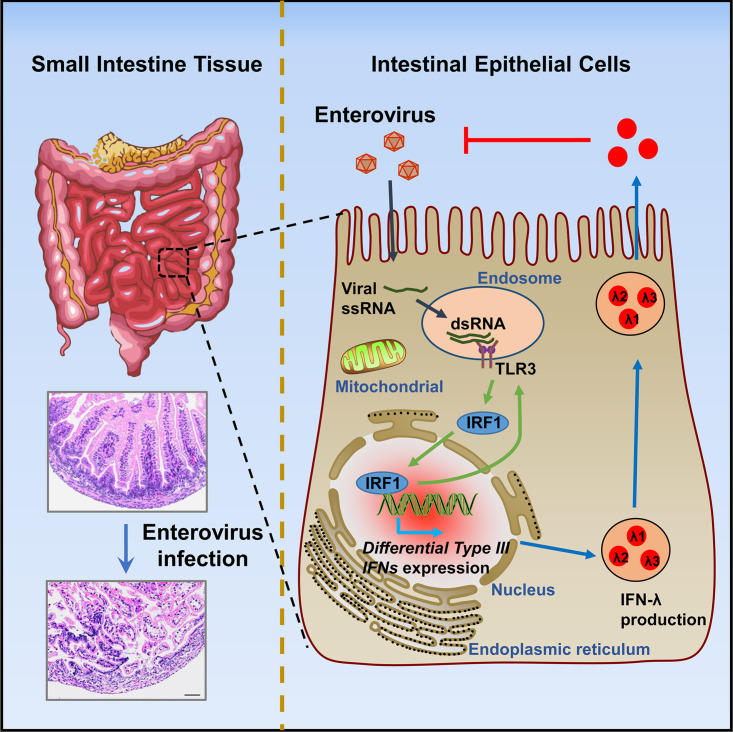
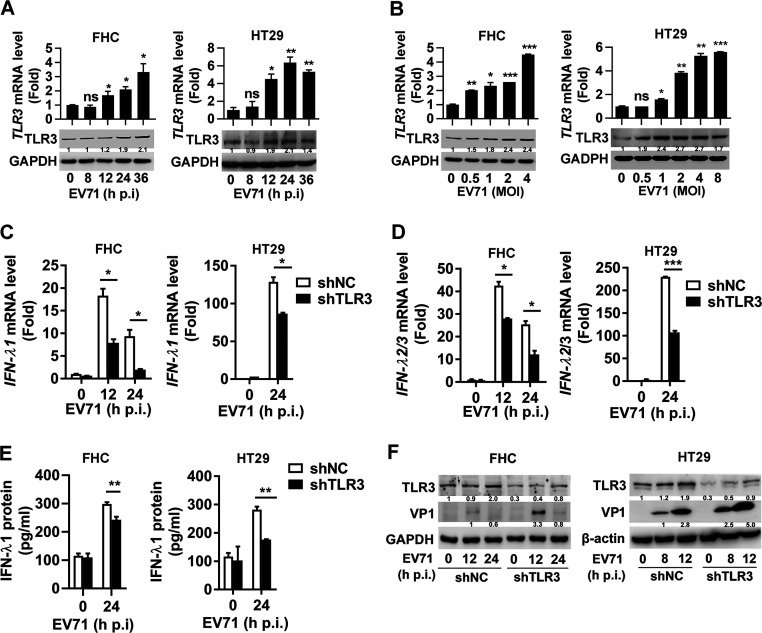
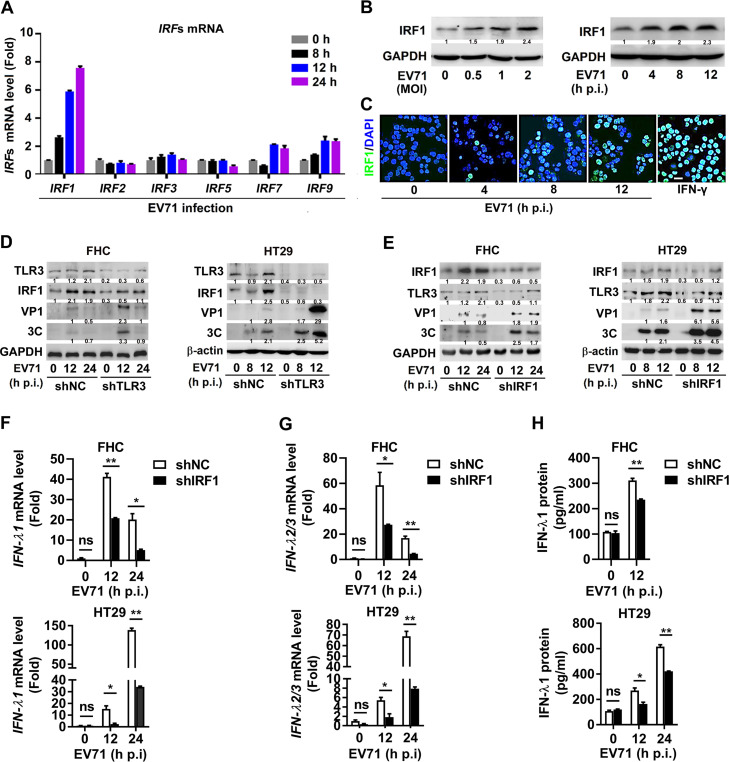
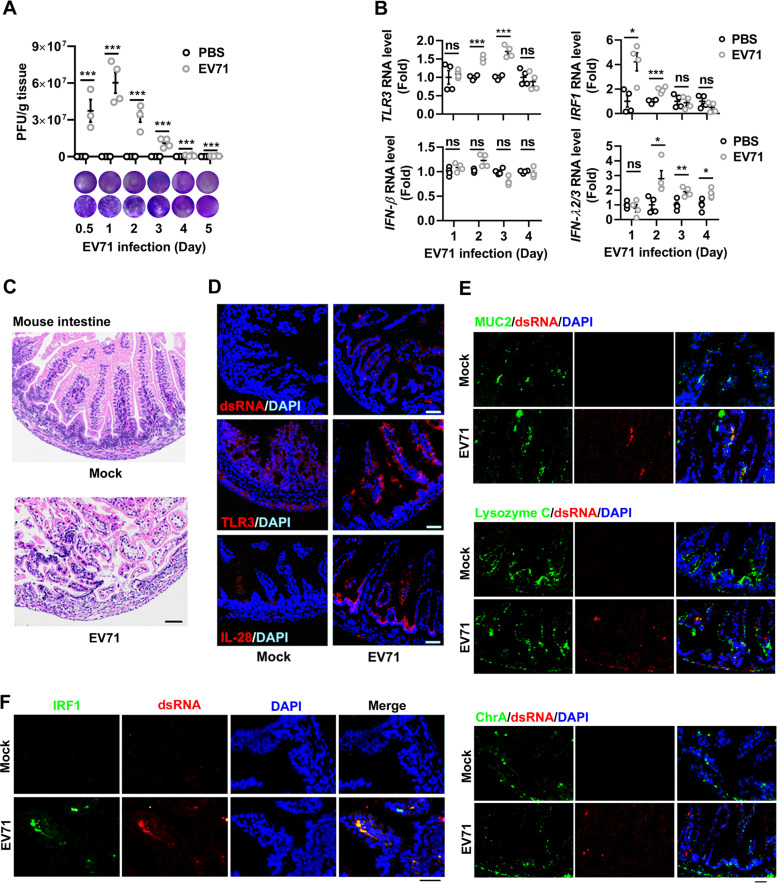
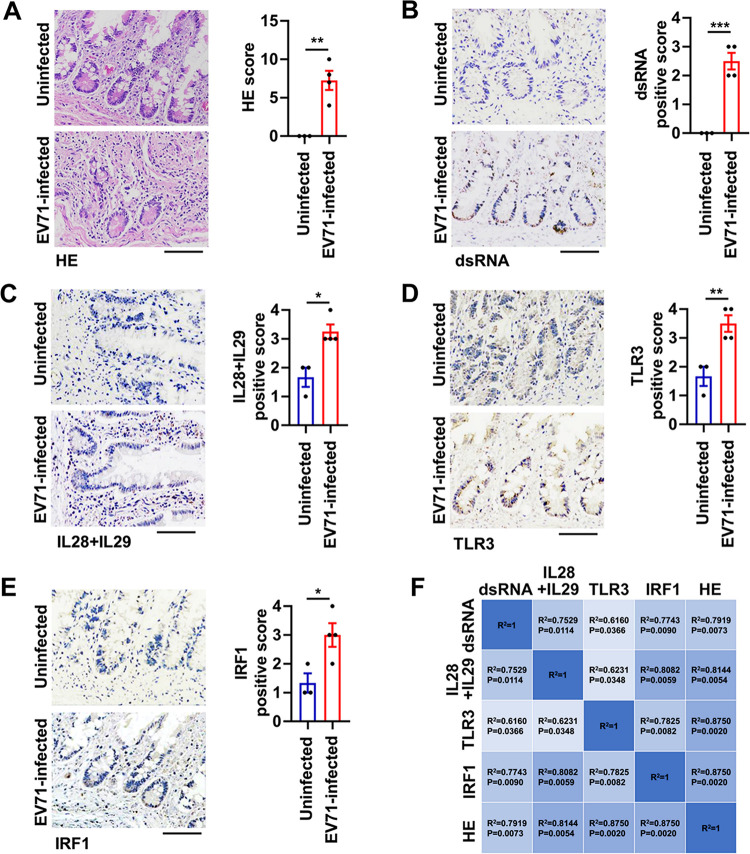
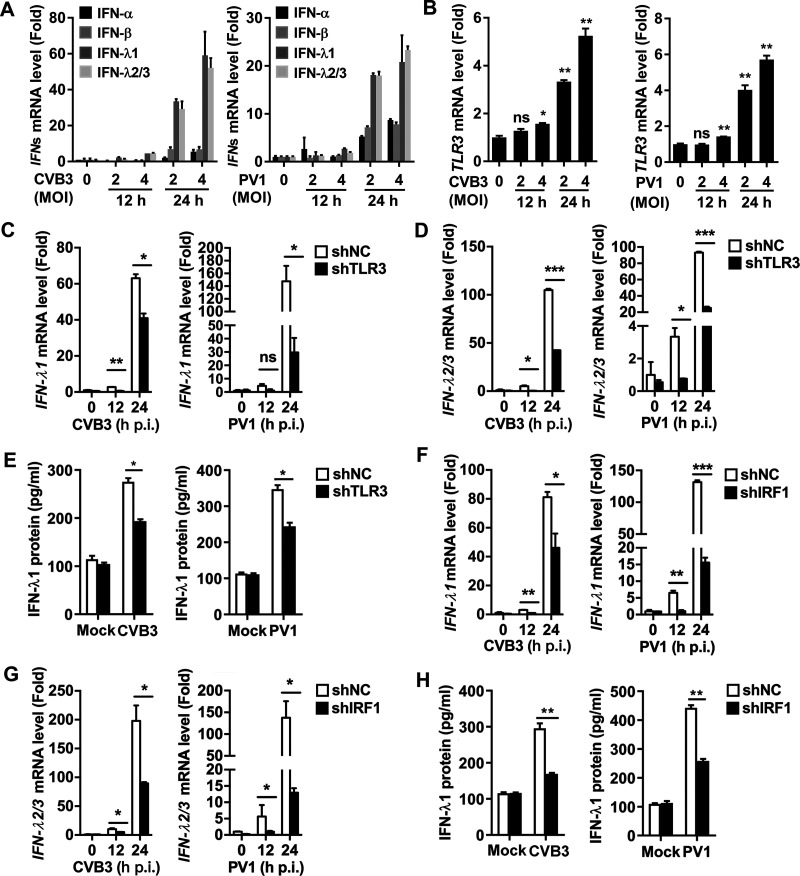
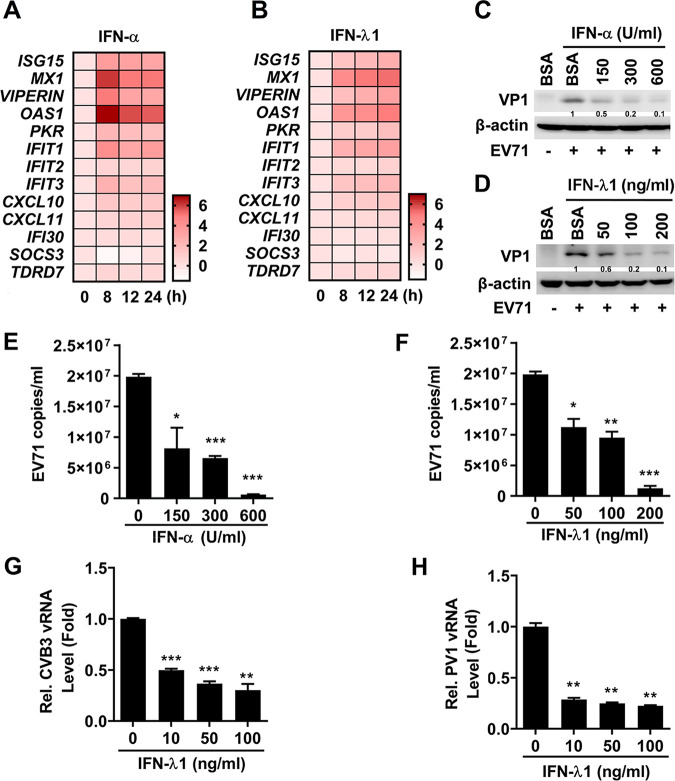
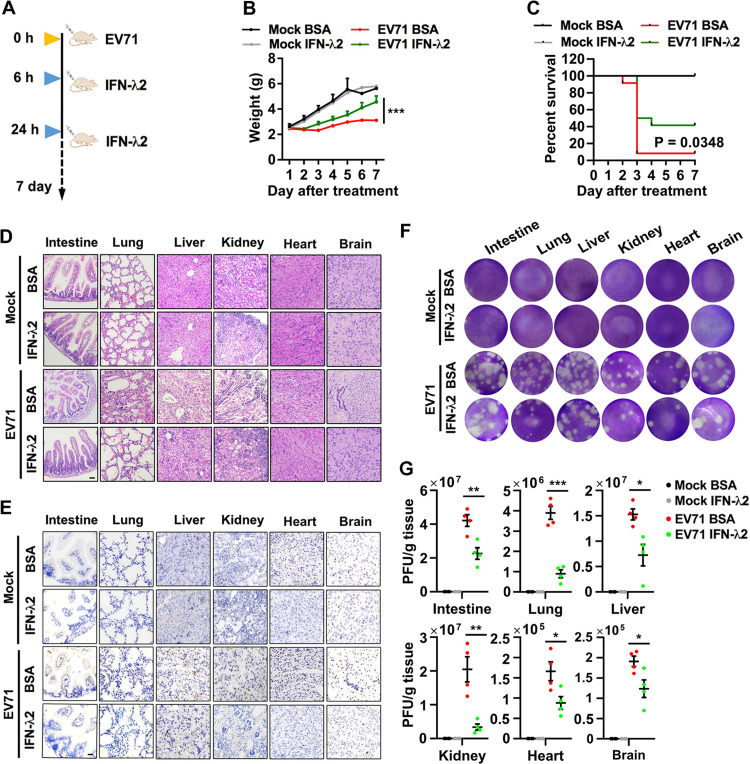
Enteroviruses infect gastrointestinal epithelium cells, cause multiple human diseases, and present public health risks worldwide. However, the mechanisms underlying host immune responses in intestinal mucosa against the early enterovirus infections remain elusive. Here, we showed that human enteroviruses including enterovirus 71 (EV71), coxsackievirus B3 (CVB3), and poliovirus 1 (PV1) predominantly induce type III interferons (IFN-λ1 and IFN-λ2/3), rather than type I interferons (IFN-α and IFN-β), in cultured human normal and cancerous intestine epithelial cells (IECs), mouse intestine tissues, and human clinical intestine specimens. Mechanistic studies demonstrated that IFN-λ production is induced upon enterovirus infection through the Toll-like receptor 3/interferon regulatory factor 1 (TLR3/IRF1) signaling pathway in IECs. In turn, the supplementation of IFN-λ subsequently induces intrinsically antiviral responses against enterovirus replication. Notably, intraperitoneal injection in neonatal C57BL/6J mice with mouse recombinant IFN-λ2 protein represses EV71 replication and protects mice from viral lethal effects. Altogether, these results revealed a distinct mechanism by which the host elicited immune responses against enterovirus infections in intestine through activating the TLR3/IRF1/type III IFN axis. The new findings would provide an antiviral strategy for the prevention and treatment of enterovirus infections and associated diseases. Enterovirus infections are significant sources of human diseases and public health risks worldwide, but little is known about the mechanism of innate immune response in host intestine epithelial surface during the viral replication. We reported the epithelial immune response in cultured human normal and cancerous cells (IECs), mouse tissues, and human clinical intestine specimens following infection with enterovirus 71. The results mechanistically revealed type III interferons (IFN-λ1 and IFN-λ2/3), rather than type I interferons (IFN-α and IFN-β), as the dominant production through TLR3/IRF1 signaling upon multiple human enterovirus infection, including enterovirus 71 (EV71), coxsackievirus B3 (CVB3), and poliovirus 1 (PV1). IFN-λ subsequently induced antiviral activity against enterovirus replication and These studies uncovered the role of the novel process of type III IFN production involved in the TLR3/IRF1 pathway in host intestine upon enterovirus infection, which highlighted a regulatory manner of antiviral defense in intestine during enterovirus infection.
肠道病毒感染胃肠道上皮细胞,引起多种人类疾病,并在全球范围内构成公共卫生风险。然而,肠道黏膜固有免疫应答宿主抵抗早期肠道病毒感染的机制仍不清楚。在这里,我们发现包括肠道病毒 71 型(EV71)、柯萨奇病毒 B3 型(CVB3)和脊髓灰质炎病毒 1 型(PV1)在内的人类肠道病毒主要在培养的人正常和癌性肠上皮细胞(IECs)、小鼠肠组织和人临床肠组织标本中诱导 III 型干扰素(IFN-λ1 和 IFN-λ2/3),而不是 I 型干扰素(IFN-α 和 IFN-β)。机制研究表明,在 IECs 中,肠道病毒感染通过 Toll 样受体 3/干扰素调节因子 1(TLR3/IRF1)信号通路诱导 IFN-λ 的产生。反过来,IFN-λ 的补充随后诱导针对肠道病毒复制的固有抗病毒反应。值得注意的是,用鼠重组 IFN-λ2 蛋白腹腔内注射新生 C57BL/6J 小鼠可抑制 EV71 复制并保护小鼠免受病毒致命影响。总之,这些结果揭示了宿主通过激活 TLR3/IRF1/III 型 IFN 轴在肠道中针对肠道病毒感染产生免疫应答的独特机制。新发现将为预防和治疗肠道病毒感染和相关疾病提供一种抗病毒策略。肠道病毒感染是全球人类疾病和公共卫生风险的重要来源,但宿主肠道上皮表面在病毒复制过程中的固有免疫反应机制知之甚少。我们报告了感染肠道病毒 71 后培养的人正常和癌性细胞(IECs)、小鼠组织和人临床肠组织标本中的上皮免疫反应。结果从机制上揭示了 III 型干扰素(IFN-λ1 和 IFN-λ2/3),而不是 I 型干扰素(IFN-α 和 IFN-β),作为多种人类肠道病毒感染(包括肠道病毒 71(EV71)、柯萨奇病毒 B3(CVB3)和脊髓灰质炎病毒 1 型(PV1))后通过 TLR3/IRF1 信号诱导的主要产生物。IFN-λ 随后诱导针对肠道病毒复制的抗病毒活性。这些研究揭示了在肠道病毒感染时,宿主肠道中涉及 TLR3/IRF1 途径的 III 型 IFN 产生的新过程在固有免疫应答中的作用,强调了肠道病毒感染期间肠道中抗病毒防御的调节方式。