Dagnell Markus, Cheng Qing, Arnér Elias S J
Division of Biochemistry, Department of Medical Biochemistry and Biophysics, Karolinska Institutet, 171 77 Stockholm, Sweden.
Department of Selenoprotein Research, National Institute of Oncology, 1122 Budapest, Hungary.
Antioxidants (Basel). 2021 Jan 14;10(1):111. doi: 10.3390/antiox10010111.
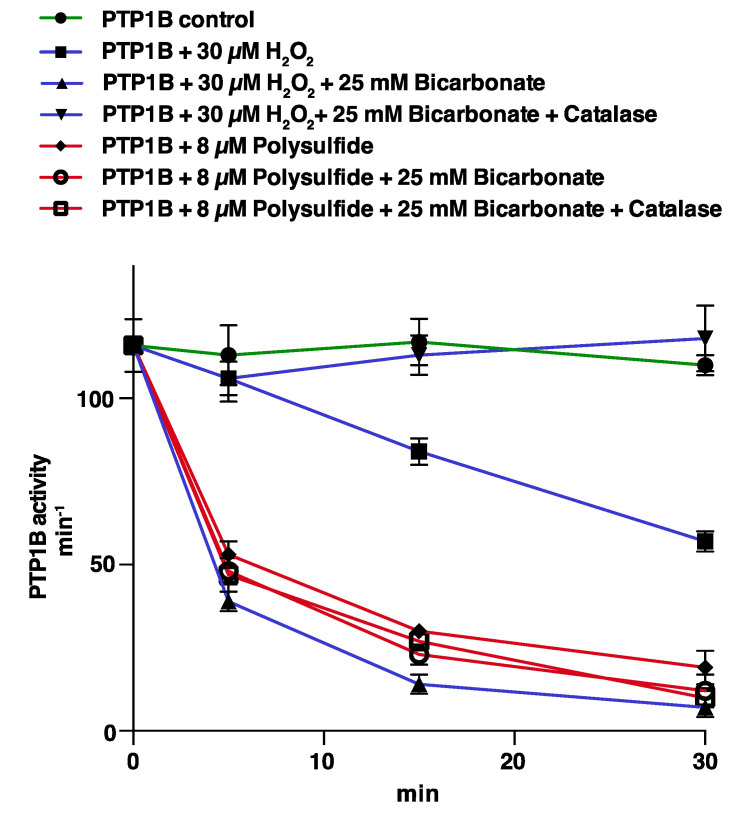
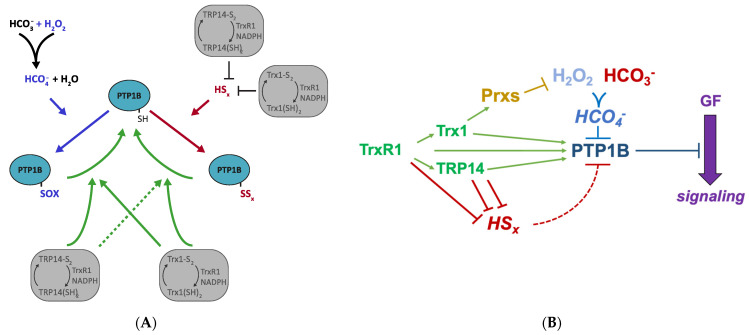
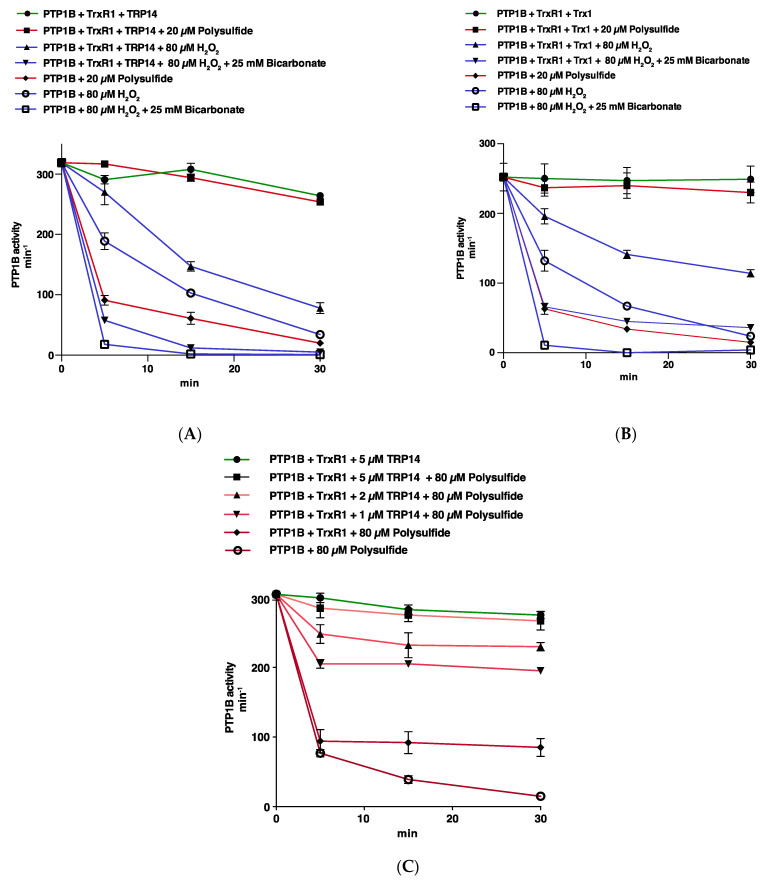
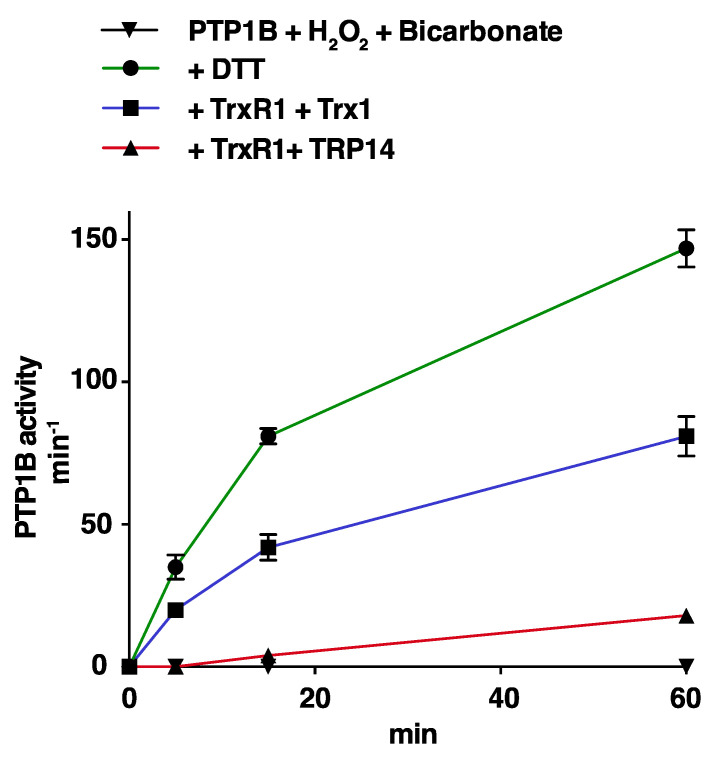
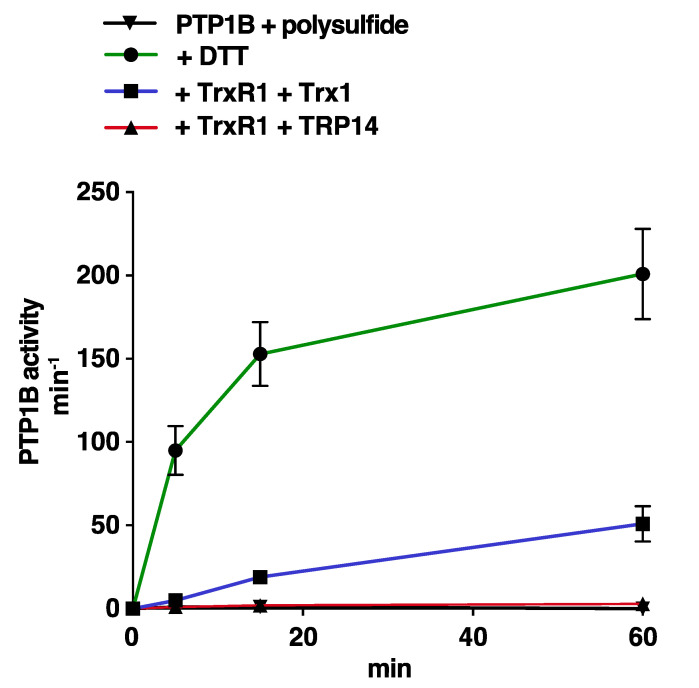
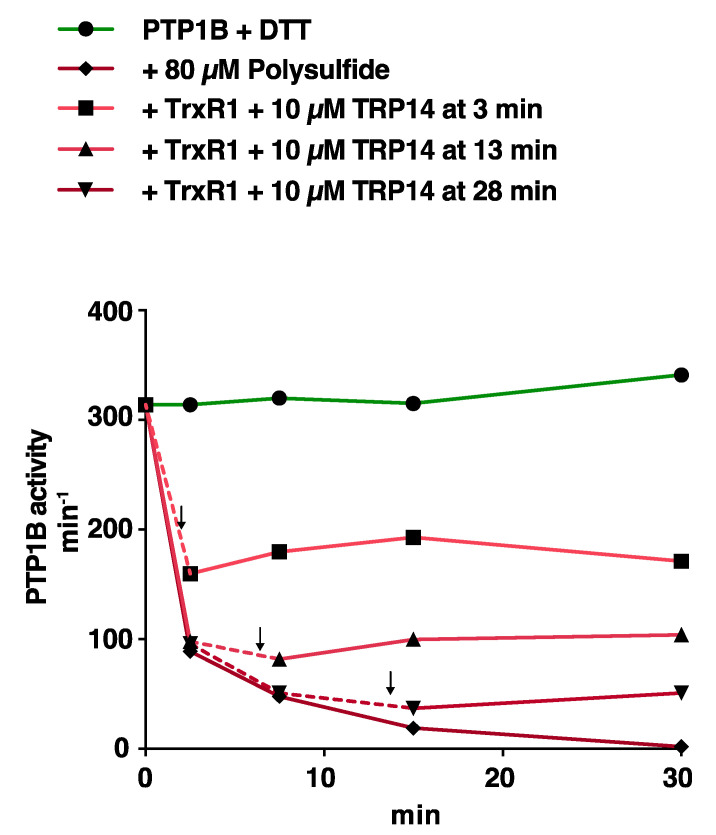
Protein tyrosine phosphatases (PTPs) can be regulated by several redox-dependent mechanisms and control growth factor-activated receptor tyrosine kinase phosphorylation cascades. Reversible oxidation of PTPs is counteracted by reductive enzymes, including thioredoxin (Trx) and Trx-related protein of 14 kDa (TRP14), keeping PTPs in their reduced active states. Different modes of oxidative inactivation of PTPs concomitant with assessment of activating reduction have been little studied in direct comparative analyses. Determining PTP1B activities, we here compared the potency of inactivation by bicarbonate-assisted oxidation using HO with that of polysulfide-mediated inactivation. Inactivation of pure PTP1B was about three times more efficient with polysulfides as compared to the combination of bicarbonate and HO. Bicarbonate alone had no effect on PTP1B, neither with nor without a combination with polysulfides, thus strengthening the notion that bicarbonate-assisted HO-mediated inactivation of PTP1B involves formation of peroxymonocarbonate. Furthermore, PTP1B was potently protected from polysulfide-mediated inactivation by either TRP14 or Trx1, in contrast to the inactivation by bicarbonate and HO. Comparing reductive activation of polysulfide-inactivated PTP1B with that of bicarbonate- and HO-treated enzyme, we found Trx1 to be more potent in reactivation than TRP14. Altogether we conclude that inactivation of PTP1B by polysulfides displays striking qualitative differences compared to that by HO together with bicarbonate, also with regard to maintenance of PTP1B activity by either Trx1 or TRP14.
蛋白酪氨酸磷酸酶(PTPs)可通过多种氧化还原依赖性机制进行调节,并控制生长因子激活的受体酪氨酸激酶磷酸化级联反应。PTPs的可逆氧化可被包括硫氧还蛋白(Trx)和14 kDa硫氧还蛋白相关蛋白(TRP14)在内的还原酶抵消,从而使PTPs保持还原的活性状态。在直接比较分析中,对PTPs氧化失活的不同模式以及激活还原的评估研究较少。在测定PTP1B活性时,我们在此比较了使用HO进行碳酸氢盐辅助氧化的失活效力与多硫化物介导的失活效力。与碳酸氢盐和HO的组合相比,多硫化物对纯PTP1B的失活效率高出约三倍。单独的碳酸氢盐对PTP1B没有影响,无论是否与多硫化物组合,这进一步强化了碳酸氢盐辅助的HO介导的PTP1B失活涉及过氧一碳酸酯形成的观点。此外,与碳酸氢盐和HO的失活不同,TRP14或Trx1可有效保护PTP1B免受多硫化物介导的失活。比较多硫化物失活的PTP1B与碳酸氢盐和HO处理的酶的还原激活情况,我们发现Trx1在再激活方面比TRP14更有效。总之,我们得出结论,与HO和碳酸氢盐相比,多硫化物对PTP1B的失活在质量上存在显著差异,在通过Trx1或TRP14维持PTP1B活性方面也是如此。