Lehmann Christian, Aali Maral, Zhou Juan, Holbein Bruce
Department of Anesthesia, Pain Management and Perioperative Medicine, Dalhousie University, Halifax, NS B3H 4R2, Canada.
Department of Physiology and Biophysics, Dalhousie University, Halifax, NS B3H 4R2, Canada.
Life (Basel). 2021 Jan 14;11(1):57. doi: 10.3390/life11010057.
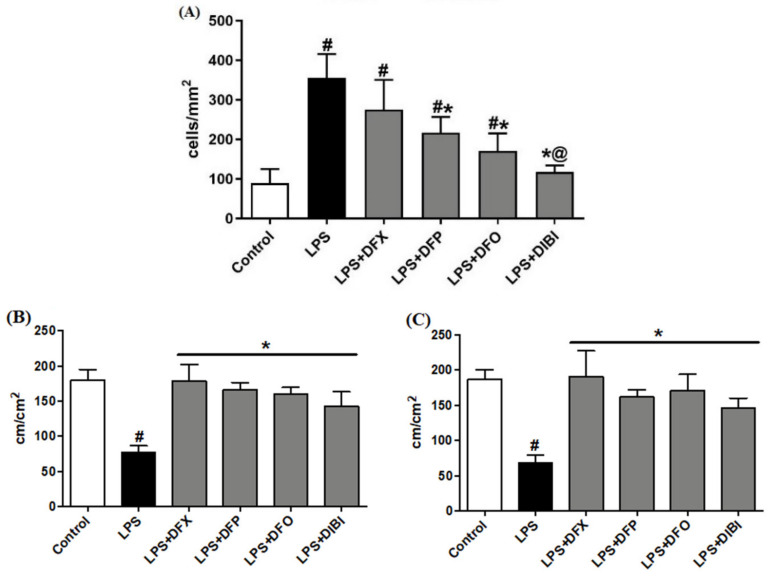
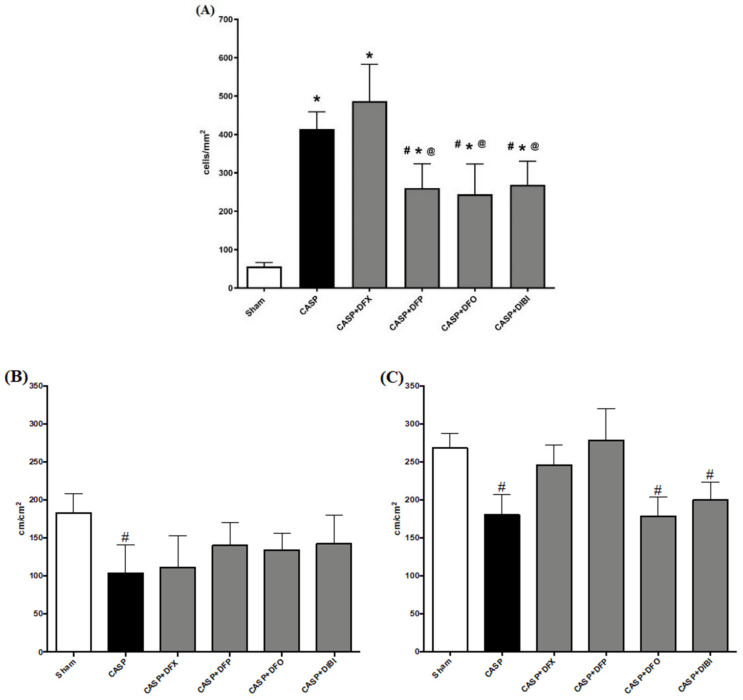
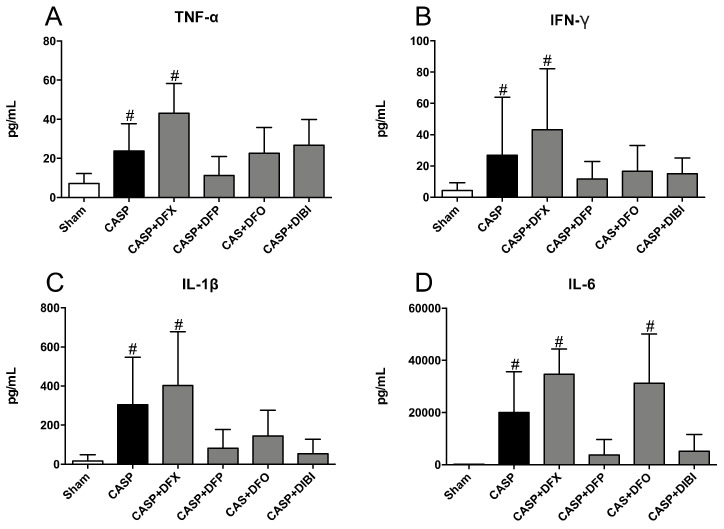
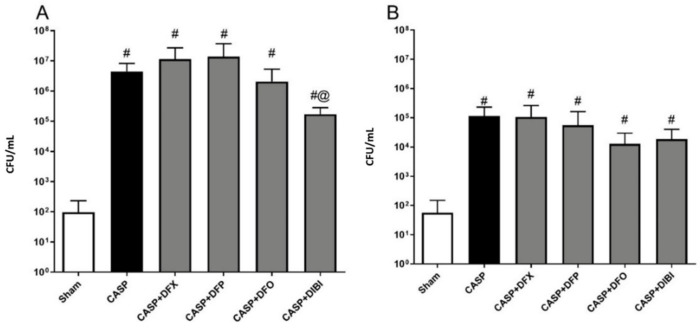
Growing evidence indicates that dysregulated iron metabolism with altered and excess iron availability in some body compartments plays a significant role in the course of infection and sepsis in humans. Given that all bacterial pathogens require iron for growth, that iron withdrawal is a normal component of innate host defenses and that bacterial pathogens have acquired increasing levels of antibiotic resistance, targeting infection and sepsis through use of appropriate iron chelators has potential to provide new therapeutics. We have directly compared the effects of three Food and Drug Administration (FDA)-approved chelators (deferoxamine-DFO; deferiprone-DFP; and deferasirox-DFX), as were developed for treating hematological iron overload conditions, to DIBI, a novel purpose-designed, anti-infective and anti-inflammatory water-soluble hydroxypyridinone containing iron-selective copolymers. Two murine sepsis models, endotoxemia and polymicrobial abdominal sepsis, were utilized to help differentiate anti-inflammatory versus anti-infective activities of the chelators. Leukocyte adhesion, as measured by intravital microscopy, was observed in both models, with DIBI providing the most effective reduction and DFX the poorest. Inflammation in the abdominal sepsis model, assessed by cytokine measurements, indicated exacerbation by DFX and DFO for plasma Interleukin (IL)-6 and reductions to near-control levels for DIBI and DFP. Peritoneal infection burden was reduced 10-fold by DIBI while DFX and DFP provided no reductions. Overall, the results, together with those from other studies, revealed serious limitations for each of the three hematological chelators, i.e., as potentially repurposed for treating infection/sepsis. In contrast, DIBI provided therapeutic benefits, consistent with various in vitro and in vivo results from other studies, supporting the potential for its use in treating sepsis.
越来越多的证据表明,人体某些部位铁代谢失调,铁的可用性发生改变且过量,这在人类感染和脓毒症的病程中起着重要作用。鉴于所有细菌病原体的生长都需要铁,铁的去除是宿主固有防御的正常组成部分,并且细菌病原体的抗生素耐药性不断增强,因此使用适当的铁螯合剂来治疗感染和脓毒症有可能提供新的治疗方法。我们直接比较了三种美国食品药品监督管理局(FDA)批准的螯合剂(去铁胺-DFO;地拉罗司-DFP;和地拉罗司-DFX)的效果,这些螯合剂是为治疗血液系统铁过载疾病而开发的,与DIBI进行了比较,DIBI是一种新设计的、具有抗感染和抗炎作用的水溶性含羟基吡啶酮的铁选择性共聚物。利用两种小鼠脓毒症模型,即内毒素血症和多微生物腹腔脓毒症模型,来区分螯合剂的抗炎和抗感染活性。通过活体显微镜观察到两种模型中均有白细胞粘附现象,其中DIBI的降低效果最为显著,而DFX的效果最差。通过细胞因子测量评估腹腔脓毒症模型中的炎症,结果表明DFX和DFO会使血浆白细胞介素(IL)-6水平升高,而DIBI和DFP则将其降低至接近对照水平。DIBI使腹腔感染负担降低了10倍,而DFX和DFP则没有降低感染负担。总体而言,这些结果以及其他研究的结果表明,这三种血液学螯合剂中的每一种都存在严重局限性,即它们作为潜在的用于治疗感染/脓毒症的药物。相比之下,DIBI具有治疗益处,这与其他研究的各种体外和体内结果一致,支持了其用于治疗脓毒症的潜力。