Tibana Ramires Alsamir, De Sousa Nuno Manuel Frade, Prestes Jonato, Voltarelli Fabrício Azevedo
Graduate Program in Health Sciences, Faculty of Medicine, Federal University of Mato Grosso, 78000 Cuiabá (MT), Brazil.
Laboratory of Exercise Physiology, Faculty Estacio of Vitoria, 29010 Vitoria (ES), Brazil.
J Funct Morphol Kinesiol. 2018 Nov 28;3(4):60. doi: 10.3390/jfmk3040060.
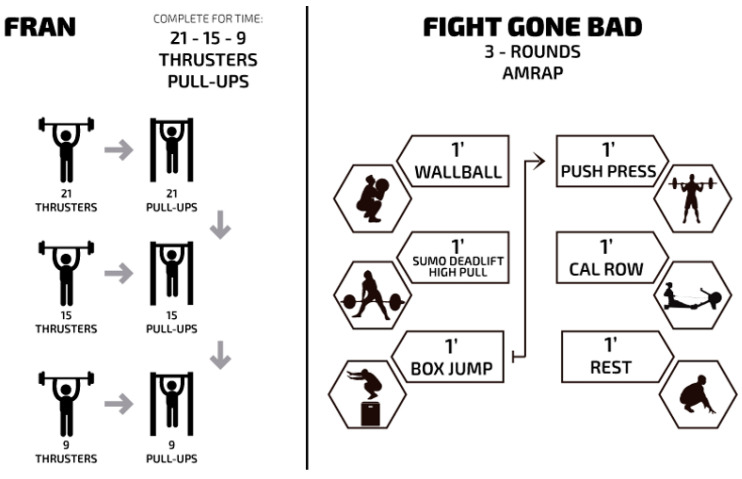
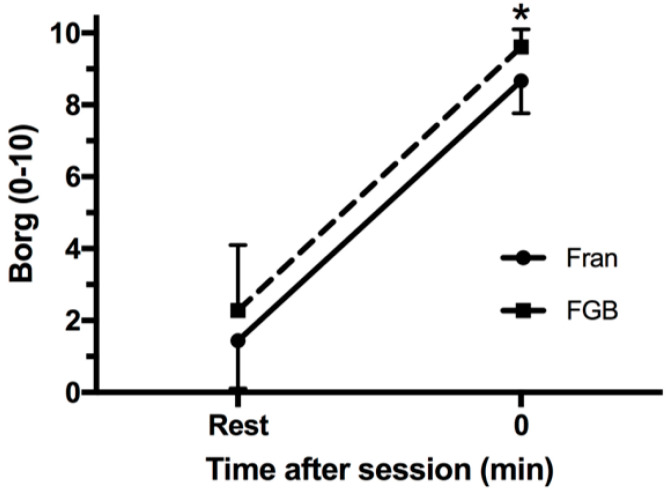
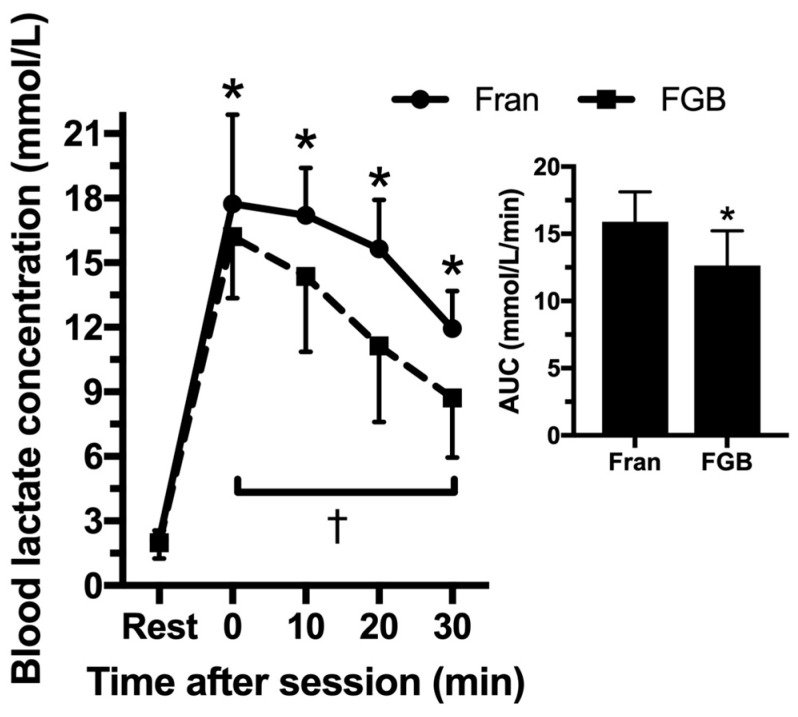
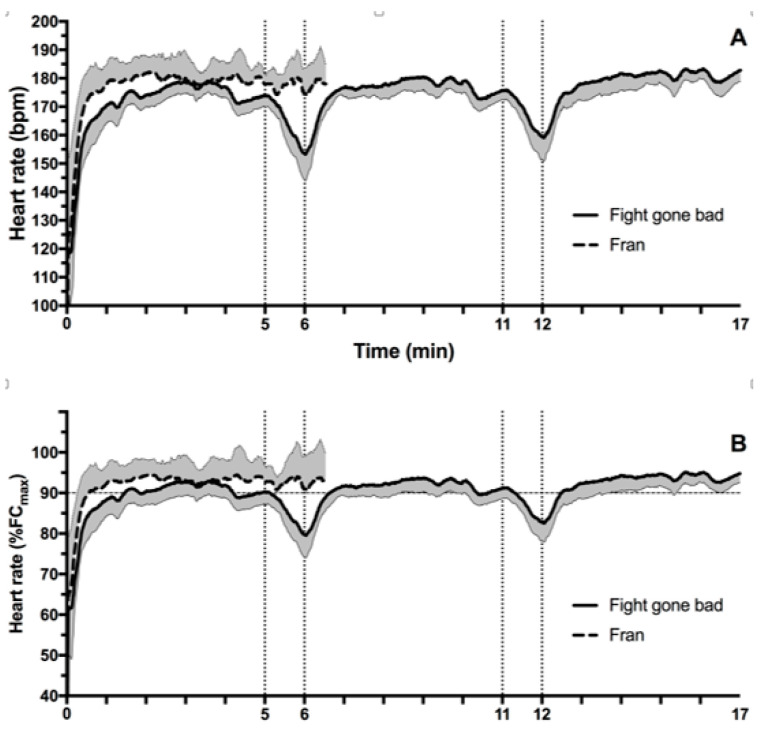
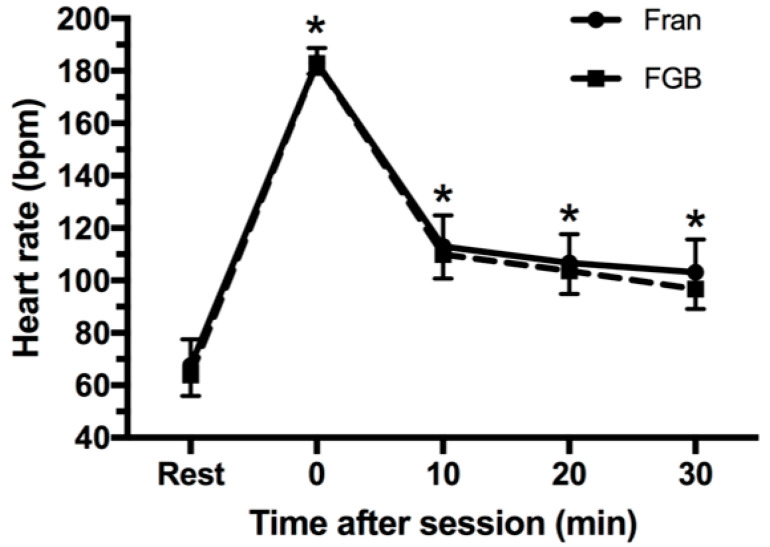
The aim of this study was to analyze blood lactate concentration (LAC), heart rate (HR), and rating perceived exertion (RPE) during and after shorter and longer duration CrossFit sessions. Nine men (27.7 ± 3.2 years; 11.3 ± 4.6% body fat percentage and training experience: 41.1 ± 19.6 months) randomly performed two CrossFit sessions (shorter: ~4 min and longer: 17 min) with a 7-day interval between them. The response of LAC and HR were measured pre, during, immediately after, and 10, 20, and 30 min after the sessions. RPE was measured pre and immediately after sessions. Lactate levels were higher during the recovery of the shorter session as compared with the longer session (shorter: 15.9 ± 2.2 mmol/L/min, longer: 12.6 ± 2.6 mmol/L/min; = 0.019). There were no significant differences between protocols on HR during (shorter: 176 ± 6 bpm or 91 ± 4% HRmax, longer: 174 ± 3 bpm or 90 ± 3% HRmax, = 0.387). The LAC was significantly higher throughout the recovery period for both training sessions as compared to pre-exercise. The RPE was increased immediately after both sessions as compared to pre-exercise, while there was no significant difference between them (shorter: 8.7 ± 0.9, longer: 9.6 ± 0.5; = 0.360). These results demonstrated that both shorter and longer sessions induced elevated cardiovascular responses which met the recommendations for gains in cardiovascular fitness. In addition, both training sessions had a high metabolic and perceptual response, which may not be suitable if performed on consecutive days.
本研究的目的是分析在时长较短和较长的CrossFit训练期间及之后的血乳酸浓度(LAC)、心率(HR)和自觉用力程度(RPE)。九名男性(年龄27.7±3.2岁;体脂率11.3±4.6%;训练经验:41.1±19.6个月)随机进行两次CrossFit训练(较短时长:约4分钟;较长时长:17分钟),两次训练间隔7天。在训练前、训练期间、训练结束后即刻以及训练结束后10、20和30分钟测量LAC和HR的反应。在训练前和训练结束后即刻测量RPE。与较长时长训练相比,较短时长训练恢复期间的乳酸水平更高(较短时长:15.9±2.2毫摩尔/升/分钟,较长时长:12.6±2.6毫摩尔/升/分钟;P = 0.019)。训练期间,两种训练方案的HR无显著差异(较短时长:176±6次/分钟或91±4%最大心率,较长时长:174±3次/分钟或90±3%最大心率,P = 0.387)。与运动前相比,两次训练的整个恢复期间LAC均显著升高。与运动前相比,两次训练结束后即刻RPE均升高,而两者之间无显著差异(较短时长:8.7±0.9,较长时长:9.6±0.5;P = 0.360)。这些结果表明,较短和较长时长的训练均会引起心血管反应升高,达到了心血管适能提升的建议水平。此外,两次训练均具有较高的代谢和感知反应,如果连续进行可能不合适。