National Reference Laboratory of HIV, National Center of Infectious and Parasitic Diseases, 1504 Sofia, Bulgaria.
Division of HIV/AIDS Prevention, National Center for HIV/AIDS, Viral Hepatitis, STD, and TB Prevention, Centers for Disease Control and Prevention, Atlanta, GA 30329, USA.
Viruses. 2021 Jan 16;13(1):116. doi: 10.3390/v13010116.
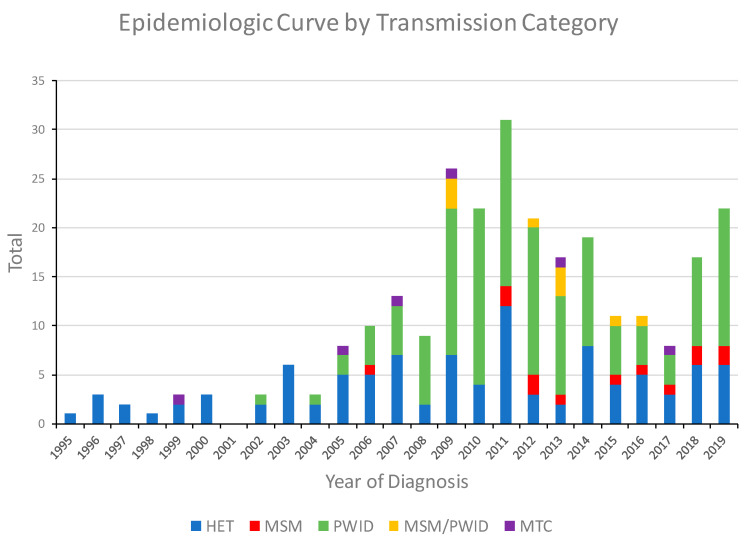
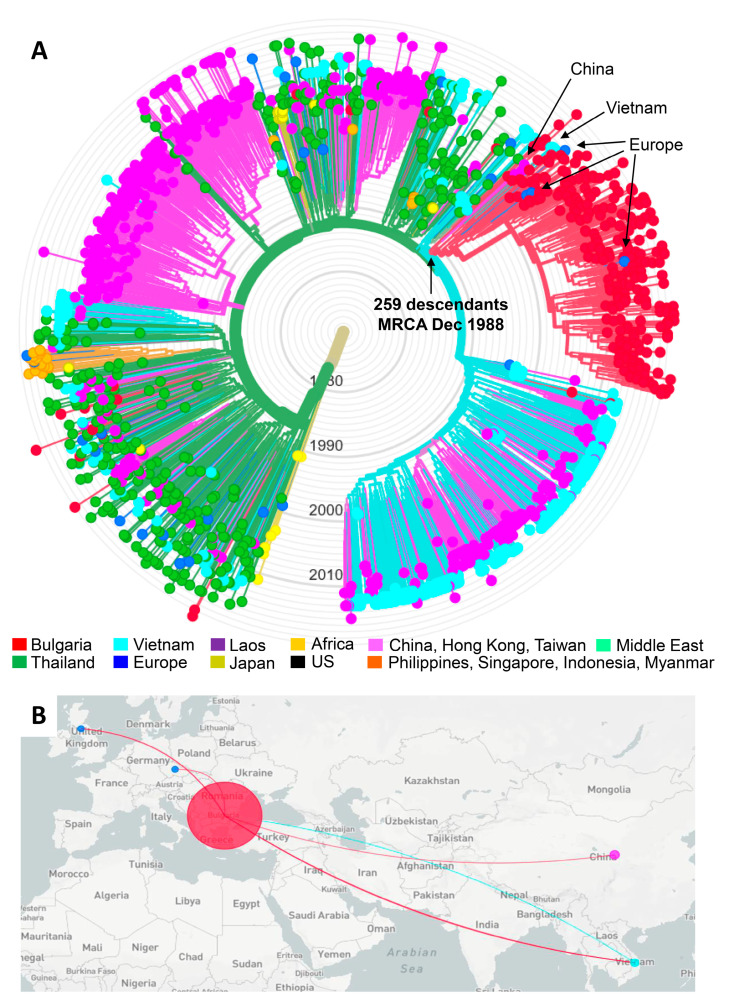
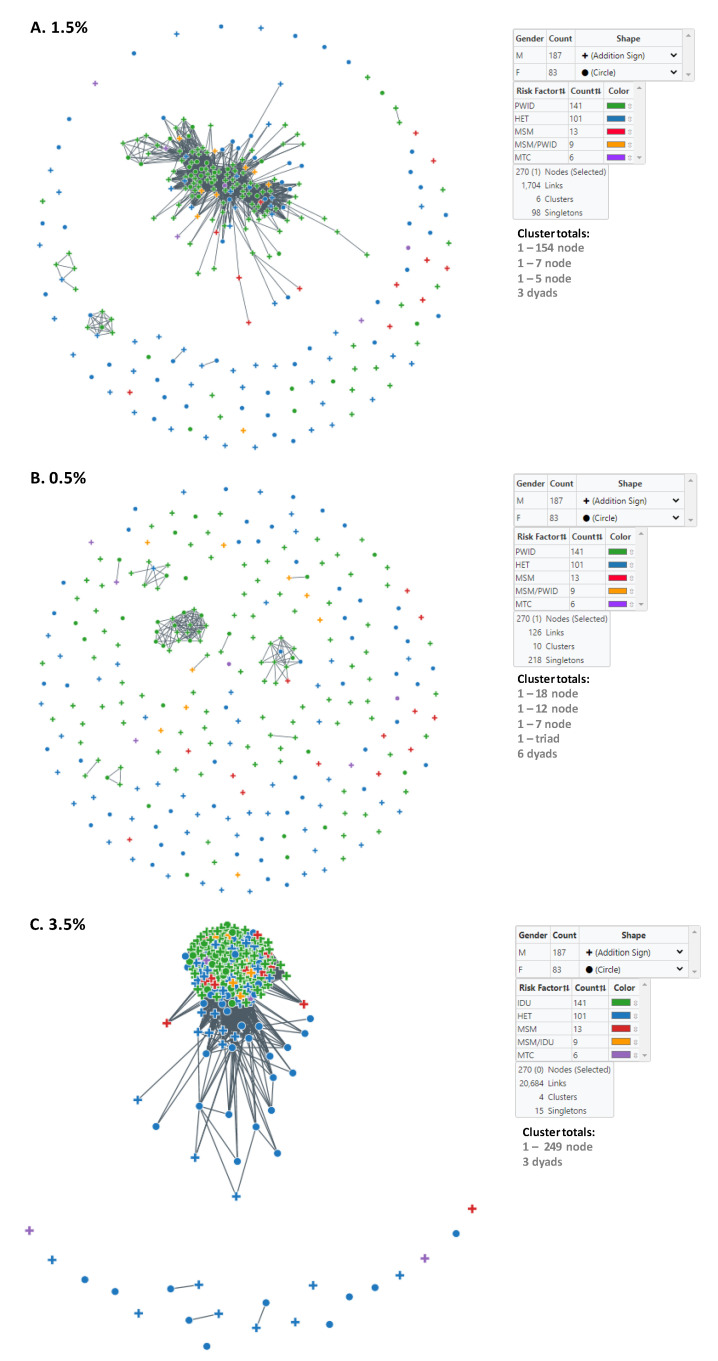
HIV-1 subtype CRF01_AE is the second most predominant strain in Bulgaria, yet little is known about the molecular epidemiology of its origin and transmissibility. We used a phylodynamics approach to better understand this sub-epidemic by analyzing 270 HIV-1 polymerase () sequences collected from persons diagnosed with HIV/AIDS between 1995 and 2019. Using network analyses at a 1.5% genetic distance threshold (), we found a large 154-member outbreak cluster composed mostly of persons who inject drugs (PWID) that were predominantly men. At = 0.5%, which was used to identify more recent transmission, the large cluster dissociated into three clusters of 18, 12, and 7 members, respectively, five dyads, and 107 singletons. Phylogenetic analysis of the Bulgarian sequences with publicly available global sequences showed that CRF01_AE likely originated from multiple Asian countries, with Vietnam as the likely source of the outbreak cluster between 1988 and 1990. Our findings indicate that CRF01_AE was introduced into Bulgaria multiple times since 1988, and infections then rapidly spread among PWID locally with bridging to other risk groups and countries. CRF01_AE continues to spread in Bulgaria as evidenced by the more recent large clusters identified at = 0.5%, highlighting the importance of public health prevention efforts in the PWID communities.
HIV-1 亚型 CRF01_AE 是保加利亚第二大主要流行株,但关于其起源和传播能力的分子流行病学知之甚少。我们采用系统发育动力学方法,通过分析 1995 年至 2019 年间诊断为 HIV/AIDS 的 270 例 HIV-1 聚合酶(pol)序列,更好地了解了这一亚流行。在 1.5%遗传距离阈值()的网络分析中,我们发现了一个由主要为男性的注射吸毒者(PWID)组成的 154 个成员的大型暴发簇。在 = 0.5%时,用于识别更近的传播,大型簇分为三个簇,分别为 18、12 和 7 个成员,5 对和 107 个单倍型。与公开的全球序列的保加利亚序列的系统发育分析表明,CRF01_AE 可能源自多个亚洲国家,越南是 1988 年至 1990 年暴发簇的可能来源。我们的研究结果表明,自 1988 年以来,CRF01_AE 已多次传入保加利亚,随后在当地迅速传播给 PWID,并与其他风险群体和国家传播。最近在 = 0.5%时发现的更大簇表明 CRF01_AE 仍在保加利亚传播,突出了在 PWID 群体中开展公共卫生预防工作的重要性。