Centre of Excellence for Research in AIDS (CERiA), Department of Medicine, Faculty of Medicine, University of Malaya, Kuala Lumpur, Malaysia.
PLoS One. 2013 May 7;8(5):e62560. doi: 10.1371/journal.pone.0062560. Print 2013.
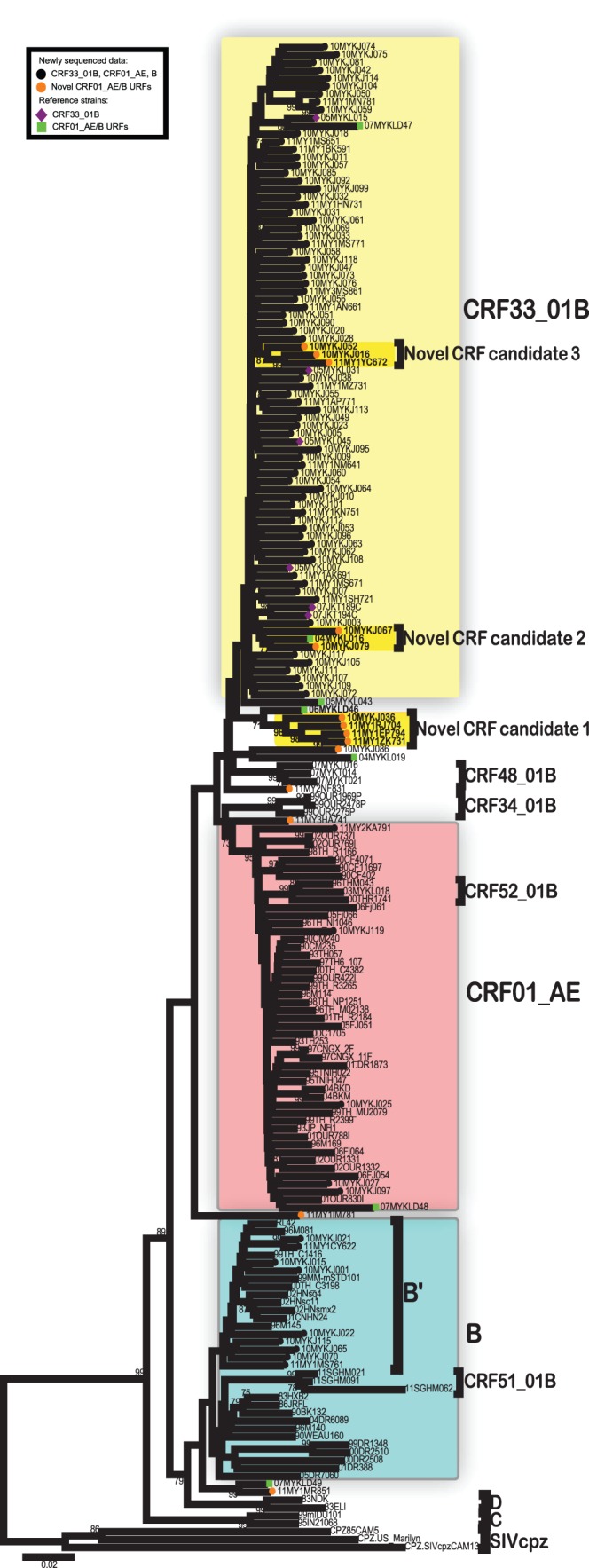
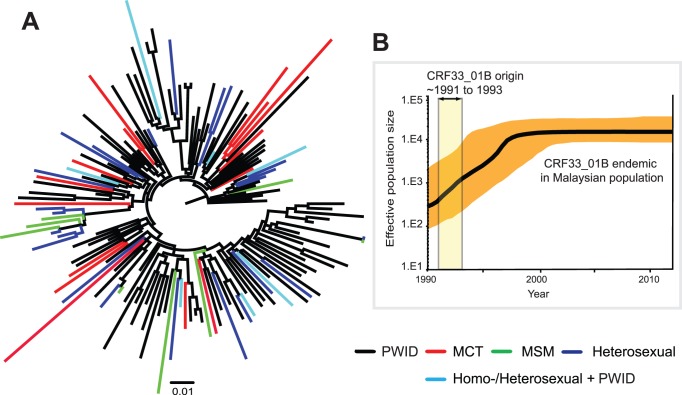
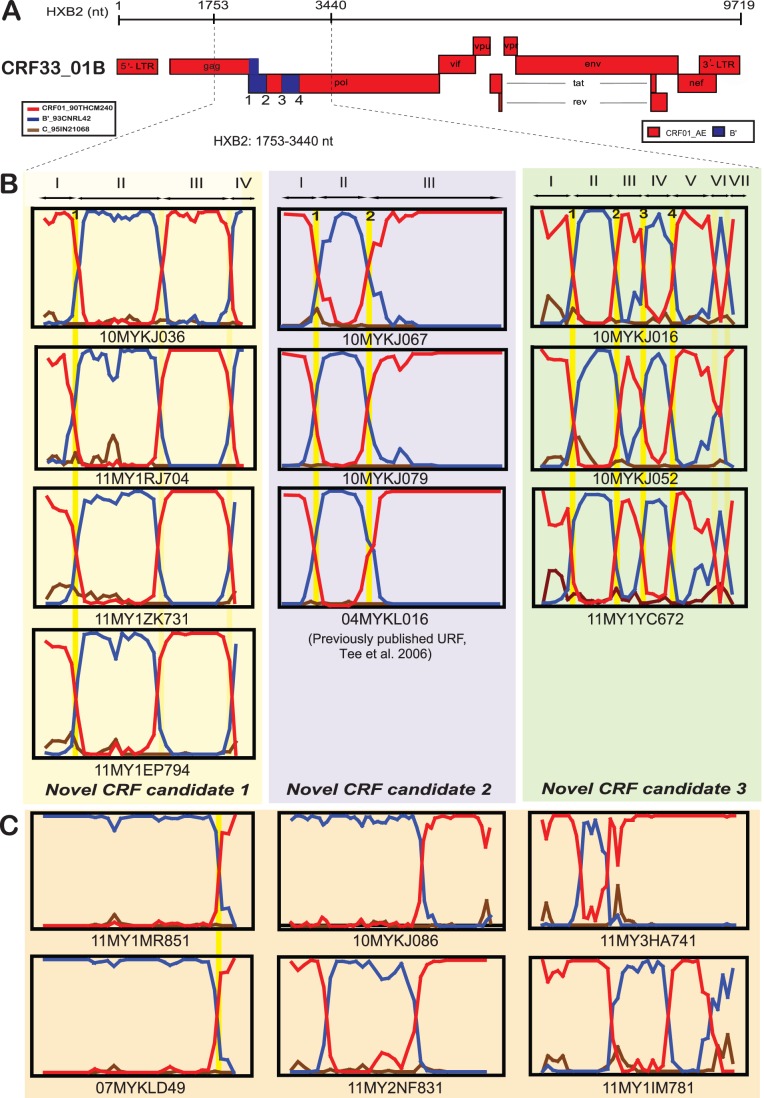
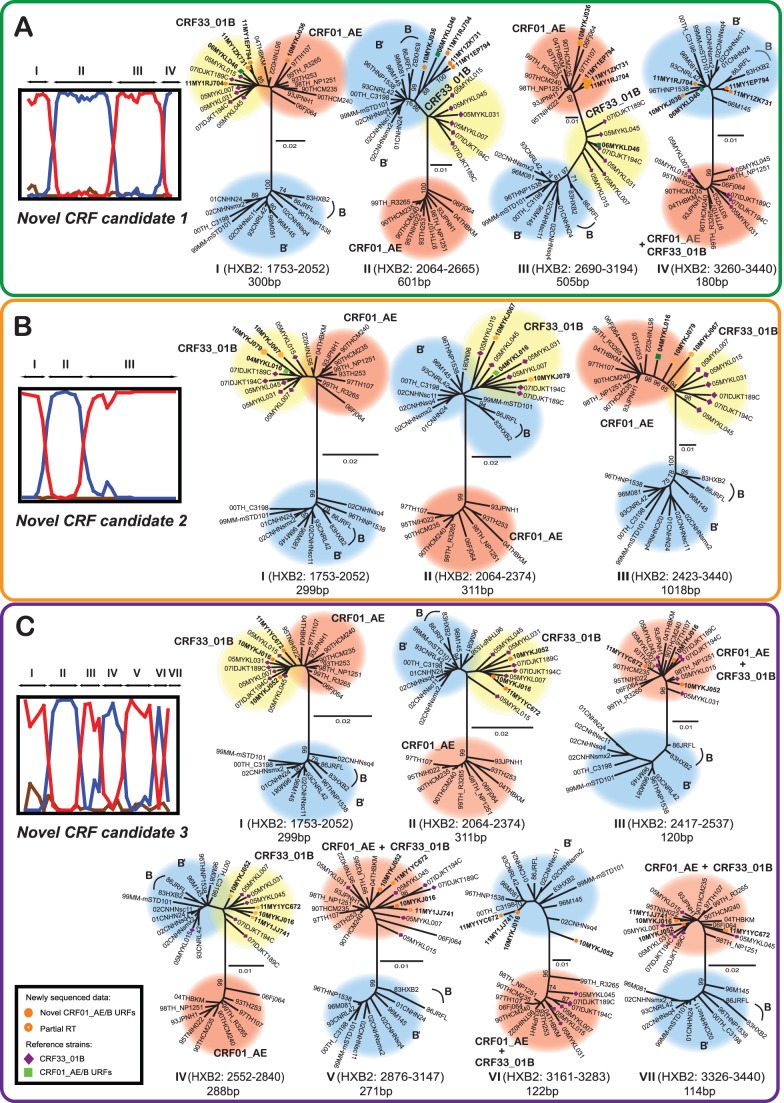
Since the discovery of HIV-1 circulating recombinant form (CRF) 33_01B in Malaysia in the early 2000 s, continuous genetic diversification and active recombination involving CRF33_01B and other circulating genotypes in the region including CRF01_AE and subtype B' of Thai origin, have led to the emergence of novel CRFs and unique recombinant forms. The history and magnitude of CRF33_01B transmission among various risk groups including people who inject drugs (PWID) however have not been investigated despite the high epidemiological impact of CRF33_01B in the region. We update the most recent molecular epidemiology of HIV-1 among PWIDs recruited in Malaysia between 2010 and 2011 by population sequencing and phylogenetic analysis of 128 gag-pol sequences. HIV-1 CRF33_01B was circulating among 71% of PWIDs whilst a lower prevalence of other previously dominant HIV-1 genotypes [subtype B' (11%) and CRF01_AE (5%)] and CRF01_AE/B' unique recombinants (13%) were detected, indicating a significant shift in genotype replacement in this population. Three clusters of CRF01_AE/B' recombinants displaying divergent yet phylogenetically-related mosaic genomes to CRF33_01B were identified and characterized, suggestive of an abrupt emergence of multiple novel CRF clades. Using rigorous maximum likelihood approach and the Bayesian Markov chain Monte Carlo (MCMC) sampling of CRF33_01Bpol sequences to elucidate the past population dynamics, we found that the founder lineages of CRF33_01B were likely to have first emerged among PWIDs in the early 1990 s before spreading exponentially to various high and low-risk populations (including children who acquired infections from their mothers) and later on became endemic around the early 2000 s. Taken together, our findings provide notable genetic evidence indicating the widespread expansion of CRF33_01B among PWIDs and into the general population. The emergence of numerous previously unknown recombinant clades highlights the escalating genetic complexity of HIV-1 in the Southeast Asian region.
自 21 世纪初在马来西亚发现 HIV-1 循环重组形式(CRF)33_01B 以来,该地区包括源自泰国的 CRF01_AE 和亚型 B'的 CRF33_01B 和其他循环基因型的持续遗传多样化和活跃重组,导致了新型 CRF 和独特重组形式的出现。然而,尽管 CRF33_01B 在该地区具有很高的流行病学影响,但包括注射吸毒者(PWID)在内的各种风险群体中 CRF33_01B 的传播历史和规模尚未得到调查。我们通过对 2010 年至 2011 年间在马来西亚招募的 PWID 进行人群测序和 128 个 gag-pol 序列的系统发育分析,更新了 HIV-1 最近的分子流行病学。在 PWID 中,71%的人感染了 HIV-1 CRF33_01B,而其他先前占主导地位的 HIV-1 基因型[亚型 B'(11%)和 CRF01_AE(5%)]和 CRF01_AE/B'独特重组体(13%)的流行率较低,表明该人群中基因型替代发生了重大变化。确定并描述了三个 CRF01_AE/B'重组体簇,这些簇显示出与 CRF33_01B 不同但系统发育相关的镶嵌基因组,提示突然出现了多个新型 CRF 分支。使用严格的最大似然方法和贝叶斯马尔可夫链蒙特卡罗(MCMC)抽样对 CRF33_01Bpol 序列进行分析,以阐明过去的种群动态,我们发现 CRF33_01B 的创始谱系可能首先出现在 20 世纪 90 年代初的 PWID 中,然后呈指数级传播到各种高风险和低风险人群(包括从母亲那里感染的儿童),随后在 21 世纪初左右成为地方性流行。总的来说,我们的发现提供了显著的遗传证据,表明 CRF33_01B 在 PWID 中以及在普通人群中的广泛扩展。许多以前未知的重组分支的出现突显了东南亚地区 HIV-1 遗传复杂性的不断升级。