Varona Elisa, Tres Alba, Rafecas Magdalena, Vichi Stefania, Barroeta Ana C, Guardiola Francesc
Departament de Nutrició, Ciències de l'Alimentació i Gastronomia, Campus de l'Alimentació de Torribera, Facultat de Farmàcia i Ciències de l'Alimentació, Universitat de Barcelona, Av Prat de la Riba, 08921 Santa Coloma de Gramenet, Spain.
Institut de Recerca en Nutrició i Seguretat Alimentària (INSA-UB), Universitat de Barcelona, Av Prat de la Riba, 08921 Santa Coloma de Gramenet, Spain.
Animals (Basel). 2021 Jan 15;11(1):196. doi: 10.3390/ani11010196.
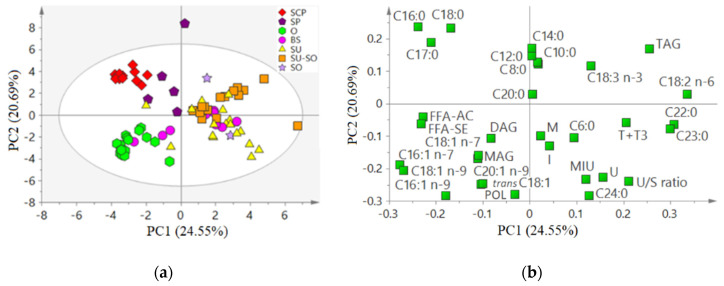
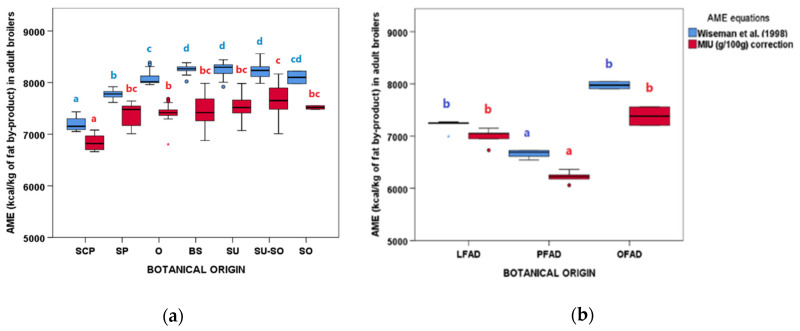
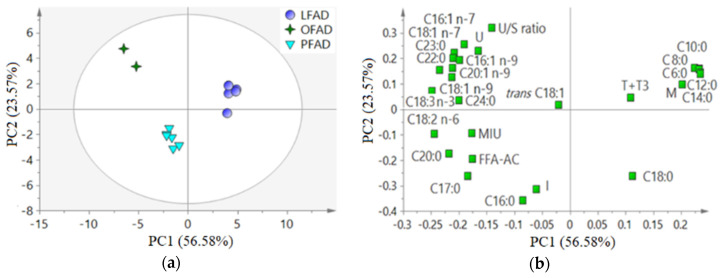
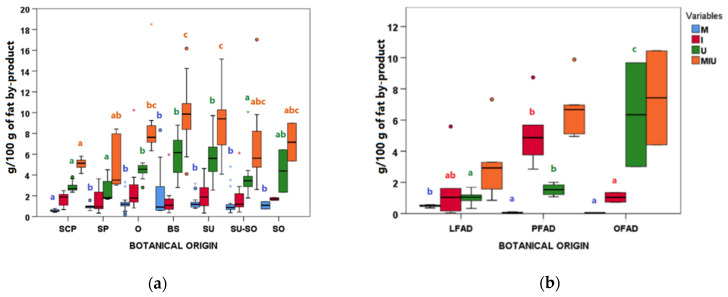
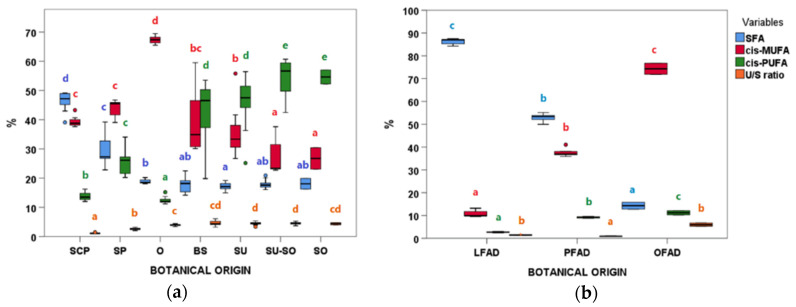
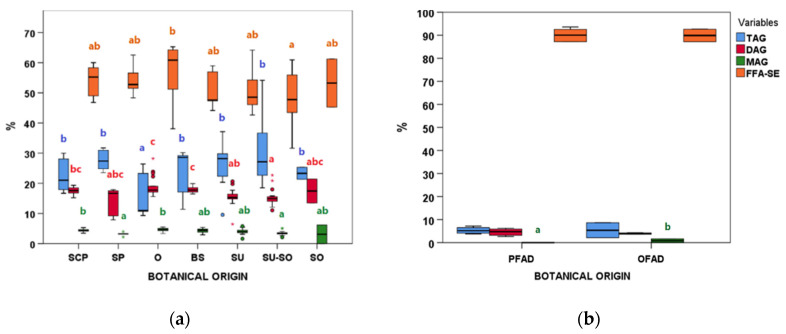
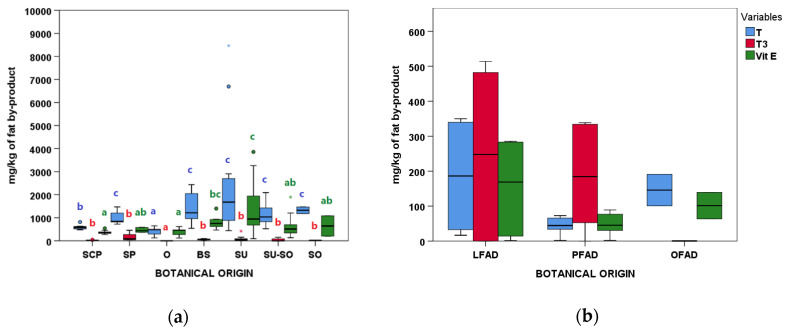
Acid oils (AO) and fatty acid distillates (FAD) are oil refining by-products rich in free fatty acids. The objective of this study is their characterization and the identification of their sources of variability so that they can be standardized to improve their use as feed ingredients. Samples (n=92) were collected from the Spanish market and the MIU value (sum of moisture, insoluble impurities, and unsaponifiable matter), lipid classes, fatty acid composition, and tocol content were analyzed. Their composition was highly variable even between batches from the same producer. As FAD originated from a distillation step, they showed higher free fatty acid amounts (82.5 vs 57.0 g/100 g, median values), whereas AO maintained higher proportions of moisture, polymers, tri-, di-, and monoacylglycerols. Overall, the MIU value was higher in AO (2.60-18.50 g/100 g in AO vs 0.63-10.44 g/100 g in FAD), with most of the contents of insoluble impurities being higher than those in the guidelines. Tocol and fatty acid composition were influenced by the crude oil's botanical origin. The calculated dietary energy values were, in general, higher for AO and decreased when a MIU correction factor was applied. The analytical control and standardization of these by-products is of the outmost importance to revalorize them as feed ingredients.
酸性油(AO)和脂肪酸馏出物(FAD)是富含游离脂肪酸的炼油副产品。本研究的目的是对它们进行表征并确定其变异性来源,以便对其进行标准化,从而提高它们作为饲料原料的利用价值。从西班牙市场收集了样本(n = 92),并分析了MIU值(水分、不溶性杂质和不皂化物的总和)、脂质类别、脂肪酸组成和生育酚含量。即使是来自同一生产商的批次,它们的组成也有很大差异。由于FAD源自蒸馏步骤,它们的游离脂肪酸含量较高(中位数分别为82.5和57.0 g/100 g),而AO中水分、聚合物、三酰基甘油、二酰基甘油和单酰基甘油的比例更高。总体而言,AO的MIU值更高(AO为2.60 - 18.50 g/100 g,FAD为0.63 - 10.44 g/100 g),大多数不溶性杂质含量高于指导标准。生育酚和脂肪酸组成受原油植物来源的影响。一般来说,AO的计算膳食能量值更高,应用MIU校正因子后会降低。对这些副产品进行分析控制和标准化对于将它们作为饲料原料重新评估其价值至关重要。