Department of Pediatrics, Imam Reza Hospital, Kermanshah University of Medical Sciences, Kermanshah 75333-67427, Iran.
Department of Medicine and Aging Sciences, University G. d'Annunzio, 66100 Chieti, Italy.
Int J Mol Sci. 2021 Jan 15;22(2):833. doi: 10.3390/ijms22020833.
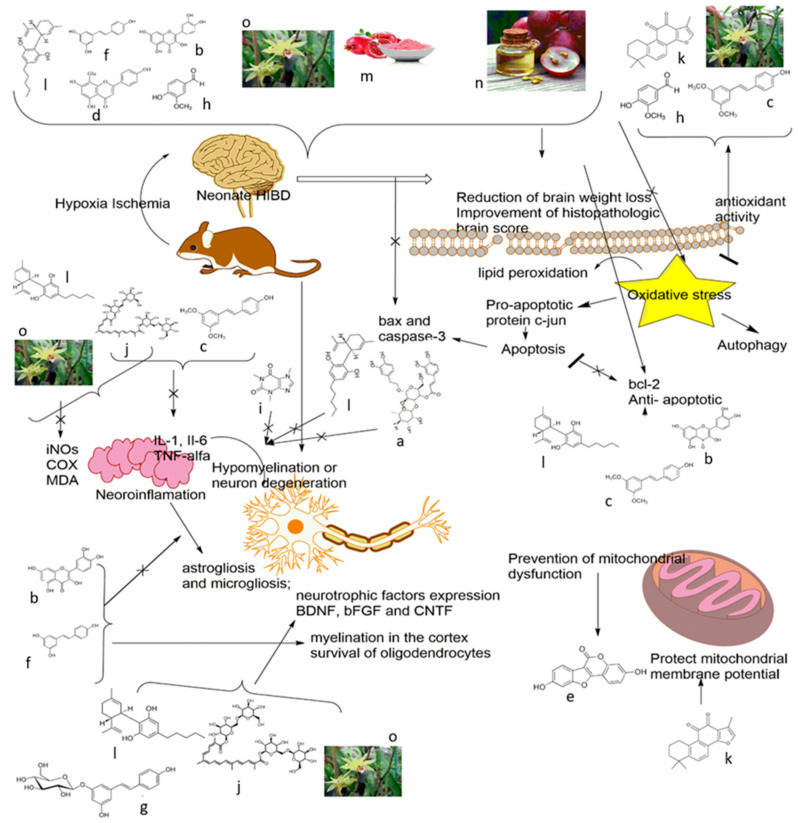
Neonatal hypoxic-ischemic (HI) brain injury is one of the major drawbacks of mortality and causes significant short/long-term neurological dysfunction in newborn infants worldwide. To date, due to multifunctional complex mechanisms of brain injury, there is no well-established effective strategy to completely provide neuroprotection. Although therapeutic hypothermia is the proven treatment for hypoxic-ischemic encephalopathy (HIE), it does not completely chang outcomes in severe forms of HIE. Therefore, there is a critical need for reviewing the effective therapeutic strategies to explore the protective agents and methods. In recent years, it is widely believed that there are neuroprotective possibilities of natural compounds extracted from plants against HIE. These natural agents with the anti-inflammatory, anti-oxidative, anti-apoptotic, and neurofunctional regulatory properties exhibit preventive or therapeutic effects against experimental neonatal HI brain damage. In this study, it was aimed to review the literature in scientific databases that investigate the neuroprotective effects of plant extracts/plant-derived compounds in experimental animal models of neonatal HI brain damage and their possible underlying molecular mechanisms of action.
新生儿缺氧缺血性(HI)脑损伤是全球新生儿死亡率的主要原因之一,并导致严重的短期/长期神经功能障碍。迄今为止,由于脑损伤的多功能复杂机制,还没有建立完善的有效策略来完全提供神经保护。虽然亚低温治疗是缺氧缺血性脑病(HIE)的有效治疗方法,但它并不能完全改变严重 HIE 患者的结局。因此,迫切需要审查有效的治疗策略,以探索保护剂和方法。近年来,人们普遍认为,从植物中提取的天然化合物对 HIE 具有神经保护作用。这些具有抗炎、抗氧化、抗细胞凋亡和神经功能调节特性的天然药物对实验性新生儿 HI 脑损伤具有预防或治疗作用。本研究旨在综述科学数据库中关于植物提取物/植物源性化合物在实验性新生儿 HI 脑损伤动物模型中的神经保护作用及其可能的作用机制的文献。