Bhuyan Golam Sarower, Noor Aftab Uz Zaman, Sultana Rosy, Noor Farjana Akther, Sultana Nusrat, Sarker Suprovath Kumar, Islam Muhammad Tarikul, Sayeed Md Abu, Khabir Md Imam Ul, Hossain A K M Ekramul, Zeba Zebunnesa, Qadri Syeda Kashfi, Siddique Md Ruhul Furkan, Qadri Syed Saleheen, Qadri Firdausi, Mannoor Kaiissar
Infectious Diseases Laboratory, Institute for Developing Science and Health Initiatives, Mohakhali, Dhaka-1212, Bangladesh.
Laboratory of Genetics and Genomics, Institute for Developing Science and Health Initiatives, Mohakhali, Dhaka-1212, Bangladesh.
Infect Dis Rep. 2021 Jan 15;13(1):89-95. doi: 10.3390/idr13010011.
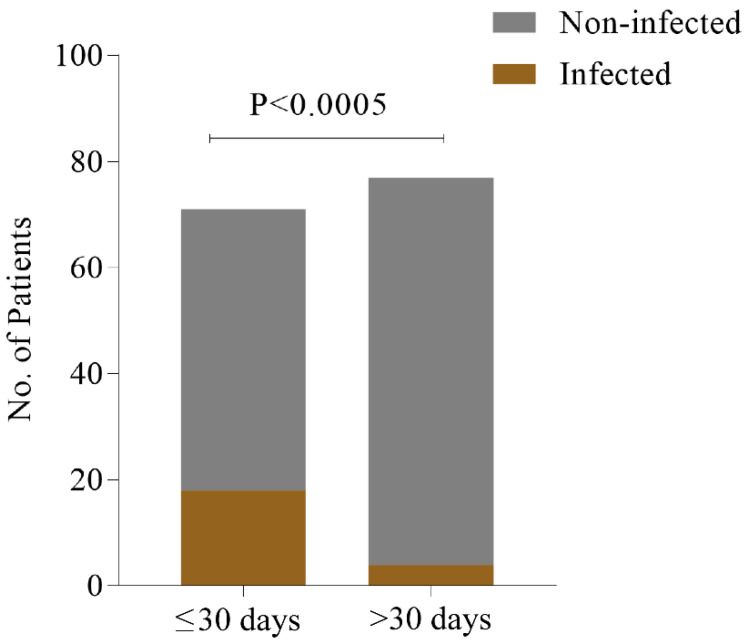
Transfusion transmitted infections have remained a major deterrent to public health, particularly among the patients with transfusion-dependent Beta thalassemia in developing countries. Although proper donor selection through adoption of WHO-advised infection panel has lowered the rate of infections, the multi-transfused patients are not free of risk. In this study, we screened 148 transfusion-dependent Beta thalassemia patients to determine the frequency of Hepatitis C Virus (HCV), Hepatitis B Virus (HBV) and Human Immunodeficiency Virus (HIV) using the ELISA method. Among them, infected cases with HCV, HBV and HIV were 13.51%, 3.37% and 0%, respectively. Moreover, 2% of the patients were found to be co-infected with both HBV and HCV. The percentage of infections in the patients with frequent transfusion interval (≤30 days) was significantly higher ( < 0.0005) than that in the patients with less frequent transfusion intervals (>30 days). Immunochromatography (ICT)-based rapid test kits are usually used to screen and confirm these infections in the blood of the patients. However, ICT-based tests are not sensitive enough to detect the infections. So, a combination of both Nucleic Acid testing (NAT) and serological testing are suggested to significantly reduce the risk of viral infections during blood transfusion.
输血传播感染一直是公共卫生的主要威慑因素,尤其是在发展中国家依赖输血的β地中海贫血患者中。尽管通过采用世界卫生组织建议的感染检测项目进行适当的献血者筛选降低了感染率,但多次输血的患者并非没有风险。在本研究中,我们使用酶联免疫吸附测定(ELISA)方法对148例依赖输血的β地中海贫血患者进行筛查,以确定丙型肝炎病毒(HCV)、乙型肝炎病毒(HBV)和人类免疫缺陷病毒(HIV)的感染频率。其中,HCV、HBV和HIV的感染病例分别为13.51%、3.37%和0%。此外,发现2%的患者同时感染了HBV和HCV。输血间隔频繁(≤30天)的患者感染率显著高于输血间隔不频繁(>30天)的患者(<0.0005)。基于免疫层析法(ICT)的快速检测试剂盒通常用于筛查和确认患者血液中的这些感染。然而,基于ICT的检测对检测感染的敏感性不够。因此,建议将核酸检测(NAT)和血清学检测相结合,以显著降低输血期间病毒感染的风险。