Departments of Orthopaedics, Weifang People's Hospital, no. 151 Guangwen Road, Weifang, 260041, China.
Department Rheumatology, Weifang People's Hospital, no. 151 Guangwen Road, Weifang, 260041, China.
J Orthop Surg Res. 2021 Jan 19;16(1):69. doi: 10.1186/s13018-021-02218-7.
This study was performed to compare the advantage and disadvantage of posterolateral approach (PLA) and direct anterior approach (DAA) in total hip arthroplasty (THA).
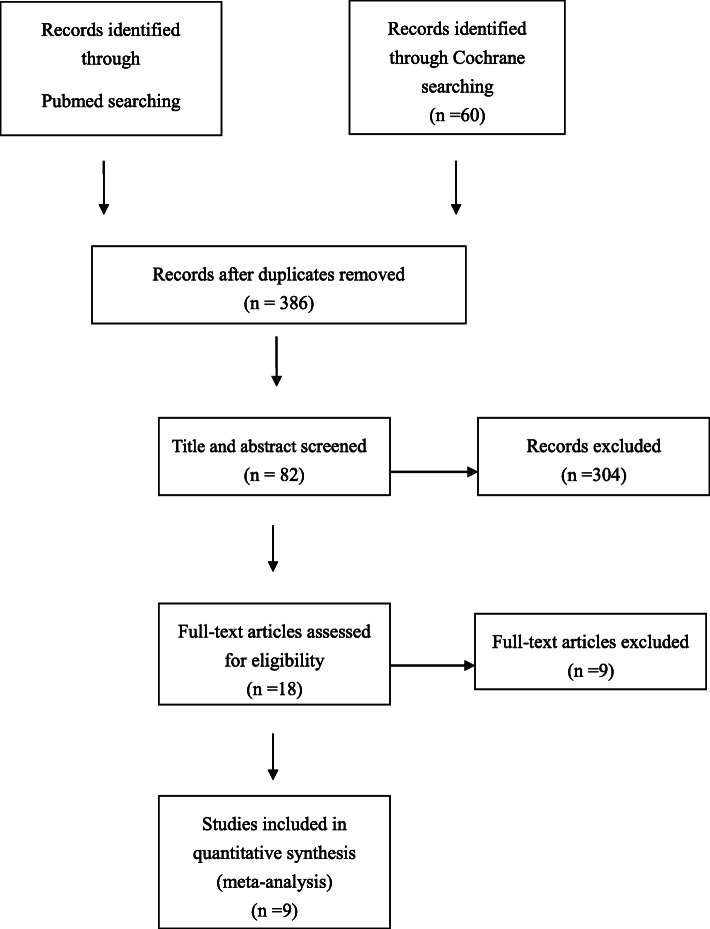
Relevant trials were identified via a search of the Cochrane Central Register of Controlled Trials and PubMed from inception to 1 June 2019. A meta-analysis was performed to compare postoperative perioperative and radiographic outcomes between DAA and PLA in THA with respect to the hospital stay, blood loss, incision length, operative time, complications, and femoral and cup component position. The Harris Hip Score (HHS) was also assessed before and after 6 months postoperatively.
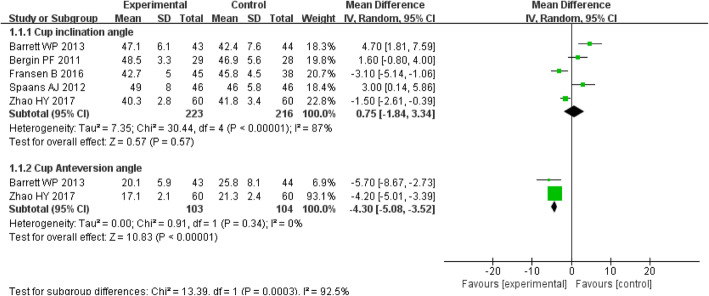
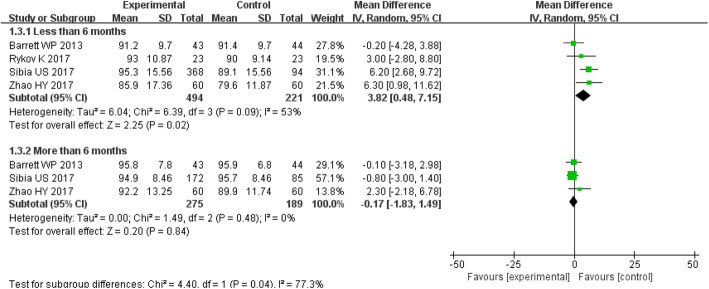
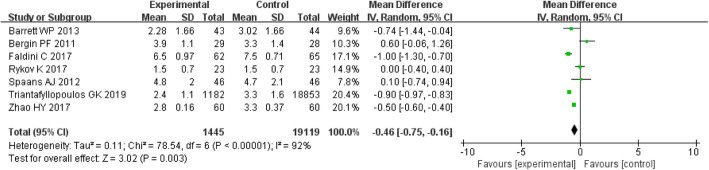
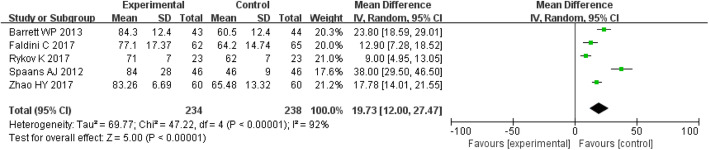
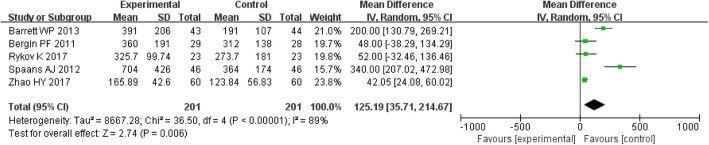
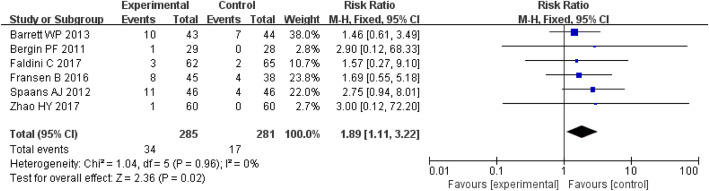
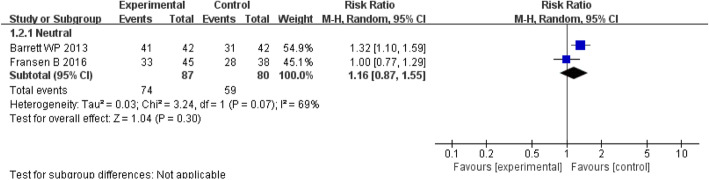
Nine eligible studies involving 22698 adult patients (DAA group, n = 2947; PLA group, n = 19751) were identified for analysis. Compared with the PLA group, the DAA group had shorter hospital stay and achieved better HHS within 6 months after operation (P < 0.05), but the HHS was no significant differences between the two groups over 6 months (P > 0.05). The DAA group had significantly longer operative time, more blood loss, and complications than the PLA group (P < 0.05). In addition, the femoral component positioned in neutral and cup component inclination angle was comparable between both groups (P > 0.05); however, cup component anteversion angle was significantly larger in the PLA group (P < 0.05).
Patients in the DAA group had higher HHS within 6 months and shorter hospital stay. The DAA could offer rapid early functional recovery after THA compared with the PLA. However, the DAA group often required longer operative time and had more blood loss. Furthermore, there was a higher early complication rate. Therefore, we believe that the direct anterior approach was a more difficult technique. The surgeon should be a well-trained joint surgeon with extensive prior hip replacement experience before performing THA through a DAA, and DAA was not suitable for beginners performing THA. In addition, we did not observe the difference with regard to the femoral component position and cup component inclination angle except for the smaller cup component anteversion angle in DAA group.
本研究旨在比较全髋关节置换术(THA)中后外侧入路(PLA)和直接前入路(DAA)的优缺点。
通过检索 Cochrane 对照试验中心注册库和 PubMed 数据库,从建库至 2019 年 6 月 1 日,收集有关研究。对 PLA 和 DAA 两种术式的围手术期和影像学结果进行比较,包括住院时间、出血量、切口长度、手术时间、并发症以及股骨和髋臼组件位置。还评估了术后 6 个月的 Harris 髋关节评分(HHS)。
共纳入 9 项符合条件的研究,涉及 22698 例成年患者(DAA 组,n=2947;PLA 组,n=19751)。与 PLA 组相比,DAA 组的住院时间更短,术后 6 个月内的 HHS 更高(P<0.05),但两组术后 6 个月时的 HHS 无显著差异(P>0.05)。DAA 组的手术时间更长,出血量更多,并发症发生率更高(P<0.05)。此外,两组的股骨组件位置和髋臼组件倾斜角相似(P>0.05),但 PLA 组的髋臼组件前倾角明显更大(P<0.05)。
DAA 组患者术后 6 个月内 HHS 更高,住院时间更短。与 PLA 相比,DAA 可提供更快的术后早期功能恢复。但 DAA 组往往需要更长的手术时间和更多的出血量。此外,早期并发症发生率更高。因此,我们认为直接前入路是一种更具挑战性的技术。在进行 DAA 下 THA 之前,外科医生应该是一位经过充分培训的关节外科医生,具有丰富的髋关节置换经验,初学者不适合进行 DAA 下 THA。此外,除了 DAA 组髋臼组件前倾角较小外,我们没有观察到股骨组件位置和髋臼组件倾斜角的差异。