Life Science Center for Survival Dynamics, University of Tsukuba, Ibaraki 305-8577, Japan.
Biological Sciences Division, SLAC National Accelerator Laboratory, Menlo Park, CA 94025.
Proc Natl Acad Sci U S A. 2021 Jan 26;118(4). doi: 10.1073/pnas.2022790118.
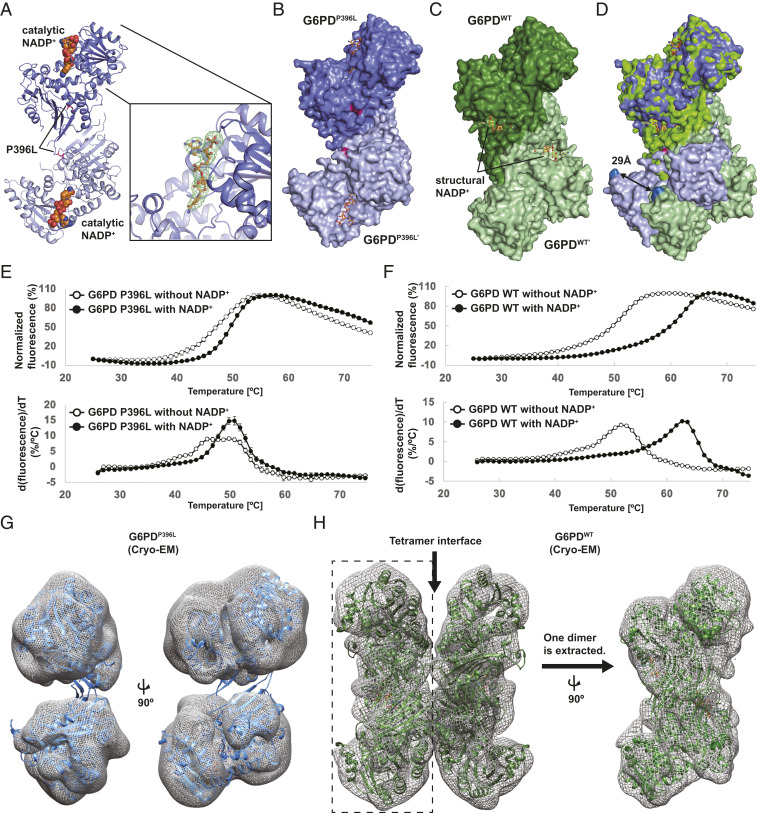
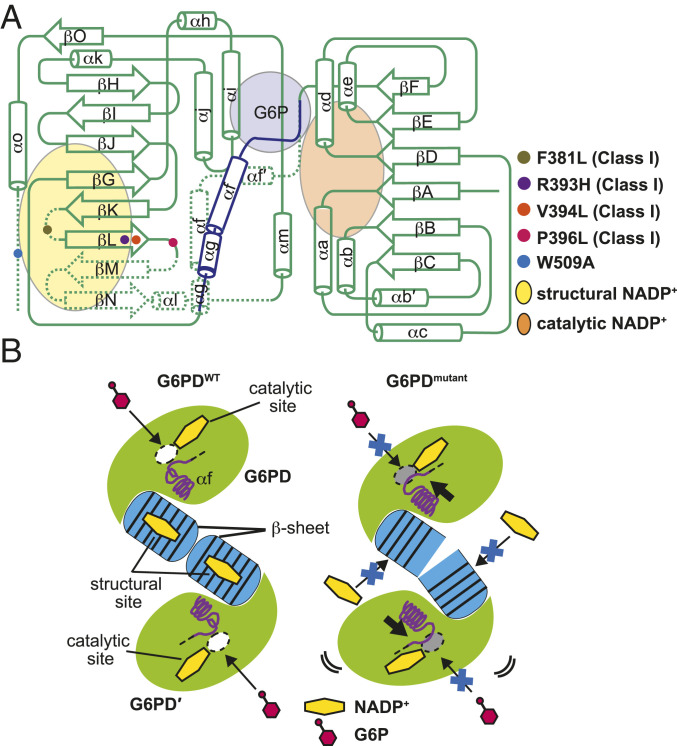
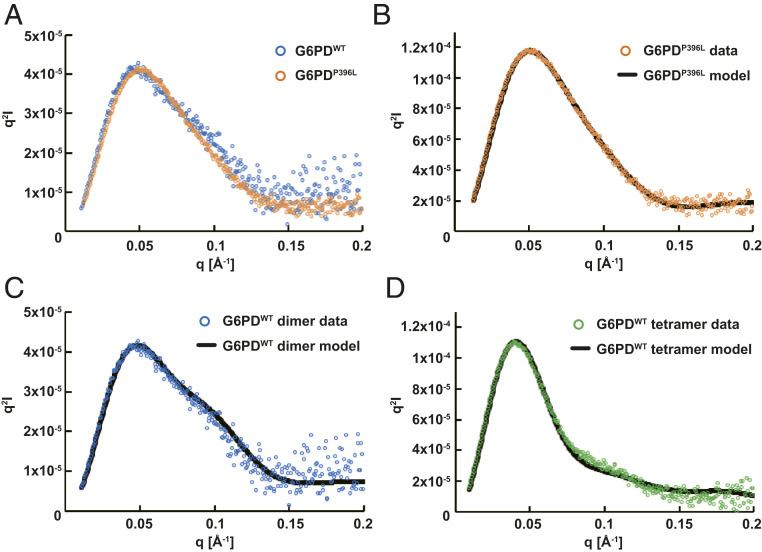
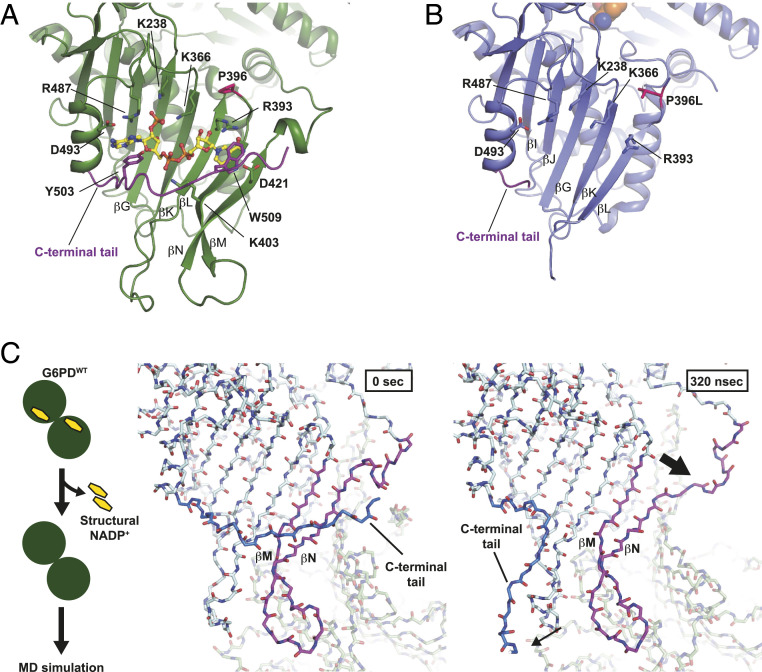
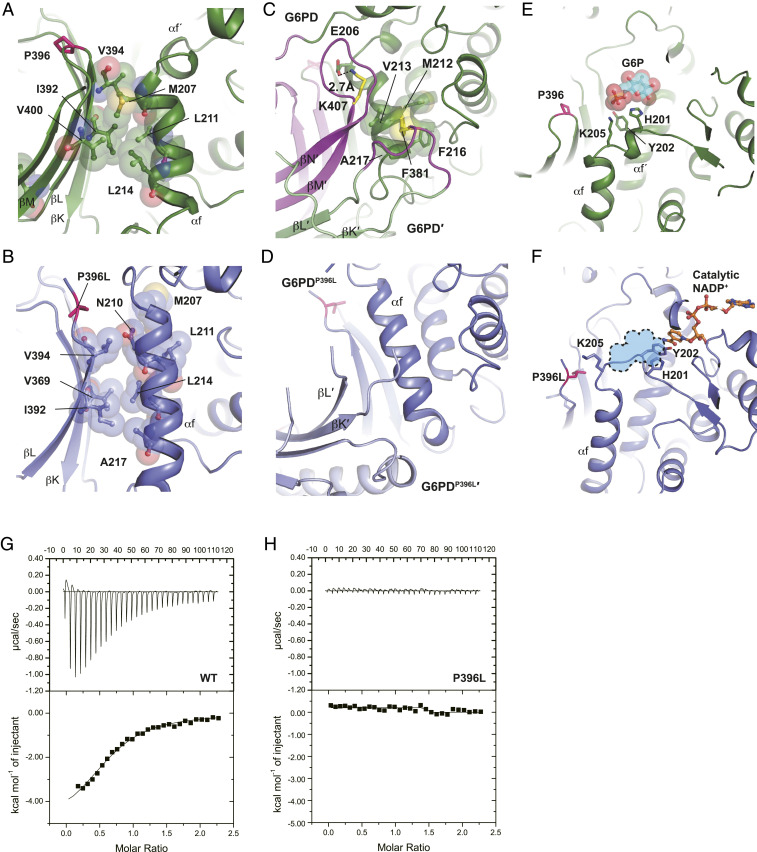
Glucose-6-phosphate dehydrogenase (G6PD) deficiency is the most common blood disorder, presenting multiple symptoms, including hemolytic anemia. It affects 400 million people worldwide, with more than 160 single mutations reported in G6PD. The most severe mutations (about 70) are classified as class I, leading to more than 90% loss of activity of the wild-type G6PD. The crystal structure of G6PD reveals these mutations are located away from the active site, concentrating around the noncatalytic NADP-binding site and the dimer interface. However, the molecular mechanisms of class I mutant dysfunction have remained elusive, hindering the development of efficient therapies. To resolve this, we performed integral structural characterization of five G6PD mutants, including four class I mutants, associated with the noncatalytic NADP and dimerization, using crystallography, small-angle X-ray scattering (SAXS), cryogenic electron microscopy (cryo-EM), and biophysical analyses. Comparisons with the structure and properties of the wild-type enzyme, together with molecular dynamics simulations, bring forward a universal mechanism for this severe G6PD deficiency due to the class I mutations. We highlight the role of the noncatalytic NADP-binding site that is crucial for stabilization and ordering two β-strands in the dimer interface, which together communicate these distant structural aberrations to the active site through a network of additional interactions. This understanding elucidates potential paths for drug development targeting G6PD deficiency.
葡萄糖-6-磷酸脱氢酶(G6PD)缺乏症是最常见的血液疾病,表现出多种症状,包括溶血性贫血。它影响着全球 4 亿人,在 G6PD 中已经报道了超过 160 种单一突变。最严重的突变(约 70%)被归类为 I 类,导致野生型 G6PD 活性丧失超过 90%。G6PD 的晶体结构表明这些突变位于活性部位之外,集中在非催化性 NADP 结合部位和二聚体界面周围。然而,I 类突变体功能障碍的分子机制仍然难以捉摸,这阻碍了有效治疗方法的发展。为了解决这个问题,我们使用晶体学、小角 X 射线散射(SAXS)、低温电子显微镜(cryo-EM)和生物物理分析等方法,对与非催化性 NADP 和二聚化相关的五种 G6PD 突变体(包括四种 I 类突变体)进行了整体结构特征分析。与野生型酶的结构和性质进行比较,并结合分子动力学模拟,提出了一种由于 I 类突变导致严重 G6PD 缺乏症的普遍机制。我们强调了非催化性 NADP 结合部位的作用,该部位对于稳定和排列二聚体界面中的两条β-链至关重要,这些β-链通过额外相互作用网络将这些遥远的结构异常传递到活性部位。这种理解为针对 G6PD 缺乏症的药物开发提供了潜在的途径。