Cediel Germán, Codina Pau, Spitaleri Giosafat, Domingo Mar, Santiago-Vacas Evelyn, Lupón Josep, Bayes-Genis Antoni
Heart Institute, Hospital Universitari Germans Trias i Pujol, Badalona, Spain.
Department of Medicine, CIBERCV, Autonomous University of Barcelona, Barcelona, Spain.
Front Cardiovasc Med. 2021 Jan 5;7:617705. doi: 10.3389/fcvm.2020.617705. eCollection 2020.
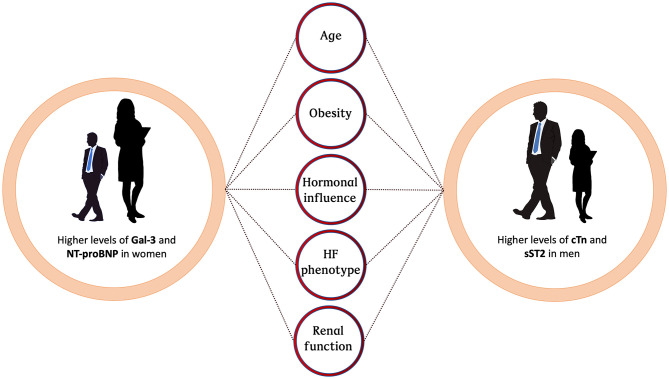
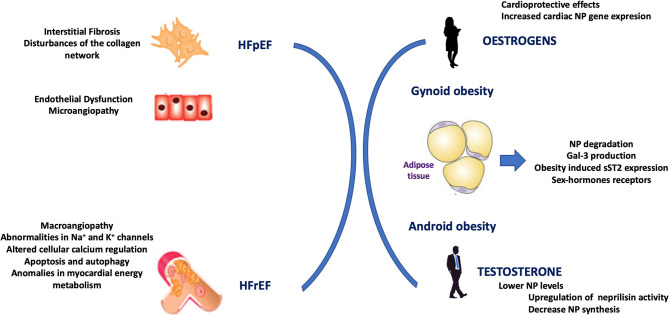
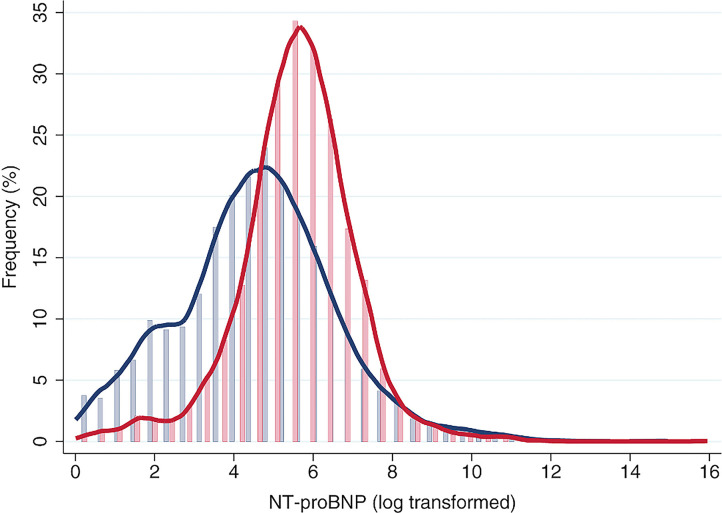
Important differences in comorbidities and clinical characteristics exist between women and men with heart failure (HF). In particular, differences in the kinetics of biological circulating biomarkers-a critical component of cardiovascular care-are highly relevant. Most circulating HF biomarkers are assessed daily by clinicians without taking sex into account, despite the multiple gender-related differences observed in plasma concentrations. Even in health, compared to men, women tend to exhibit higher levels of natriuretic peptides and galectin-3 and lower levels of cardiac troponins and the cardiac stress marker, soluble ST2. Many biological factors can provide a reliable explanation for these differences, like body composition, fat distribution, or menopausal status. Notwithstanding, these sex-specific differences in biomarker levels do not reflect different pathobiological mechanisms in HF between women and men, and they do not necessarily imply a need to use different diagnostic cut-off levels in clinical practice. To date, the sex-specific prognostic value of HF biomarkers for risk stratification is an unresolved issue that future research must elucidate. This review outlines current evidence regarding gender-related differences in circulating biomarkers widely used in HF, the pathophysiological mechanisms underlying these differences, and their clinical relevance.
心力衰竭(HF)的女性和男性在合并症及临床特征方面存在重要差异。特别是,生物循环生物标志物的动力学差异——心血管护理的关键组成部分——具有高度相关性。尽管在血浆浓度中观察到多种与性别相关的差异,但大多数循环HF生物标志物每天由临床医生评估时并未考虑性别因素。即使在健康状态下,与男性相比,女性往往表现出更高水平的利钠肽和半乳糖凝集素-3,以及更低水平的心肌肌钙蛋白和心脏应激标志物可溶性ST2。许多生物学因素可以为这些差异提供可靠的解释,如身体组成、脂肪分布或绝经状态。尽管如此,生物标志物水平的这些性别特异性差异并不反映HF中女性和男性不同的病理生物学机制,也不一定意味着在临床实践中需要使用不同的诊断临界值。迄今为止,HF生物标志物对风险分层的性别特异性预后价值是一个尚未解决的问题,未来研究必须阐明。本综述概述了目前关于HF中广泛使用的循环生物标志物的性别相关差异、这些差异背后的病理生理机制及其临床相关性的证据。