Mohammed Mustapha, Sha'aban Abubakar, Jatau Abubakar Ibrahim, Yunusa Ismaeel, Isa Abubakar Musa, Wada Abubakar Sadiq, Obamiro Kehinde, Zainal Hadzliana, Ibrahim Baharudin
School of Pharmaceutical Sciences, Universiti Sains Malaysia, 11800, Penang, Malaysia.
Department of Clinical Pharmacy and Pharmacy Practice, Ahmadu Bello University, Zaria, Nigeria.
J Racial Ethn Health Disparities. 2022 Feb;9(1):184-192. doi: 10.1007/s40615-020-00942-0. Epub 2021 Jan 19.
A relentless flood of information accompanied the novel coronavirus 2019 (COVID-19) pandemic. False news, conspiracy theories, and magical cures were shared with the general public at an alarming rate, which may lead to increased anxiety and stress levels and associated debilitating consequences.
To measure the level of COVID-19 information overload (COVIO) and assess the association between COVIO and sociodemographic characteristics among the general public.
A cross-sectional online survey was conducted between April and May 2020 using a modified Cancer Information Overload scale. The survey was developed and posted on four social media platforms. The data were only collected from those who consented to participate. COVIO score was classified into high vs. low using the asymmetrical distribution as a guide and conducted a binary logistic regression to examine the factors associated with COVIO.
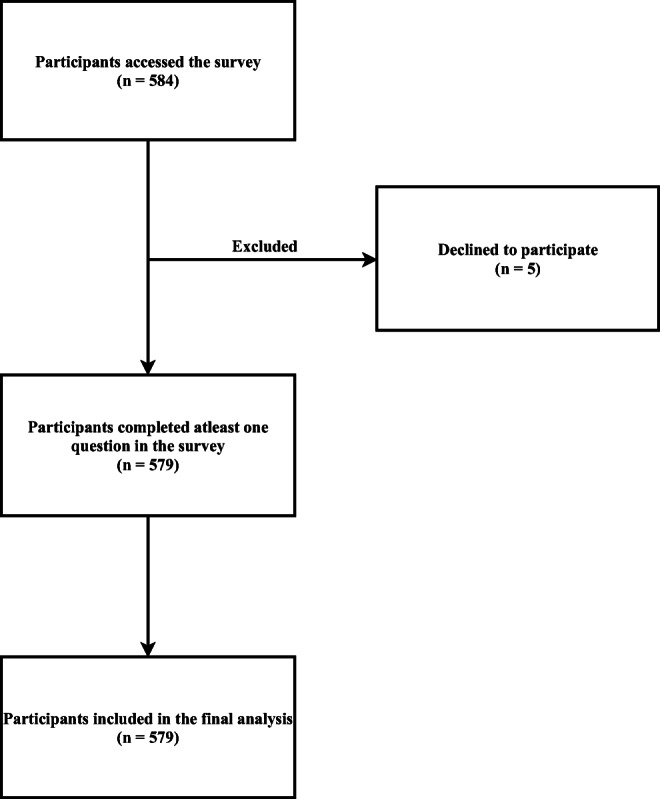
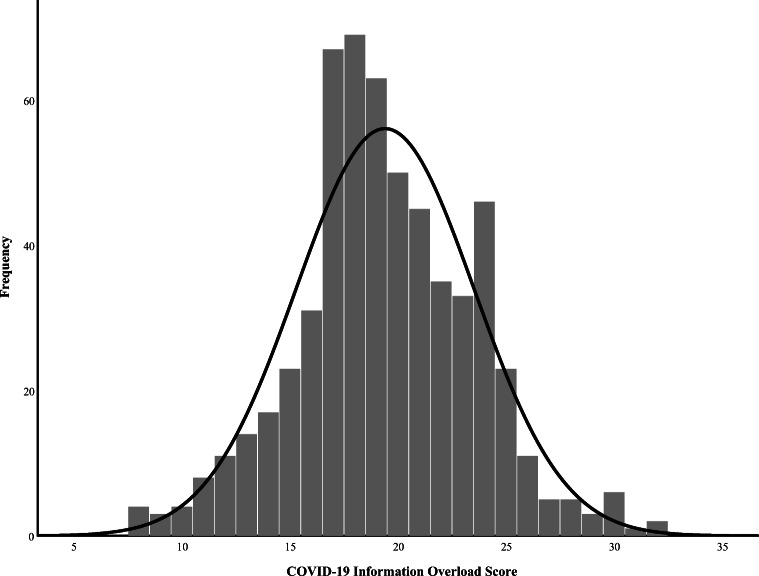
A total number of 584 respondents participated in this study. The mean COVIO score of the respondents was 19.4 (± 4.0). Sources and frequency of receiving COVID-19 information were found to be significant predictors of COVIO. Participants who received information via the broadcast media were more likely to have high COVIO than those who received information via the social media (adjusted odds ratio ([aOR],14.599; 95% confidence interval [CI], 1.608-132.559; p = 0.017). Also, participants who received COVID-19 information every minute (aOR, 3.892; 95% CI, 1.124-13.480; p = 0.032) were more likely to have high COVIO than those who received information every week.
The source of information and the frequency of receiving COVID-19 information were significantly associated with COVIO. The COVID-19 information is often conflicting, leading to confusion and overload of information in the general population. This can have unfavorable effects on the measures taken to control the transmission and management of COVID-19 infection.
2019年新型冠状病毒(COVID-19)大流行伴随着源源不断的信息洪流。虚假新闻、阴谋论和神奇疗法以惊人的速度在公众中传播,这可能导致焦虑和压力水平上升以及相关的衰弱后果。
测量COVID-19信息过载(COVIO)水平,并评估普通公众中COVIO与社会人口学特征之间的关联。
2020年4月至5月期间,使用改良的癌症信息过载量表进行了一项横断面在线调查。该调查在四个社交媒体平台上开展并发布。数据仅从同意参与的人那里收集。以不对称分布为指导,将COVIO评分分为高分组和低分组,并进行二元逻辑回归以检查与COVIO相关的因素。
共有584名受访者参与了本研究。受访者的平均COVIO评分为19.4(±4.0)。发现接收COVID-19信息的来源和频率是COVIO的重要预测因素。通过广播媒体接收信息的参与者比通过社交媒体接收信息的参与者更有可能出现高COVIO(调整后的优势比[aOR]为14.599;95%置信区间[CI]为1.608-132.559;p = 0.017)。此外,每分钟接收COVID-19信息的参与者(aOR为3.892;95%CI为1.124-13.480;p = 0.032)比每周接收信息的参与者更有可能出现高COVIO。
信息来源和接收COVID-19信息的频率与COVIO显著相关。COVID-19信息往往相互矛盾,导致普通人群信息混乱和过载。这可能会对控制COVID-19感染传播和管理所采取的措施产生不利影响。