Max Planck Institute for Evolutionary Anthropology, Leipzig, Germany.
Department of Human Genetics and Department of Cognitive Neuroscience, Donders Institute for Brain, Cognition, and Behavior, Radboudumc, Nijmegen, Netherlands.
Elife. 2021 Jan 20;10:e59323. doi: 10.7554/eLife.59323.
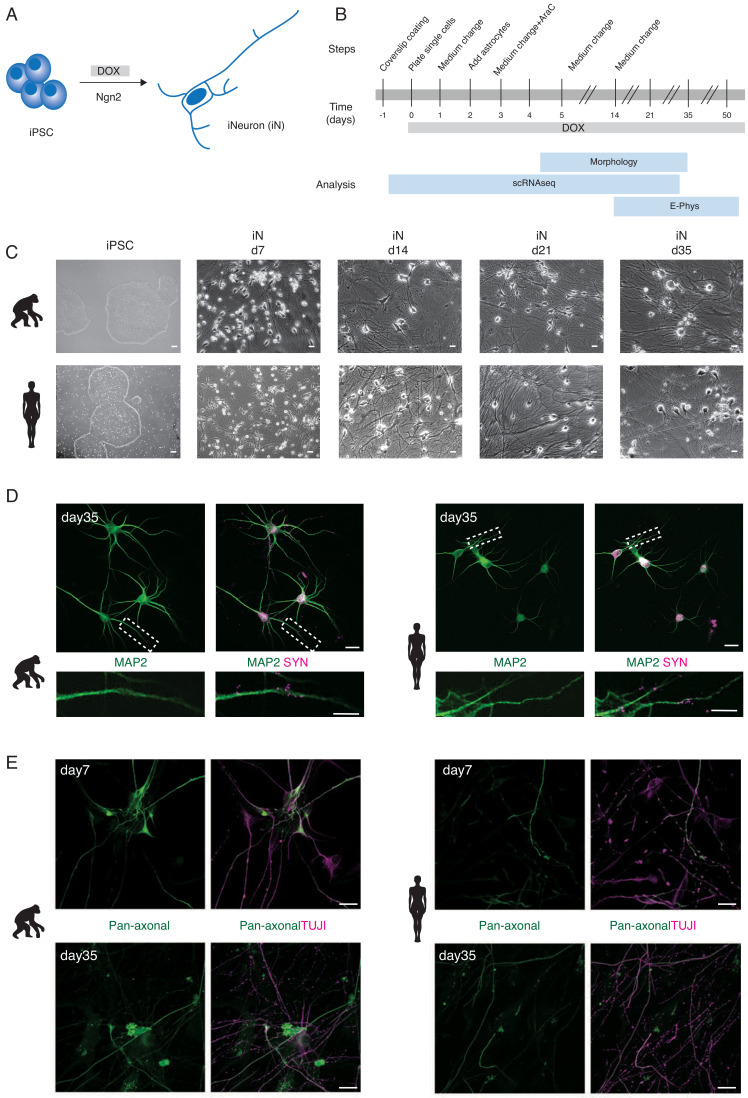
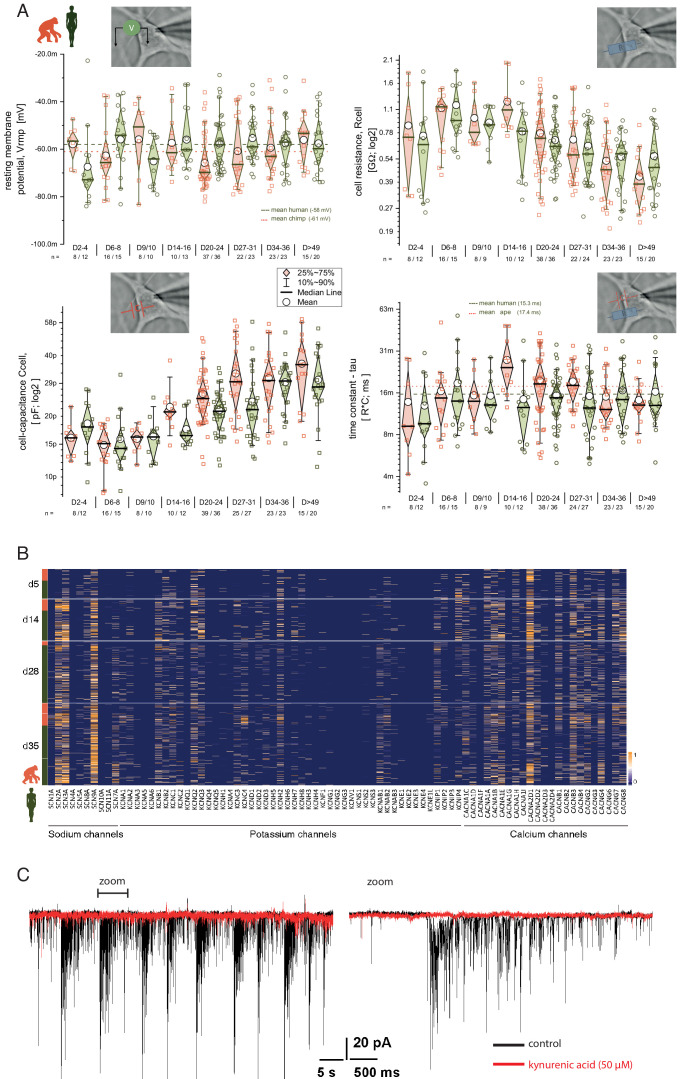
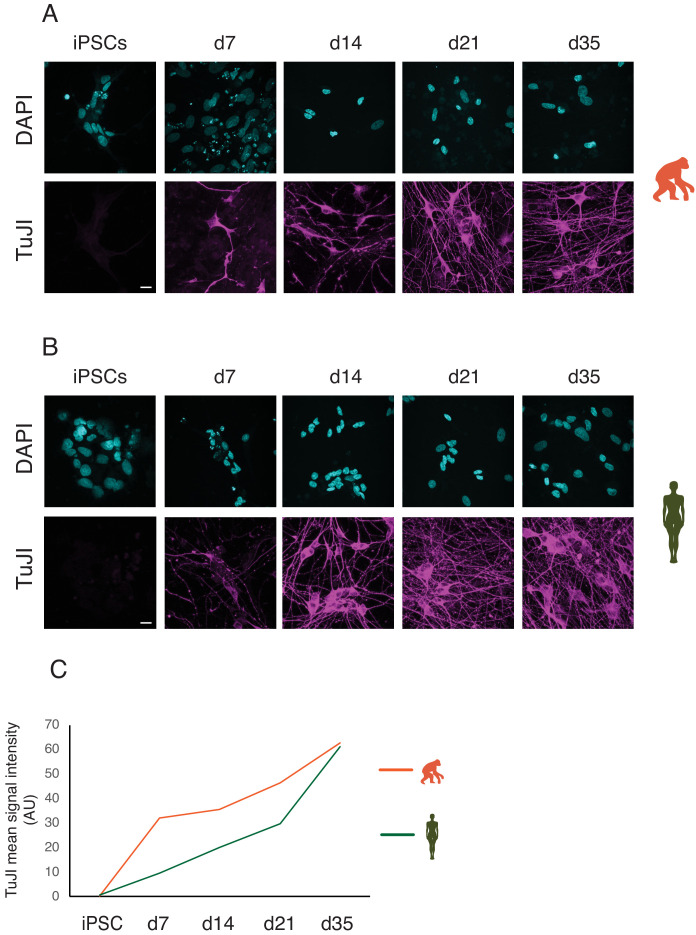
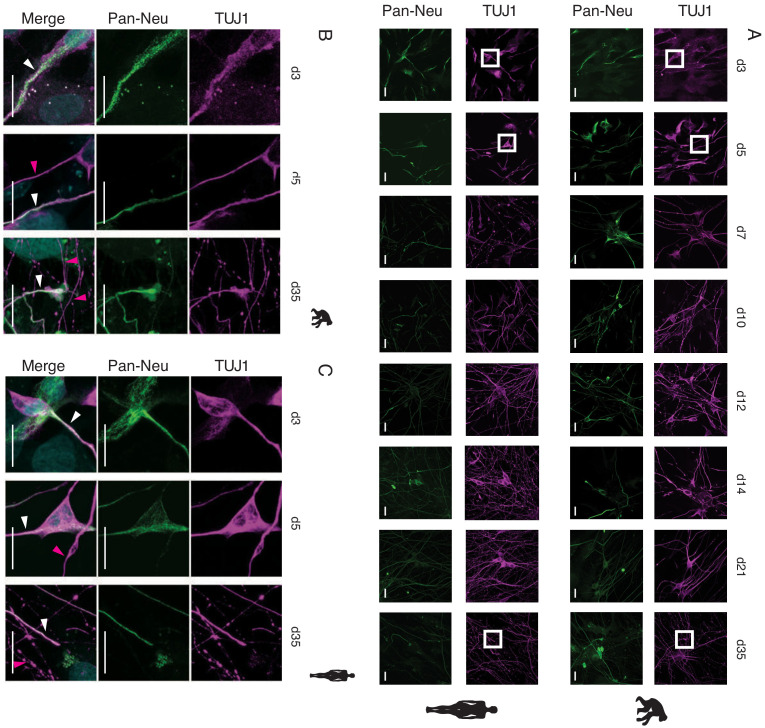
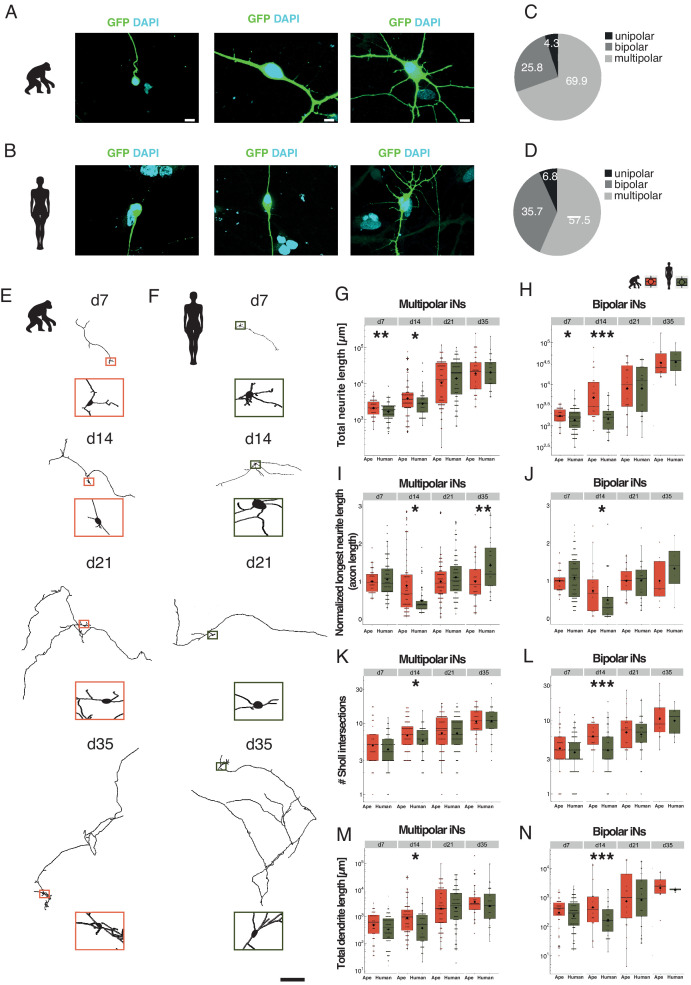
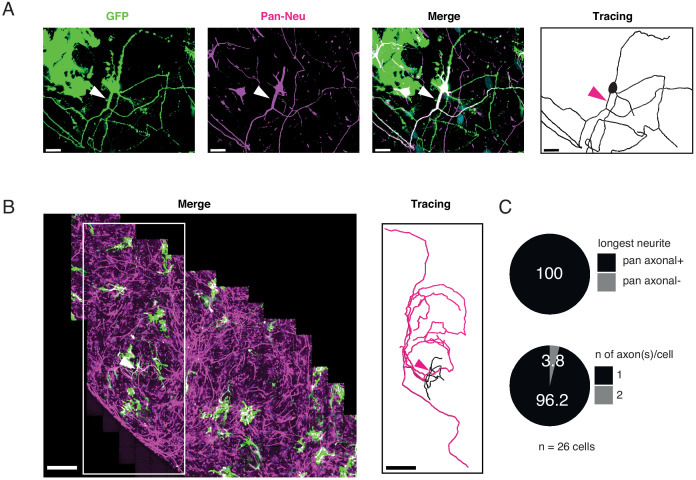
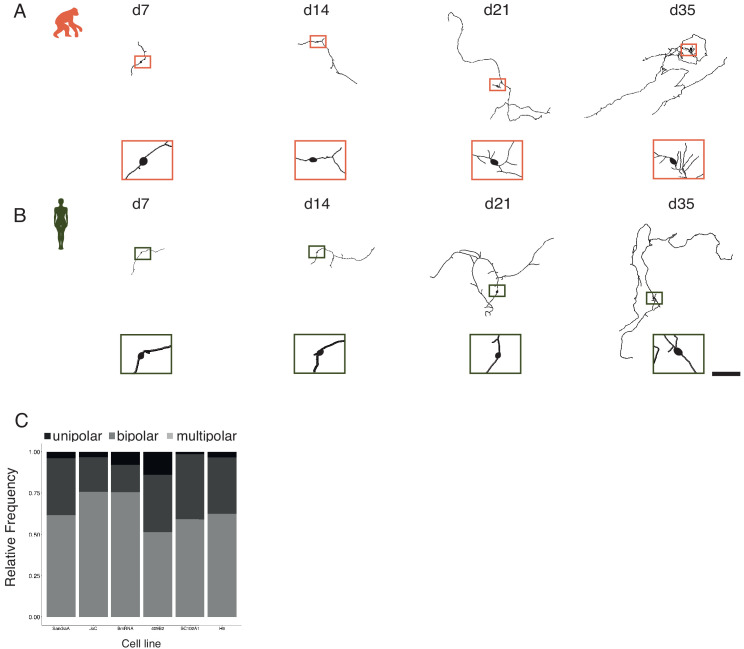
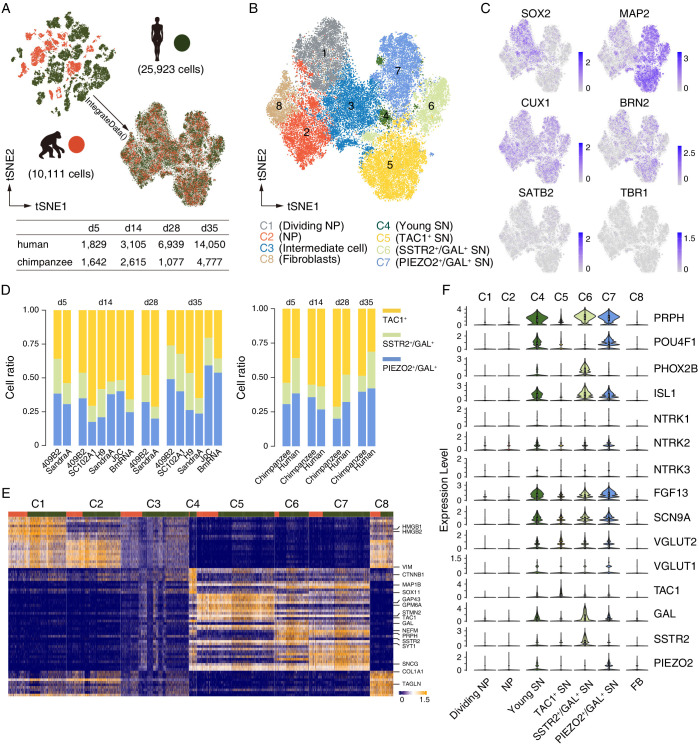
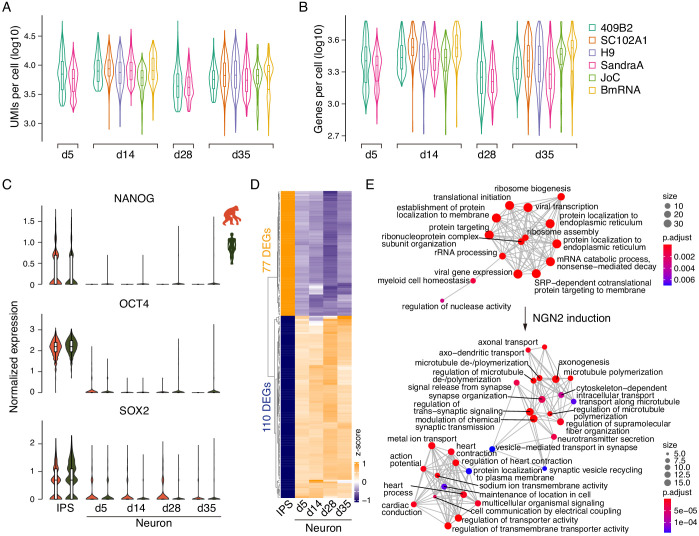
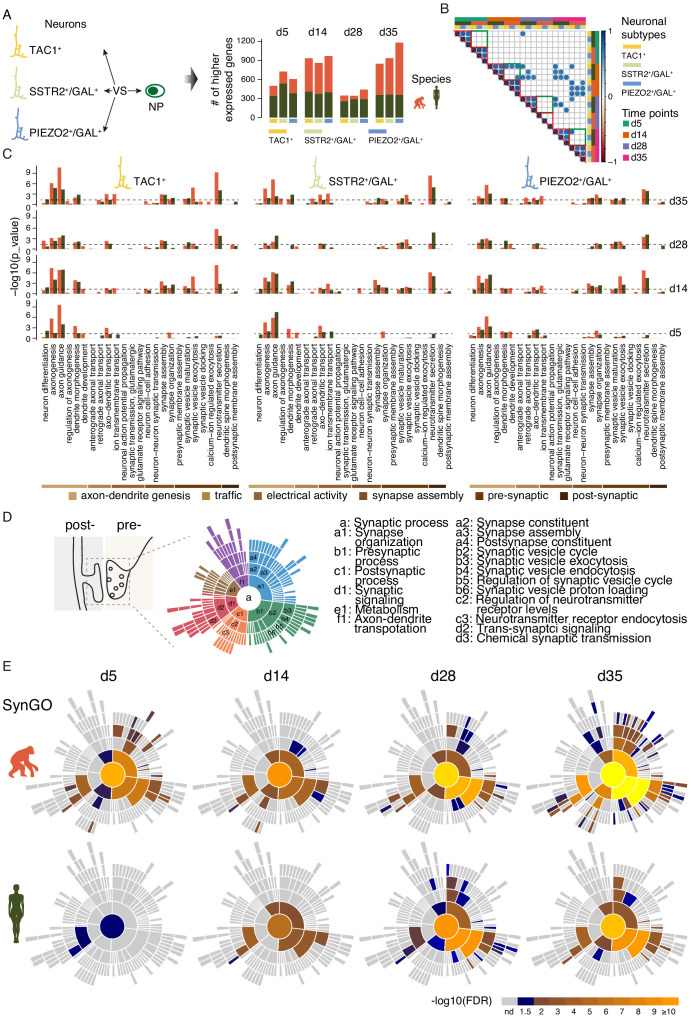
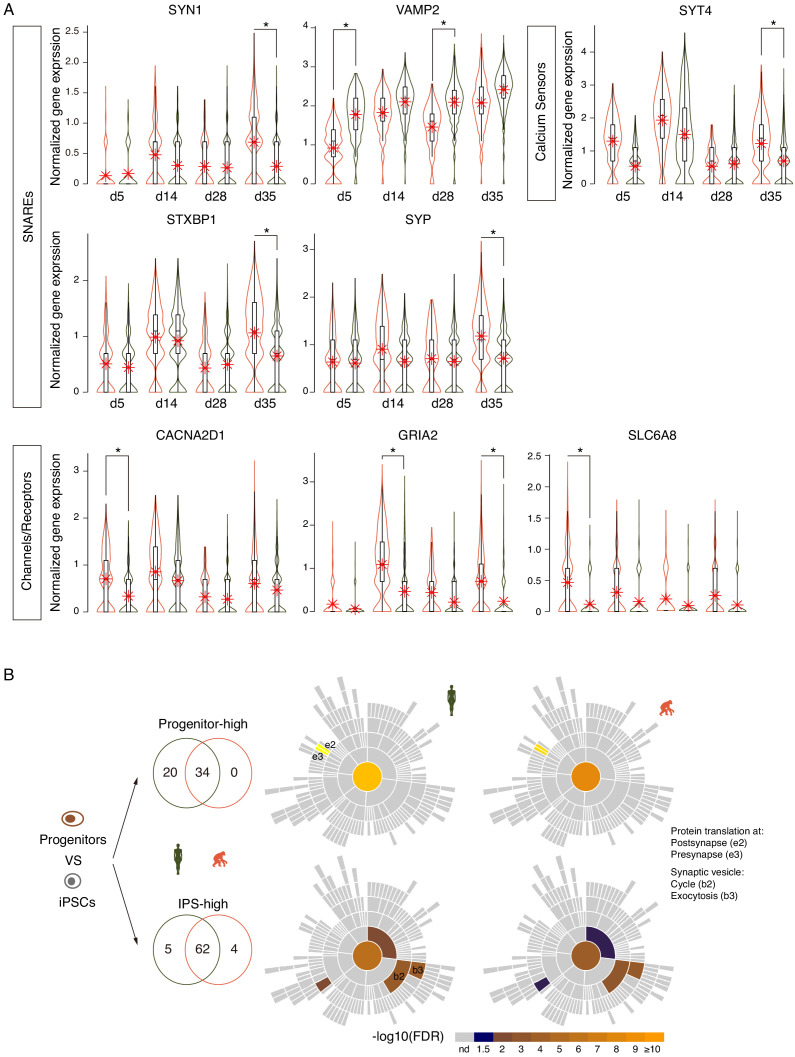
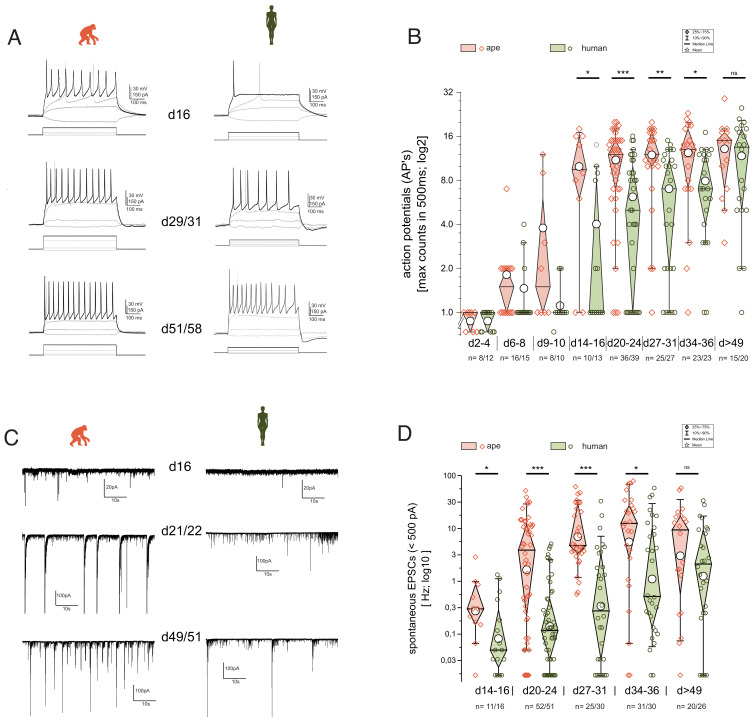
We generated induced excitatory neurons (iNeurons, iNs) from chimpanzee, bonobo, and human stem cells by expressing the transcription factor neurogenin-2 (NGN2). Single-cell RNA sequencing showed that genes involved in dendrite and synapse development are expressed earlier during iNs maturation in the chimpanzee and bonobo than the human cells. In accordance, during the first 2 weeks of differentiation, chimpanzee and bonobo iNs showed repetitive action potentials and more spontaneous excitatory activity than human iNs, and extended neurites of higher total length. However, the axons of human iNs were slightly longer at 5 weeks of differentiation. The timing of the establishment of neuronal polarity did not differ between the species. Chimpanzee, bonobo, and human neurites eventually reached the same level of structural complexity. Thus, human iNs develop slower than chimpanzee and bonobo iNs, and this difference in timing likely depends on functions downstream of NGN2.
我们通过表达转录因子神经基因 2 (NGN2),从黑猩猩、倭黑猩猩和人类干细胞中生成诱导兴奋性神经元 (iNeurons, iNs)。单细胞 RNA 测序显示,在 iNs 成熟过程中,与人类细胞相比,黑猩猩和倭黑猩猩的树突和突触发育相关基因更早表达。相应地,在分化的头 2 周内,黑猩猩和倭黑猩猩的 iNs 比人类 iNs 表现出更多的重复动作电位和更多的自发性兴奋性活动,以及更长的总长度的神经突。然而,在分化的第 5 周,人类 iNs 的轴突稍长。神经元极性建立的时间在不同物种之间没有差异。黑猩猩、倭黑猩猩和人类的神经突最终达到相同的结构复杂性水平。因此,人类 iNs 的发育比黑猩猩和倭黑猩猩的 iNs 慢,这种时间上的差异可能取决于 NGN2 下游的功能。