Department of Physics, Chonnam National University, Gwangju, 61186, Republic of Korea.
Biol Cybern. 2021 Feb;115(1):87-102. doi: 10.1007/s00422-021-00859-9. Epub 2021 Jan 20.
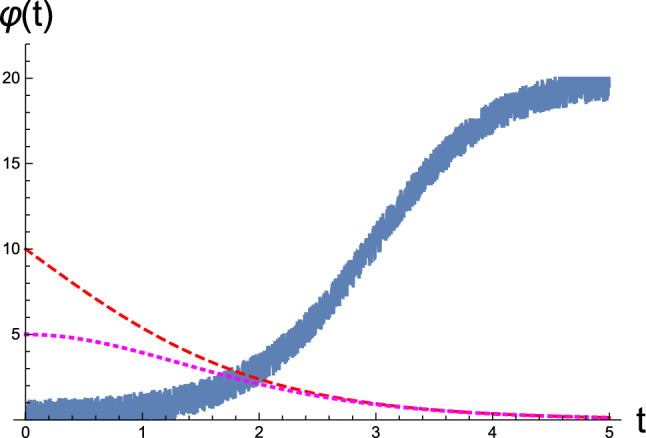
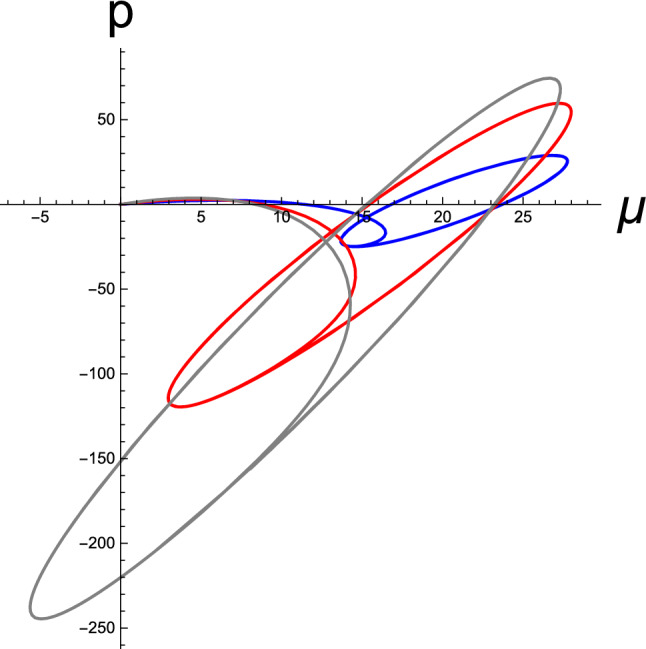
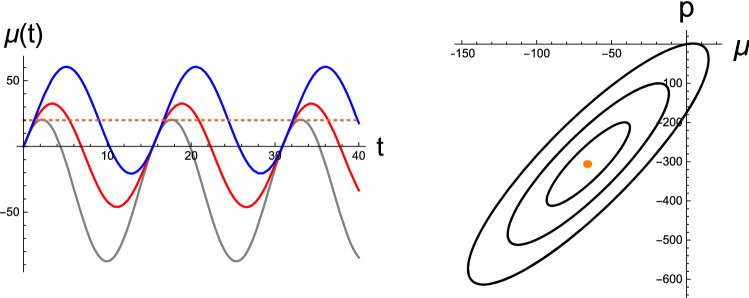
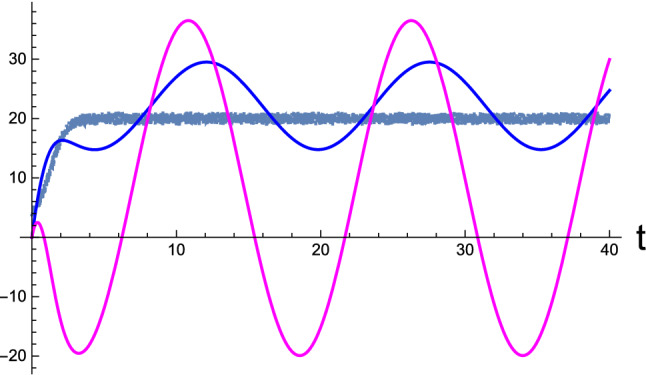
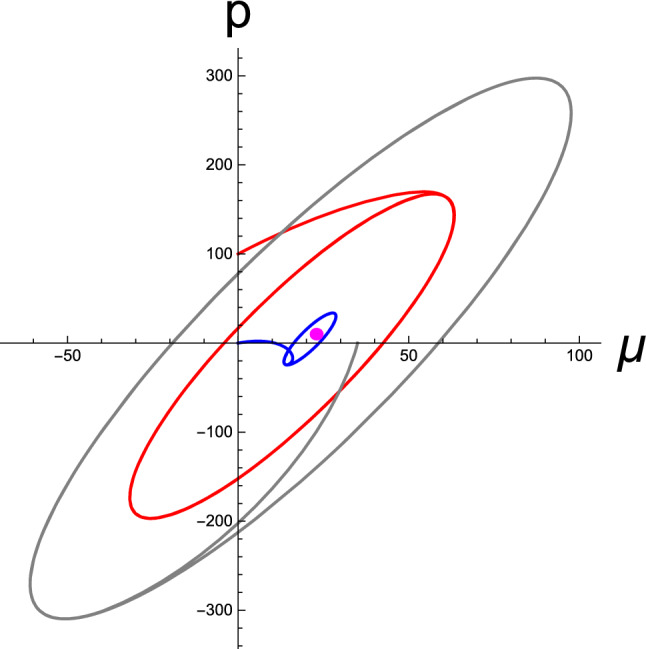
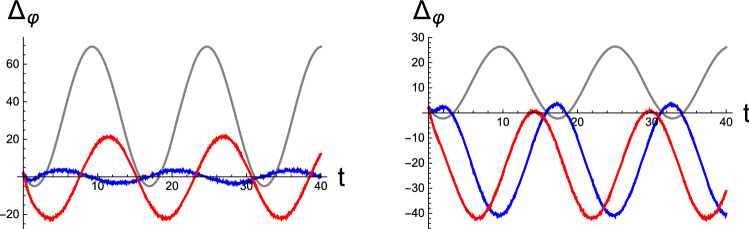
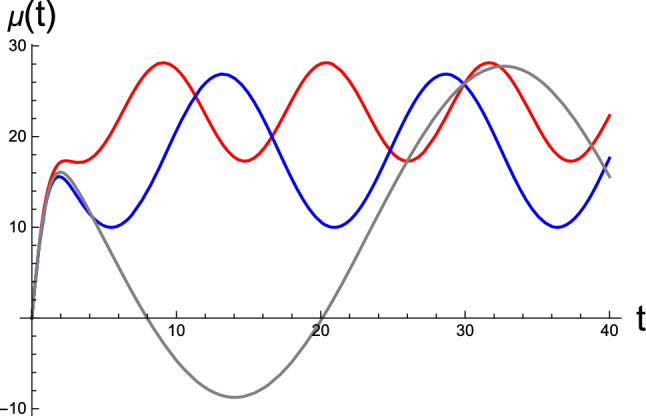
The free energy principle (FEP) in the neurosciences stipulates that all viable agents induce and minimize informational free energy in the brain to fit their environmental niche. In this study, we continue our effort to make the FEP a more physically principled formalism by implementing free energy minimization based on the principle of least action. We build a Bayesian mechanics (BM) by casting the formulation reported in the earlier publication (Kim in Neural Comput 30:2616-2659, 2018, https://doi.org/10.1162/neco_a_01115 ) to considering active inference beyond passive perception. The BM is a neural implementation of variational Bayes under the FEP in continuous time. The resulting BM is provided as an effective Hamilton's equation of motion and subject to the control signal arising from the brain's prediction errors at the proprioceptive level. To demonstrate the utility of our approach, we adopt a simple agent-based model and present a concrete numerical illustration of the brain performing recognition dynamics by integrating BM in neural phase space. Furthermore, we recapitulate the major theoretical architectures in the FEP by comparing our approach with the common state-space formulations.
神经科学中的自由能原理(FEP)规定,所有可行的代理都会在大脑中诱导和最小化信息自由能,以适应其环境小生境。在这项研究中,我们继续努力使 FEP 成为更具物理原理的形式主义,方法是基于最小作用量原理实现自由能最小化。我们通过将早期出版物(Kim 在 Neural Comput 30:2616-2659, 2018, https://doi.org/10.1162/neco_a_01115)中的公式推广到主动推理,而不仅仅是被动感知,来构建贝叶斯力学(BM)。BM 是 FEP 下连续时间变分贝叶斯的神经实现。所得的 BM 被提供为有效哈密顿运动方程,并受来自大脑在本体感受水平上的预测误差的控制信号的影响。为了展示我们方法的实用性,我们采用了一个简单的基于代理的模型,并通过将 BM 集成到神经相空间中,展示了大脑通过整合 BM 进行识别动力学的具体数值说明。此外,我们通过将我们的方法与常见的状态空间公式进行比较,概括了 FEP 中的主要理论架构。