Bagate François, Masi Paul, d'Humières Thomas, Al-Assaad Lara, Chakra Laure Abou, Razazi Keyvan, de Prost Nicolas, Carteaux Guillaume, Derumeaux Genevieve, Mekontso Dessap Armand
AP-HP, Hôpitaux universitaires Henri Mondor, Service de Médecine Intensive Réanimation, 94010, Créteil, France.
Université Paris Est Créteil, Faculté de Santé de Créteil, IMRB, Groupe de recherche clinique CARMAS, 94010, Créteil, France.
J Intensive Care. 2021 Jan 20;9(1):12. doi: 10.1186/s40560-020-00516-6.
Sepsis is characterized by various hemodynamic alterations which could happen concomitantly in the heart, pulmonary and systemic circulations. A comprehensive demonstration of their interactions in the clinical setting of COVID-19 sepsis is lacking. This study aimed at evaluating the feasibility, clinical implications, and physiological coherence of the various indices of hemodynamic function and acute myocardial injury (AMI) in COVID-19 sepsis.
Hemodynamic and echocardiographic data of septic critically ill COVID-19 patients were prospectively recorded. A dozen hemodynamic indices exploring contractility and loading conditions were assessed. Several cardiac biomarkers were measured, and AMI was considered if serum concentration of high-sensitive troponin T (hs-TNT) was above the 99th percentile, upper reference.
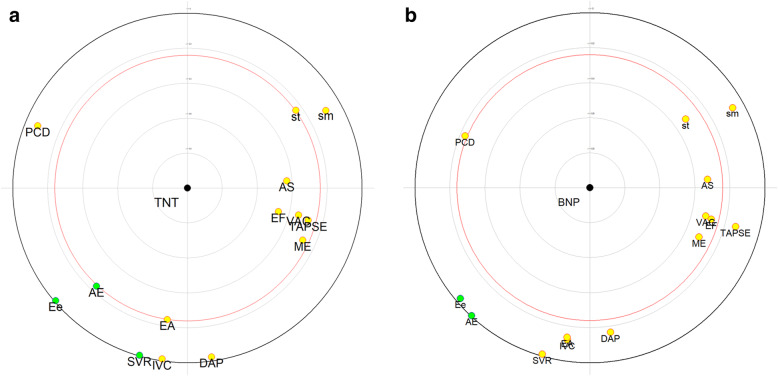
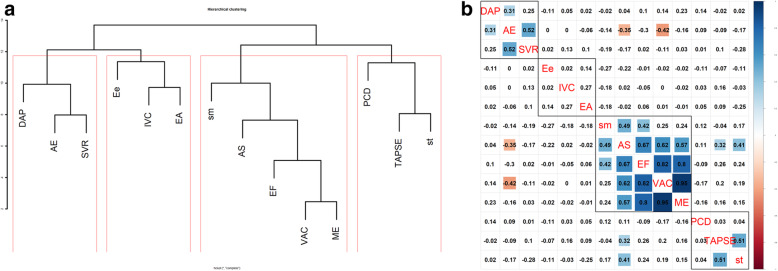
Sixty-seven patients were assessed (55 males), with a median age of 61 [50-70] years. Overall, the feasibility of echocardiographic parameters was very good, ranging from 93 to 100%. Hierarchical clustering method identified four coherent clusters involving cardiac preload, left ventricle (LV) contractility, LV afterload, and right ventricle (RV) function. LV contractility indices were not associated with preload indices, but some of them were positively correlated with RV function parameters and negatively correlated with a single LV afterload parameter. In most cases (n = 36, 54%), echocardiography results prompted therapeutic changes. Mortality was not influenced by the echocardiographic variables in multivariable analysis. Cardiac biomarkers' concentrations were most often increased with high incidence of AMI reaching 72%. hs-TNT was associated with mortality and inversely correlated with most of LV and RV contractility indices.
In this comprehensive hemodynamic evaluation in critically ill COVID-19 septic patients, we identified four homogeneous and coherent clusters with a good feasibility. AMI was common and associated with alteration of LV and RV functions. Echocardiographic assessment had a clinical impact on patient management in most cases.
脓毒症的特征是各种血流动力学改变,这些改变可能同时发生在心脏、肺循环和体循环中。目前缺乏对其在新型冠状病毒肺炎(COVID-19)脓毒症临床环境中相互作用的全面论证。本研究旨在评估COVID-19脓毒症中各种血流动力学功能指标和急性心肌损伤(AMI)指标的可行性、临床意义及生理一致性。
前瞻性记录脓毒症危重症COVID-19患者的血流动力学和超声心动图数据。评估了十几种探索收缩性和负荷状况的血流动力学指标。检测了几种心脏生物标志物,如果高敏肌钙蛋白T(hs-TNT)血清浓度高于第99百分位数(上限参考值),则考虑为AMI。
评估了67例患者(55例男性),中位年龄为61[50-70]岁。总体而言,超声心动图参数的可行性非常好,范围为93%至100%。层次聚类方法确定了四个相关聚类,涉及心脏前负荷、左心室(LV)收缩性、LV后负荷和右心室(RV)功能。LV收缩性指标与前负荷指标无关,但其中一些与RV功能参数呈正相关,与单个LV后负荷参数呈负相关。在大多数情况下(n=36,54%),超声心动图结果促使治疗方案改变。多变量分析中,超声心动图变量未影响死亡率。心脏生物标志物浓度大多升高,AMI发生率高达72%。hs-TNT与死亡率相关,与大多数LV和RV收缩性指标呈负相关。
在对危重症COVID-19脓毒症患者进行的这项全面血流动力学评估中,我们确定了四个具有良好可行性的同质且相关的聚类。AMI很常见,且与LV和RV功能改变有关。大多数情况下,超声心动图评估对患者管理有临床影响。