Center for Sports Cardiology, University of Washington, Seattle, Washington, USA
Division of Cardiovascular Sciences, University of Manchester, Manchester, UK.
Br J Sports Med. 2021 Sep;55(18):1041-1047. doi: 10.1136/bjsports-2020-102921. Epub 2021 Jan 20.
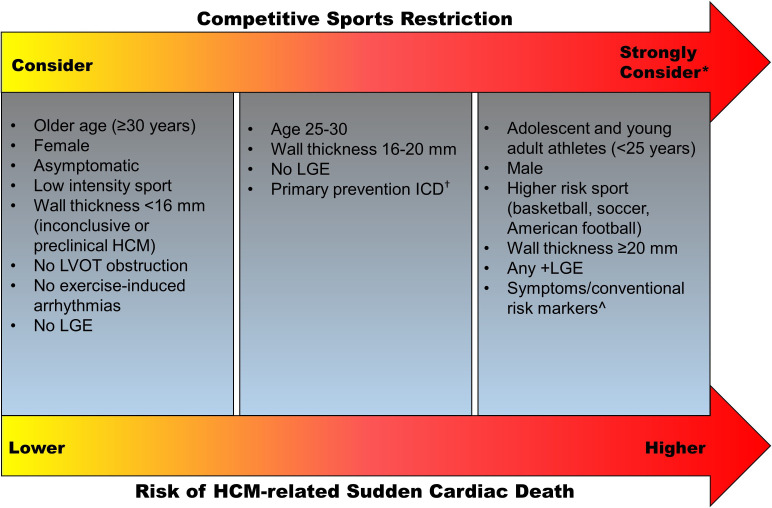
The diagnosis of a potentially lethal cardiovascular disease in a young athlete presents a complex dilemma regarding athlete safety, patient autonomy, team or institutional risk tolerance and medical decision-making. Consensus cardiology recommendations previously supported the 'blanket' disqualification of athletes with hypertrophic cardiomyopathy (HCM) from competitive sport. More recently, epidemiological studies examining the relative contribution of HCM as a cause of sudden cardiac death (SCD) in young athletes and reports from small cohorts of older athletes with HCM that continue to exercise have fueled debate whether it is safe to play with HCM. Shared decision-making is endorsed within the sports cardiology community in which athletes can make an informed decision about treatment options and potentially elect to continue competitive sports participation. This review critically examines the available evidence relevant to sports eligibility decisions in young athletes diagnosed with HCM. Histopathologically, HCM presents an unstable myocardial substrate that is vulnerable to ventricular tachyarrhythmias during exercise. Studies support that young age and intense competitive sports are risk factors for SCD in patients with HCM. We provide an estimate of annual mortality based on our understanding of disease prevalence and the incidence of HCM-related SCD in different athlete populations. Adolescent and young adult male athletes and athletes participating in a higher risk sport such as basketball, soccer and American football exhibit a greater risk. This review explores the potential harms and benefits of sports disqualification in athletes with HCM and details the challenges and limitations of shared decision-making when all parties may not agree.
在年轻运动员中诊断出潜在致命的心血管疾病,这在运动员安全、患者自主权、团队或机构风险承受能力和医疗决策方面提出了一个复杂的难题。之前的共识心脏病学建议支持将肥厚型心肌病 (HCM) 运动员从竞技运动中“一刀切”淘汰。最近,研究 HCM 作为年轻运动员心源性猝死 (SCD) 原因的相对贡献的流行病学研究,以及来自继续运动的 HCM 老年运动员的小队列报告,引发了关于 HCM 是否安全的争论。运动心脏病学界支持共同决策,运动员可以就治疗方案做出明智的决定,并可能选择继续参加竞技体育。这篇综述批判性地审查了与诊断为 HCM 的年轻运动员运动资格决策相关的现有证据。组织病理学上,HCM 表现为不稳定的心肌基质,在运动期间易发生室性心动过速。研究支持年轻和激烈的竞技运动是 HCM 患者 SCD 的危险因素。我们根据对疾病流行率和不同运动员人群中与 HCM 相关 SCD 的发生率的了解,提供了基于年度死亡率的估计。青少年和年轻成年男性运动员以及参加风险较高的运动(如篮球、足球和美式足球)的运动员风险更大。本综述探讨了在 HCM 运动员中运动淘汰的潜在危害和益处,并详细说明了在并非所有人都同意的情况下进行共同决策时所面临的挑战和局限性。