San Raffaele Diabetes Research Institute, IRCCS Ospedale San Raffaele, Milan, Italy.
Department of Pathology, Immunology and Laboratory Medicine, Diabetes Institute, College of Medicine, University of Florida, Gainesville, FL.
Diabetes. 2021 Feb;70(2):313-322. doi: 10.2337/dbi20-0026.
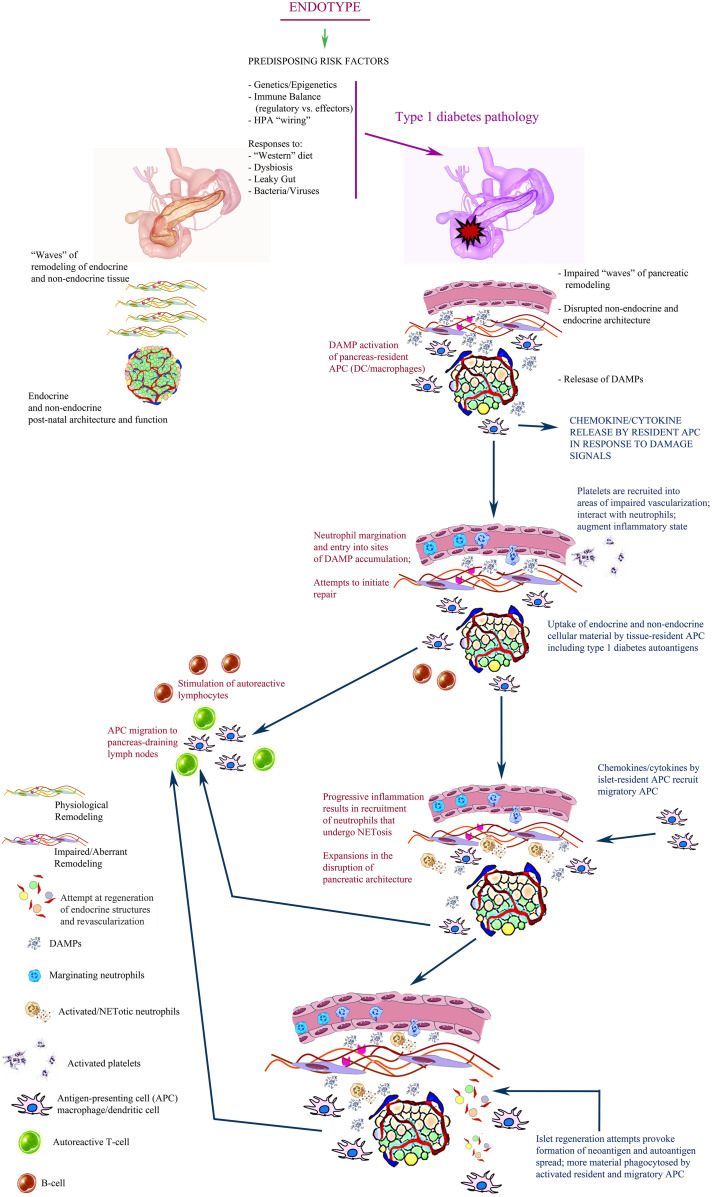
Type 1 diabetes (T1D) is characterized by insulin deficiency resulting from the selective destruction of pancreatic β-cells by self-reactive T cells. Recent evidence demonstrates that innate immune responses substantially contribute to the pathogenesis of T1D, as they represent a first line of response to danger/damage signals. Here we discuss evidence on how, in a relapsing-remitting pattern, pancreas remodeling, diet, microbiota, gut permeability, and viral/bacterial infections induce the accumulation of leukocytes of the innate arm of the immune system throughout the pancreas. The subsequent acquisition and presentation of endocrine and exocrine antigens to the adaptive arm of the immune system results in a chronic progression of pancreatic damage. This process provides for the generation of self-reactive T-cell responses; however, the relative weight that genetic and environmental factors have on the etiopathogenesis of T1D is endotype imprinted and patient specific. With this Perspectives in Diabetes, our goal is to encourage the scientific community to rethink mechanisms underlying T1D pathogenesis and to consider therapeutic approaches that focus on these processes in intervention trials within new-onset disease as well as in efforts seeking the disorder's prevention in individuals at high risk.
1 型糖尿病(T1D)的特征是由于自身反应性 T 细胞对胰腺β细胞的选择性破坏导致胰岛素缺乏。最近的证据表明,固有免疫反应在 T1D 的发病机制中起重要作用,因为它们是对危险/损伤信号的第一道反应。在这里,我们讨论了在复发缓解模式下,胰腺重塑、饮食、微生物群、肠道通透性和病毒/细菌感染如何导致固有免疫系统的白细胞在整个胰腺中积累的证据。随后,内分泌和外分泌抗原被适应性免疫系统获取和呈递,导致胰腺损伤的慢性进展。这一过程为自身反应性 T 细胞反应的产生提供了条件;然而,遗传和环境因素对 T1D 发病机制的相对权重是受表型印记和患者特异性影响的。通过这篇糖尿病视角文章,我们的目标是鼓励科学界重新思考 T1D 发病机制背后的机制,并考虑在新发病例中以及在高危人群中预防该疾病的努力中,针对这些过程的治疗方法。