MRC Biostatistics Unit, University of Cambridge, Cambridge, UK.
Department of Psychiatry, University of Cambridge, Cambridge, UK.
Pharm Stat. 2021 May;20(3):462-484. doi: 10.1002/pst.2088. Epub 2021 Jan 20.
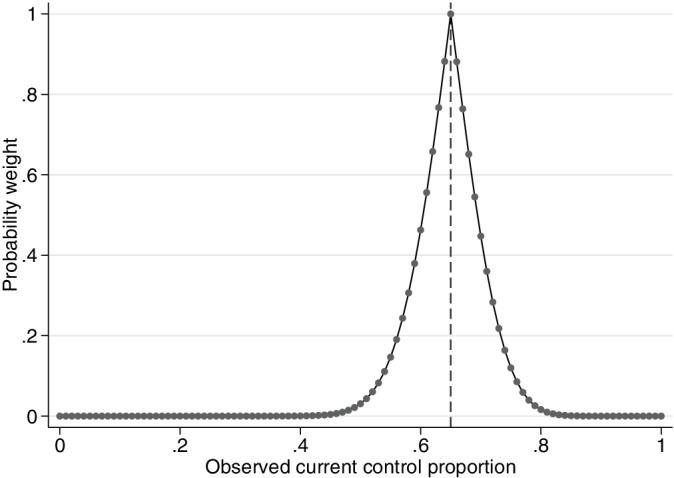
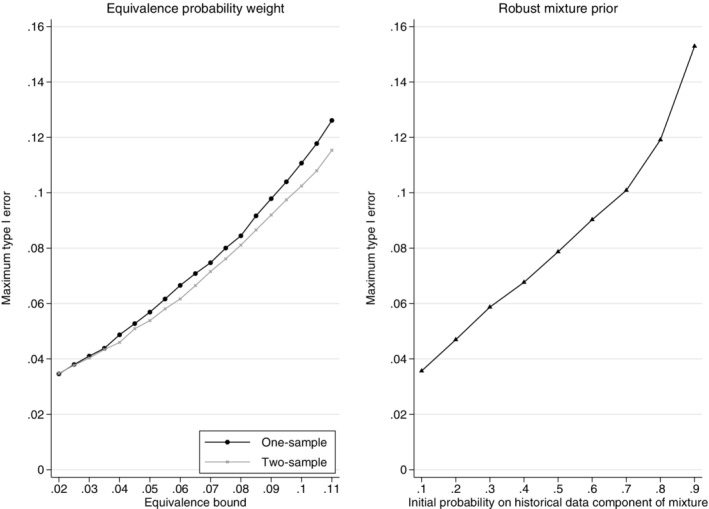
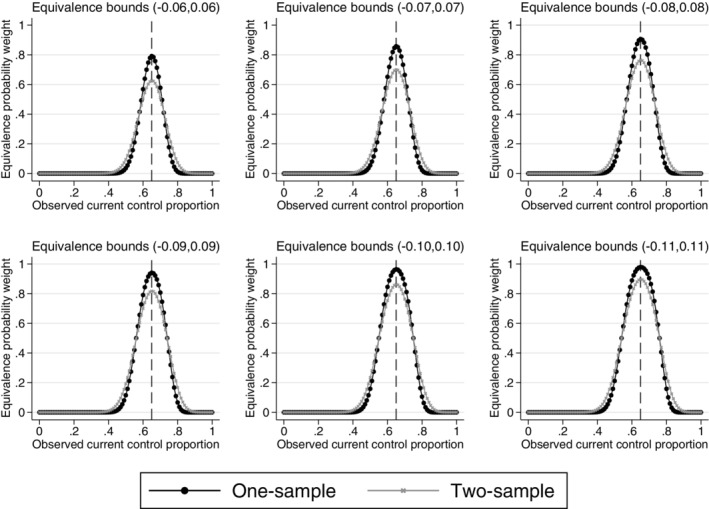
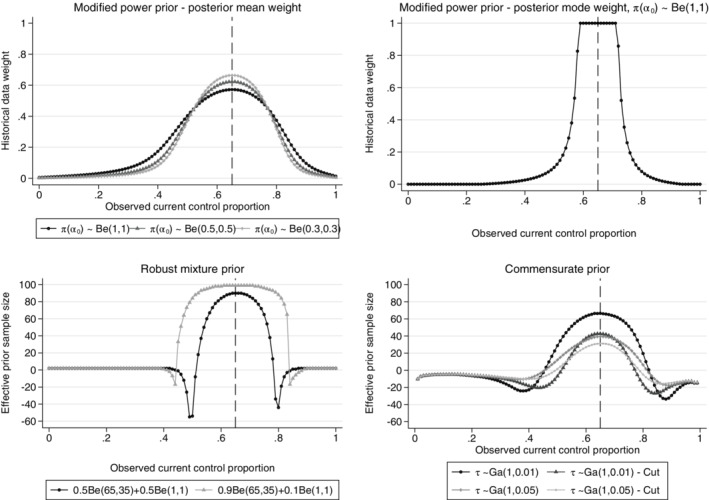
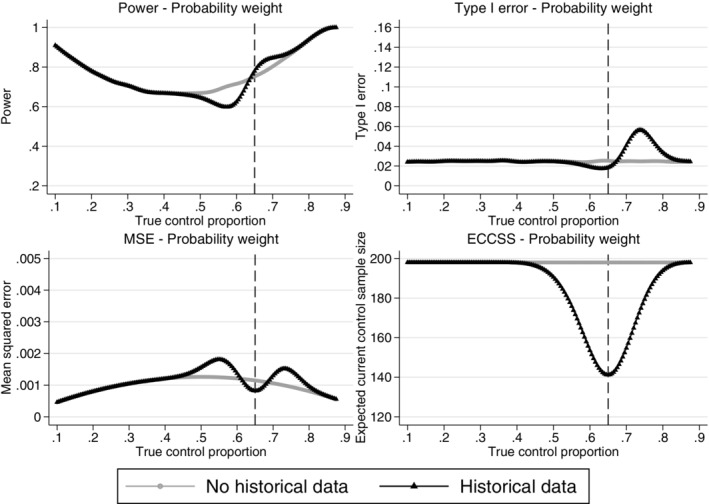
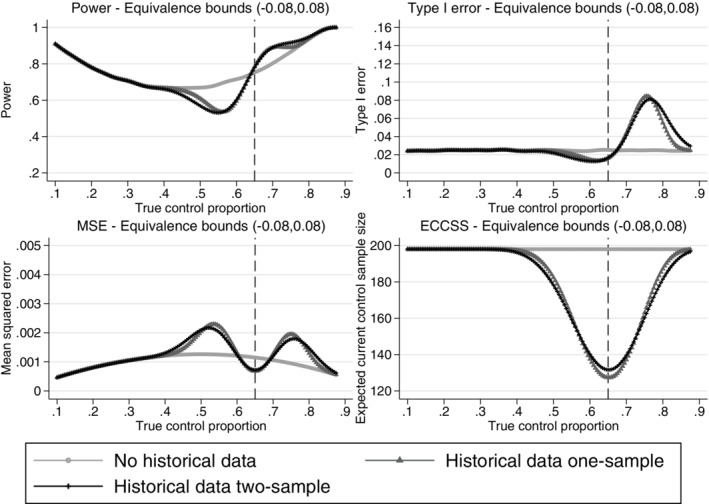
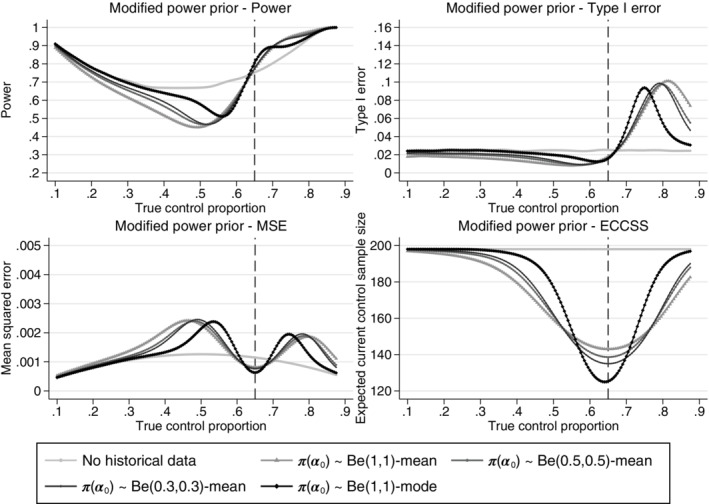
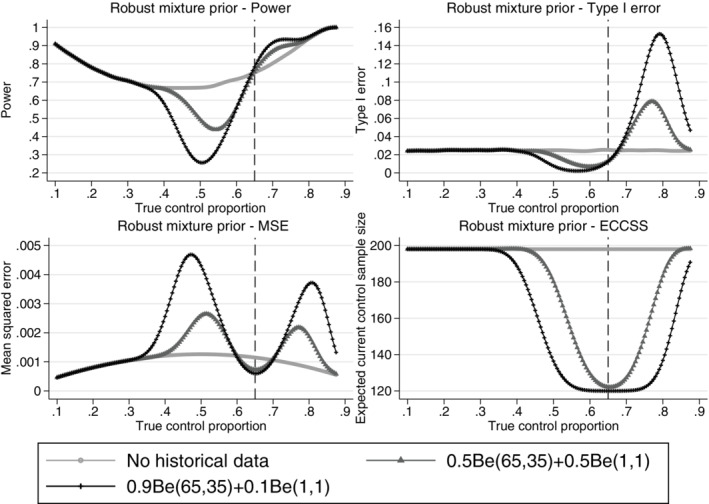
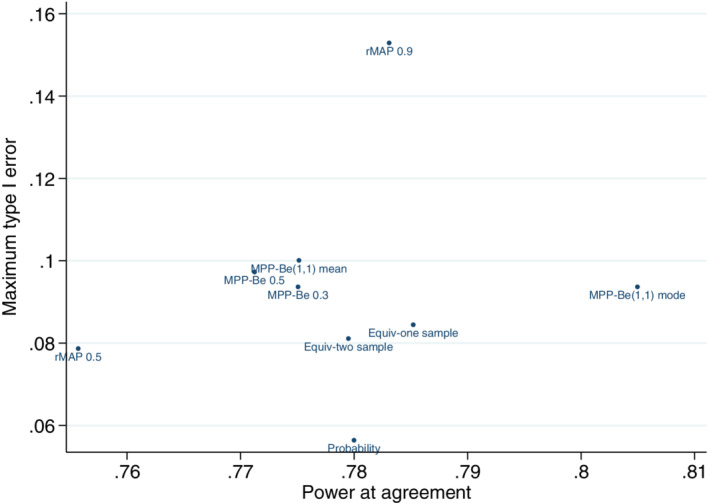
A standard two-arm randomised controlled trial usually compares an intervention to a control treatment with equal numbers of patients randomised to each treatment arm and only data from within the current trial are used to assess the treatment effect. Historical data are used when designing new trials and have recently been considered for use in the analysis when the required number of patients under a standard trial design cannot be achieved. Incorporating historical control data could lead to more efficient trials, reducing the number of controls required in the current study when the historical and current control data agree. However, when the data are inconsistent, there is potential for biased treatment effect estimates, inflated type I error and reduced power. We introduce two novel approaches for binary data which discount historical data based on the agreement with the current trial controls, an equivalence approach and an approach based on tail area probabilities. An adaptive design is used where the allocation ratio is adapted at the interim analysis, randomising fewer patients to control when there is agreement. The historical data are down-weighted in the analysis using the power prior approach with a fixed power. We compare operating characteristics of the proposed design to historical data methods in the literature: the modified power prior; commensurate prior; and robust mixture prior. The equivalence probability weight approach is intuitive and the operating characteristics can be calculated exactly. Furthermore, the equivalence bounds can be chosen to control the maximum possible inflation in type I error.
一项标准的双臂随机对照试验通常将干预措施与对照治疗进行比较,将等量的患者随机分配到每个治疗组中,仅使用当前试验内的数据评估治疗效果。在设计新试验时会使用历史数据,并且最近已经考虑在标准试验设计无法达到所需患者数量时将其用于分析。纳入历史对照数据可能会使试验更有效率,当当前研究的对照数据与历史数据一致时,可以减少当前研究中所需的对照数量。然而,当数据不一致时,可能会导致治疗效果估计值存在偏差、Ⅰ型错误率增加和效力降低。我们提出了两种新的二项数据方法,根据与当前试验对照的一致性对历史数据进行折扣,一种是等效方法,另一种是基于尾部区域概率的方法。采用适应性设计,在中期分析时调整分配比例,当存在一致性时,减少对照患者的随机分配。使用固定效力的功效先验方法对分析中的历史数据进行降权。我们将拟议设计的操作特征与文献中的历史数据方法进行比较:修改后的功效先验;相称先验;和稳健混合先验。等效概率权重方法直观,操作特征可以精确计算。此外,可以选择等效界限来控制Ⅰ型错误率的最大可能膨胀。