Klaewsongkram Jettanong, Buranapraditkun Supranee, Mongkolpathumrat Pungjai, Palapinyo Sirinoot, Chantaphakul Hiroshi
Division of Allergy and Clinical Immunology, Department of Medicine, Faculty of Medicine, Chulalongkorn University, Bangkok, Thailand.
The Skin and Allergy Research Unit, Chulalongkorn University, Bangkok, Thailand.
Allergy Asthma Immunol Res. 2021 Mar;13(2):229-244. doi: 10.4168/aair.2021.13.2.229.
Data on non-steroidal anti-inflammatory drug (NSAID) hypersensitivity in Southeast Asia are scarce. Increased urinary leukotriene E4 (uLTE4) levels have been suggested as a biomarker of NSAID-exacerbated respiratory disease (NERD). This study investigated clinical patterns of NSAID sensitivity in Thailand and the diagnostic roles of uLTE4 measurement in various phenotypes.
The clinical phenotypes in 92 Thai adults with cross-reactive NSAID hypersensitivity were characterized based on the clinical history and drug provocation. The uLTE4 levels were measured at baseline, after aspirin provocation and after desensitization.
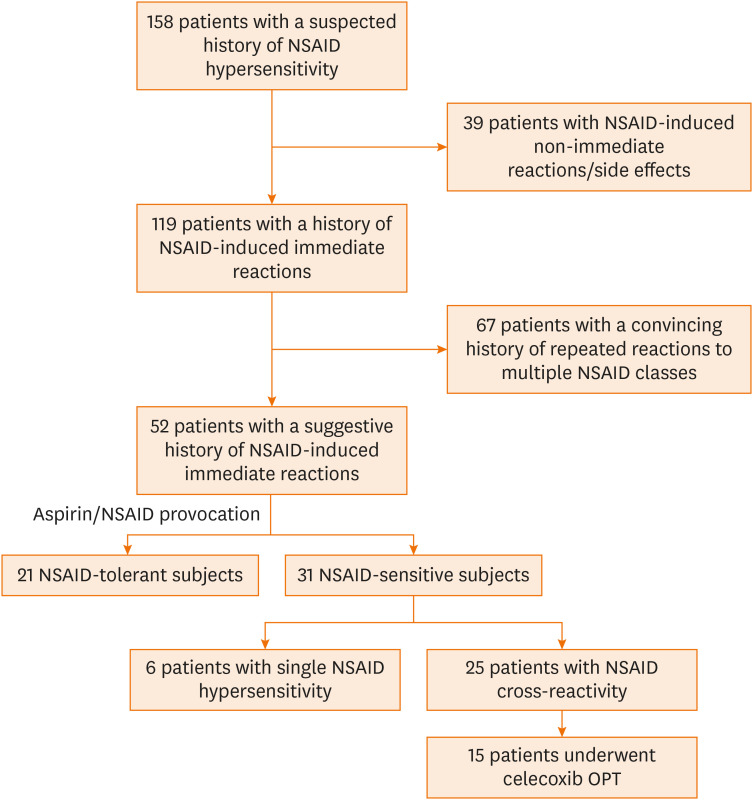
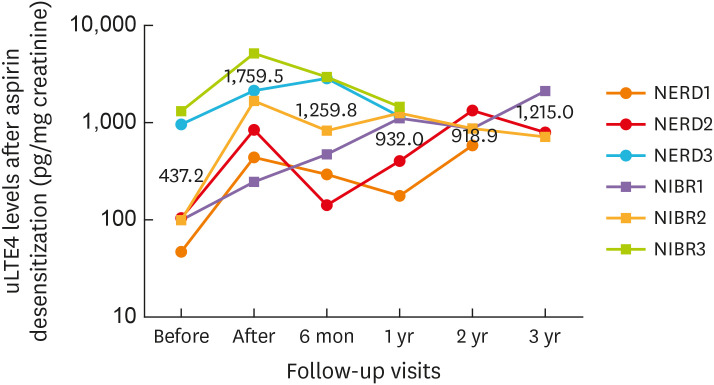
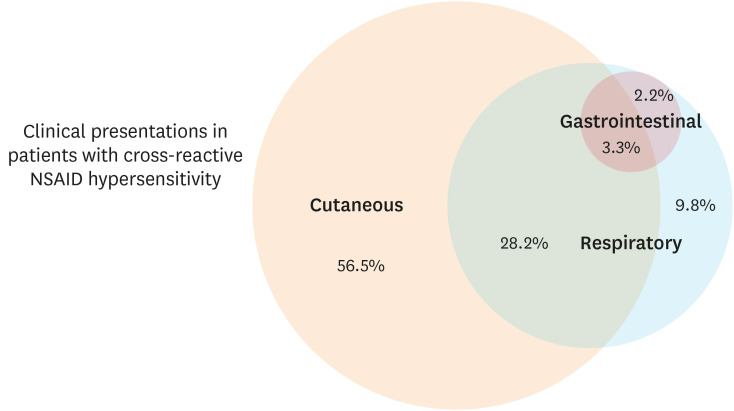
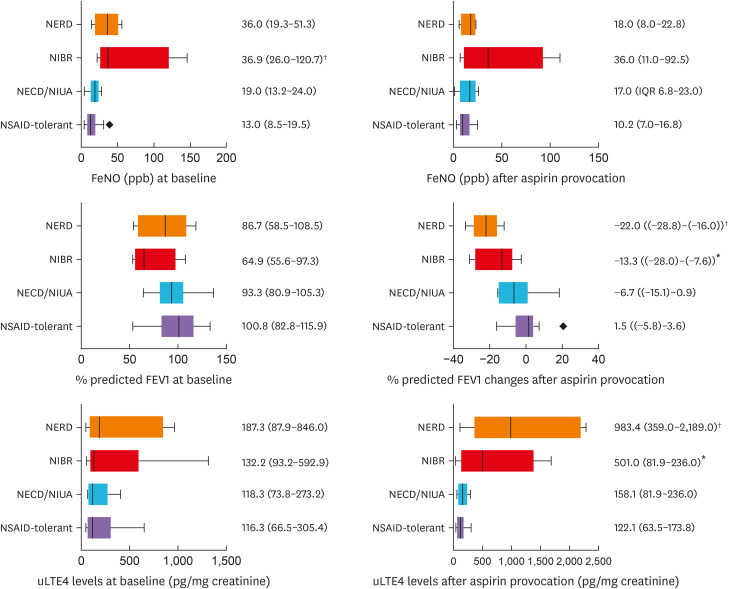
More than half of the patients (56.5%) presented with cutaneous symptoms (NSAID-exacerbated cutaneous disease), while one-third (33.7%) developed symptoms in at least 2 systems (NSAID-induced blended reactions; NIBR). Fifty-two patients underwent drug provocation and 59.6% of them yielded positive results. After drug provocation, a significant number of patients with confirmed NSAID cross-reactivity experienced clinical symptoms in more than one organ system. The uLTE4 levels at baseline were comparable between the NSAID-tolerant and NSAID-sensitive groups, but were substantially increased after aspirin provocation predominantly in NERD (983.4 pg/mg creatinine) and NIBR (501.0 pg/mg creatinine) compared to NSAID-tolerant subjects (122.1 pg/mg creatinine, < 0.01 and 0.05, respectively). The uLTE4 levels were elevated after aspirin desensitization, although nasal polyposis and asthma were under control in 3 NERD and 3 NIBR subjects.
NIBR is not uncommon among NSAID-sensitive patients in Thailand. The diagnostic value of basal uLTE4 levels was limited, but increased uLTE4 levels upon aspirin provocation suggest NSAID cross-reactivity with respiratory components. This study indicates that aspirin desensitization, if necessary, might be effective in both NERD and NIBR.
ClinicalTrials.gov Identifier: NCT03849625.
东南亚地区关于非甾体抗炎药(NSAID)超敏反应的数据稀缺。尿白三烯E4(uLTE4)水平升高被认为是NSAID加重的呼吸道疾病(NERD)的生物标志物。本研究调查了泰国NSAID敏感性的临床模式以及uLTE4测量在各种表型中的诊断作用。
根据临床病史和药物激发试验,对92名具有交叉反应性NSAID超敏反应的泰国成年人的临床表型进行了特征分析。在基线、阿司匹林激发试验后和脱敏后测量uLTE4水平。
超过一半的患者(56.5%)出现皮肤症状(NSAID加重的皮肤病),而三分之一(33.7%)的患者在至少2个系统中出现症状(NSAID诱导的混合反应;NIBR)。52名患者接受了药物激发试验,其中59.6%的试验结果为阳性。药物激发试验后,大量确诊为NSAID交叉反应性的患者在多个器官系统出现临床症状。NSAID耐受组和NSAID敏感组的基线uLTE4水平相当,但与NSAID耐受受试者(分别为122.1 pg/mg肌酐,<0.01和0.05)相比,阿司匹林激发试验后,NERD组(983.4 pg/mg肌酐)和NIBR组(501.0 pg/mg肌酐)的uLTE4水平大幅升高。在3名NERD患者和3名NIBR患者中,尽管鼻息肉和哮喘得到控制,但阿司匹林脱敏后uLTE4水平仍升高。
NIBR在泰国NSAID敏感患者中并不少见。基础uLTE4水平的诊断价值有限,但阿司匹林激发试验后uLTE4水平升高提示NSAID与呼吸道成分存在交叉反应。本研究表明,必要时阿司匹林脱敏在NERD和NIBR中可能有效。
ClinicalTrials.gov标识符:NCT03849625。