Biotechnology Platform, Agricultural Research Council, Pretoria, South Africa.
School of Life Sciences, University of KwaZulu-Natal, Pietermaritzburg, South Africa.
PLoS One. 2021 Jan 21;16(1):e0244973. doi: 10.1371/journal.pone.0244973. eCollection 2021.
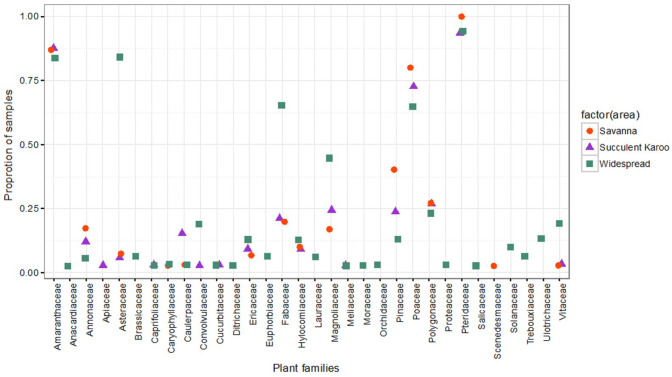
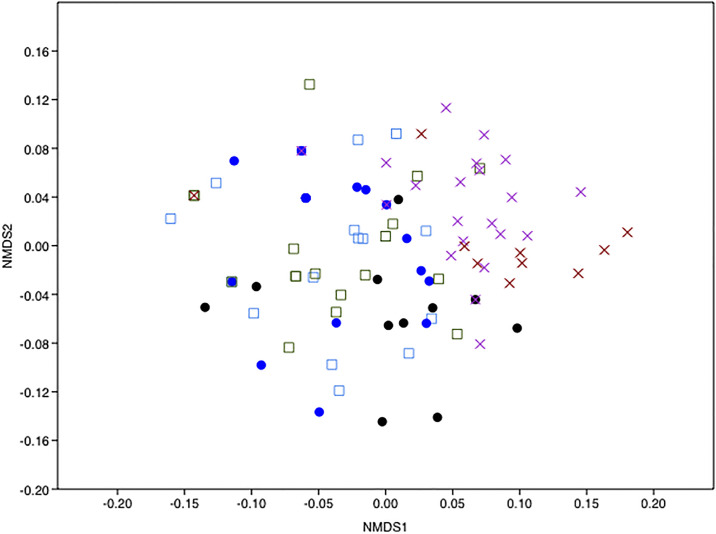
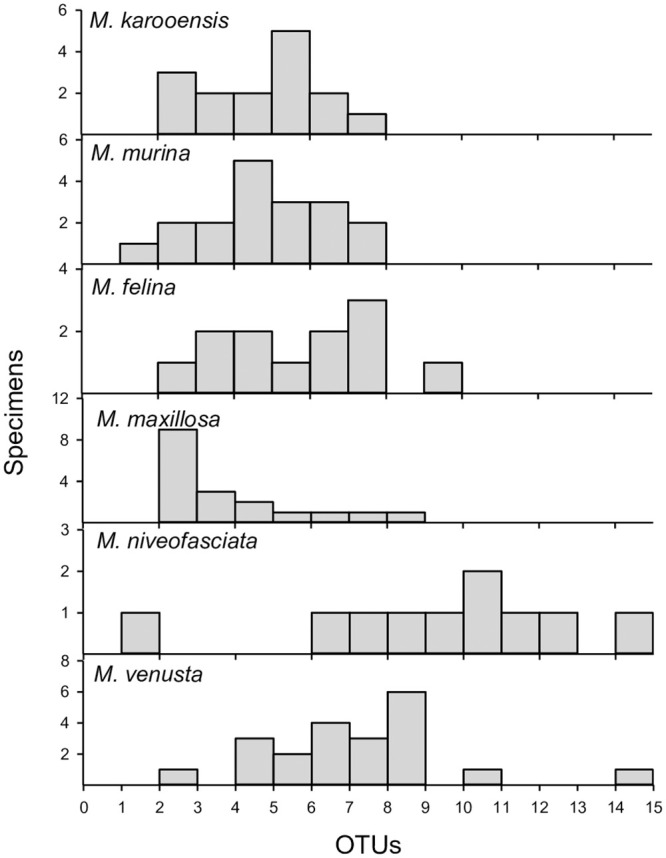
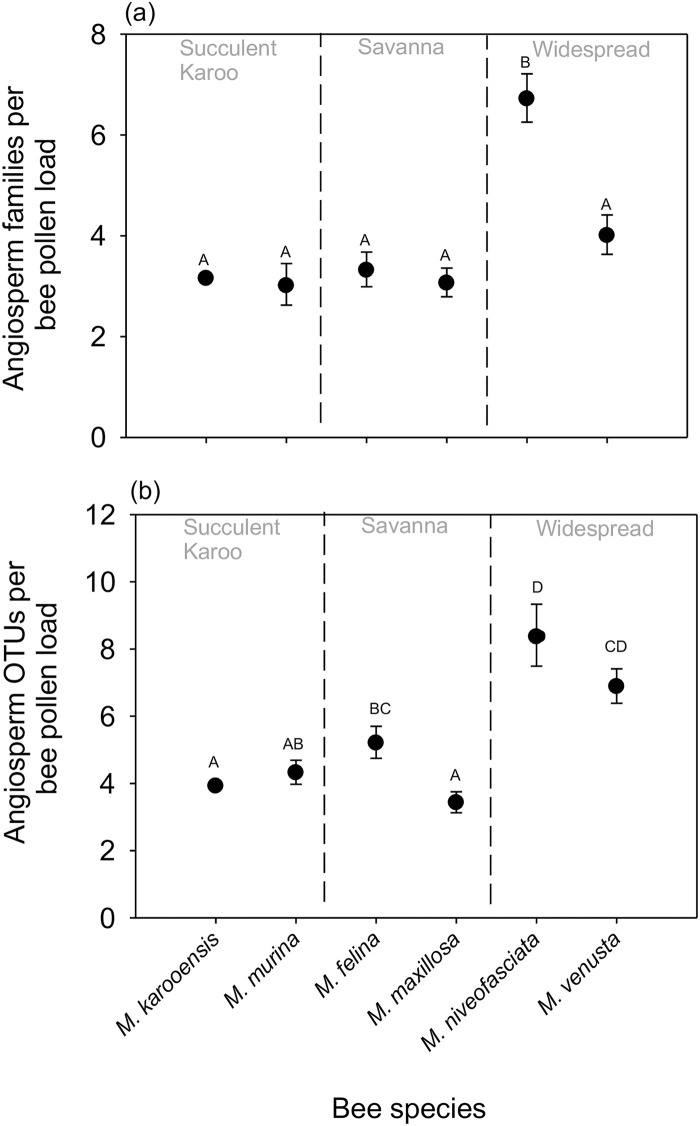
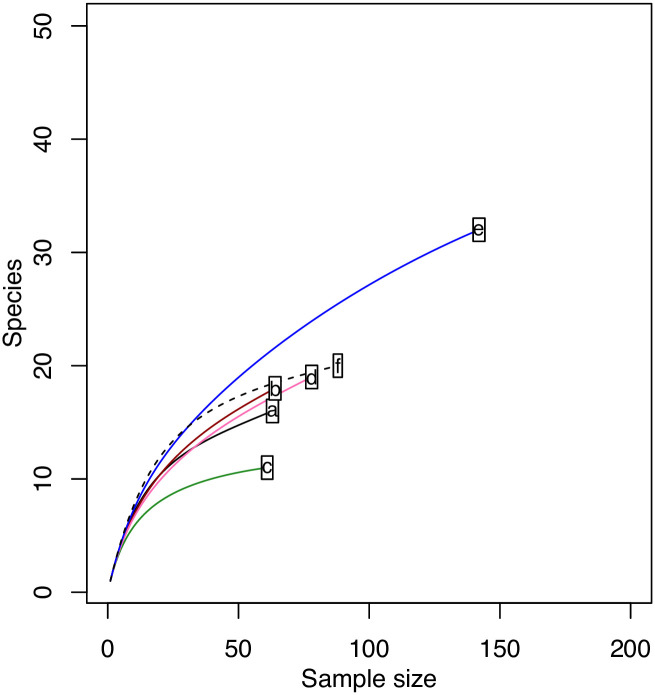
South Africa is a megadiverse country with three globally recognised biodiversity hotspots within its borders. Bees in particular show high diversity and endemism in the western part of the country. Not much is currently known about the floral host preferences of indigenous bees in South Africa, with data only available from observational studies. Pollen metabarcoding provides provenance information by utilising DNA analyses instead of floral visitation and traditional microscopic identification to identify pollinator food plants, which can be time consuming and imprecise. In this study, we sampled pollen from leaf-cutter bees (Megachilidae) specimens maintained in a historic insect collection (National Collection of Insects, South Africa) that were originally collected from two florally important areas in South Africa (Succulent Karoo and Savanna) and used metabarcoding to determine pollen provenance. We also sampled pollen from leafcutter bee species with wider distributions, that extend across many different biomes, to determine if these 'generalist' species show relaxed floral host specificity in some biomes. Metabarcoding involved sequencing of the nuclear internal transcribed spacer 2 (ITS2) region. Amplicons were compared to a sequence reference database to assign taxonomic classifications to family level. Sequence reads were also clustered to OTUs based on 97% sequence similarity to estimate numbers of plant species visited. We found no significant difference in the mean number of plant taxa visited in the Succulent Karoo and Savanna regions, but the widespread group visited significantly more floral hosts. Bees from the widespread group were also characterised by a significantly different composition in pollen assemblage. The time since specimens were collected did not have an effect on the mean number of taxa visited by any of the bee species studied. This study highlights national history collections as valuable sources of temporal and spatial biodiversity data.
南非是一个生物多样性大国,其境内有三个被全球认可的生物多样性热点地区。特别是蜜蜂在该国西部表现出高度的多样性和特有性。目前,南非本土蜜蜂对花卉寄主的偏好知之甚少,只有通过观察性研究才能获得数据。花粉代谢组学通过利用 DNA 分析而不是花卉访问和传统的微观鉴定来提供起源信息,从而识别传粉媒介的食物植物,这可能既耗时又不精确。在这项研究中,我们从保存在历史昆虫收藏(南非国家昆虫收藏)中的叶切蜂(Megachilidae)标本中采集花粉,这些标本最初是从南非两个具有重要花卉的地区(肉质植物区和稀树草原)采集的,并使用代谢组学来确定花粉的起源。我们还从分布范围更广的叶切蜂物种中采集花粉,这些物种延伸到许多不同的生物群落,以确定这些“广域”物种在某些生物群落中是否表现出放松的花卉寄主特异性。代谢组学涉及核内转录间隔区 2(ITS2)区域的测序。扩增子与序列参考数据库进行比较,以将分类学分类分配到科水平。还根据 97%的序列相似性将序列读取聚类到 OTU,以估计访问的植物物种数量。我们发现,在肉质植物区和稀树草原地区,访问的植物类群的平均数量没有显著差异,但分布广泛的组访问的花卉寄主明显更多。分布广泛的组的蜜蜂在花粉组合中的组成也有明显的不同。自标本采集以来的时间对任何研究的蜜蜂物种访问的平均分类群数量没有影响。这项研究强调了国家历史收藏作为时间和空间生物多样性数据的有价值来源。