Tarantino Giovanni, Crocetto Felice, Di Vito Concetta, Creta Massimiliano, Martino Raffaele, Pandolfo Savio Domenico, Pesce Salvatore, Napolitano Luigi, Capone Domenico, Imbimbo Ciro
Department of Clinical Medicine and Surgery, Federico II Medical School, Via S. Pansini 5, 80131 Naples, Italy.
Department of Neuroscience, Reproductive Sciences and Dentistry, University of Naples "Federico II", Via S. Pansini 5, 80131 Naples, Italy.
J Clin Med. 2021 Jan 18;10(2):346. doi: 10.3390/jcm10020346.
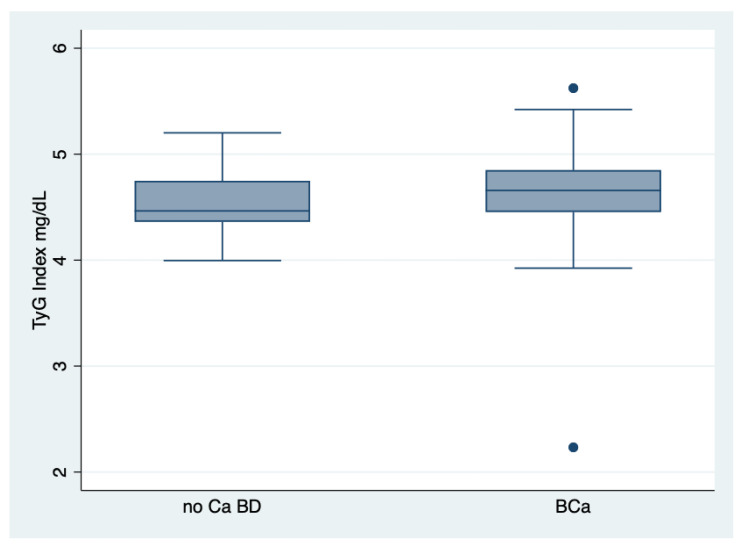
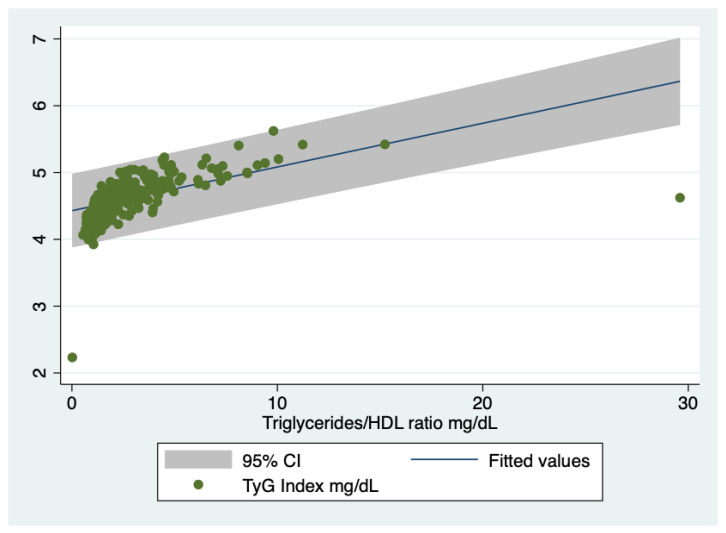
Among risk factors (apart from smoking) likely involved in bladder cancer (BCa), metabolic syndrome (MS), obesity and type 2 diabetes mellitus (T2DM) have been explored with contrasting results. In spite of these studies, there is little data on the association between nonalcoholic fatty liver disease (NAFLD), its main driver, i.e., insulin resistance (IR), and BCa. Implanting a cross-sectional retrospective study we tried to investigate both NAFLD and IR prevalence in a hospital based population of BCa patients. We studied laboratory data from 204 patients with histologically confirmed non metastatic BCa and 50 subjects with no BCa, but with bladder diseases (no Ca BD). We evaluated the presence of NAFLD by the triglycerides/glucose Index (TyG Index), using a cut-off of 0.59 and by the Aspartate Aminotransferase/Alanine Aminotransferase AST/ALT ratio. IR was assessed by the same TyG Index (cut-off 4.68) and the triglycerides/High-Density Lipoprotein HDL ratio (cut-off 2.197). The diagnosis of impaired fasting glucose (IFG), condition of prediabetes, as well as that of T2DM was assessed according to canonical guidelines. The TyG Index predicted NAFLD presence in both groups ( = 0.000), but the BCa group showed a major percentage of NAFLD cases with respect to no Ca BD group (59% versus 40%). A greater proportion of IR (47%) in BCa group than in no Ca BD one (37%) was evidenced by the TyG Index with its median value significantly different ( = 0.0092). This high rate of IR in the BCa group was confirmed by the triglycerides/HDL ratio ( = 0.02). Prediabetes and T2DM were more prevalent in the BCa group than no Ca BD group ( = 0.024). In this study a consistent NAFLD presence was found in BCa patients. This is an important comorbidity factor that deserves further consideration in prospective studies. The higher prevalence of NAFLD, IR, prediabetes and T2DM in the BCa group evidences the need that these disorders should be reckoned as adjunct factors that could impact on this cancerous disease.
在可能与膀胱癌(BCa)相关的风险因素(除吸烟外)中,代谢综合征(MS)、肥胖症和2型糖尿病(T2DM)已被研究,但结果各异。尽管有这些研究,但关于非酒精性脂肪性肝病(NAFLD)及其主要驱动因素即胰岛素抵抗(IR)与BCa之间关联的数据却很少。通过开展一项横断面回顾性研究,我们试图调查以医院为基础的BCa患者群体中NAFLD和IR的患病率。我们研究了204例经组织学确诊的非转移性BCa患者以及50例无BCa但患有膀胱疾病(无癌症膀胱疾病,no Ca BD)患者的实验室数据。我们通过甘油三酯/葡萄糖指数(TyG指数)评估NAFLD的存在情况,截断值为0.59,并通过天冬氨酸转氨酶/丙氨酸转氨酶(AST/ALT)比值进行评估。通过相同的TyG指数(截断值4.68)和甘油三酯/高密度脂蛋白(HDL)比值(截断值2.197)评估IR。根据标准指南评估空腹血糖受损(IFG)、糖尿病前期状况以及T2DM的诊断。TyG指数在两组中均能预测NAFLD的存在(P = 0.000),但与无癌症膀胱疾病组相比,BCa组中NAFLD病例的比例更高(59%对40%)。TyG指数显示BCa组中IR的比例(47%)高于无癌症膀胱疾病组(37%),其中位数差异显著(P = 0.0092)。甘油三酯/HDL比值也证实了BCa组中IR的高发生率(P = 0.02)。糖尿病前期和T2DM在BCa组中的患病率高于无癌症膀胱疾病组(P = 0.024)。在本研究中,BCa患者中发现存在相当比例的NAFLD。这是一个重要的合并症因素,值得在前瞻性研究中进一步考虑。BCa组中NAFLD、IR、糖尿病前期和T2DM的较高患病率表明,这些疾病应被视为可能影响这种癌症疾病的辅助因素。